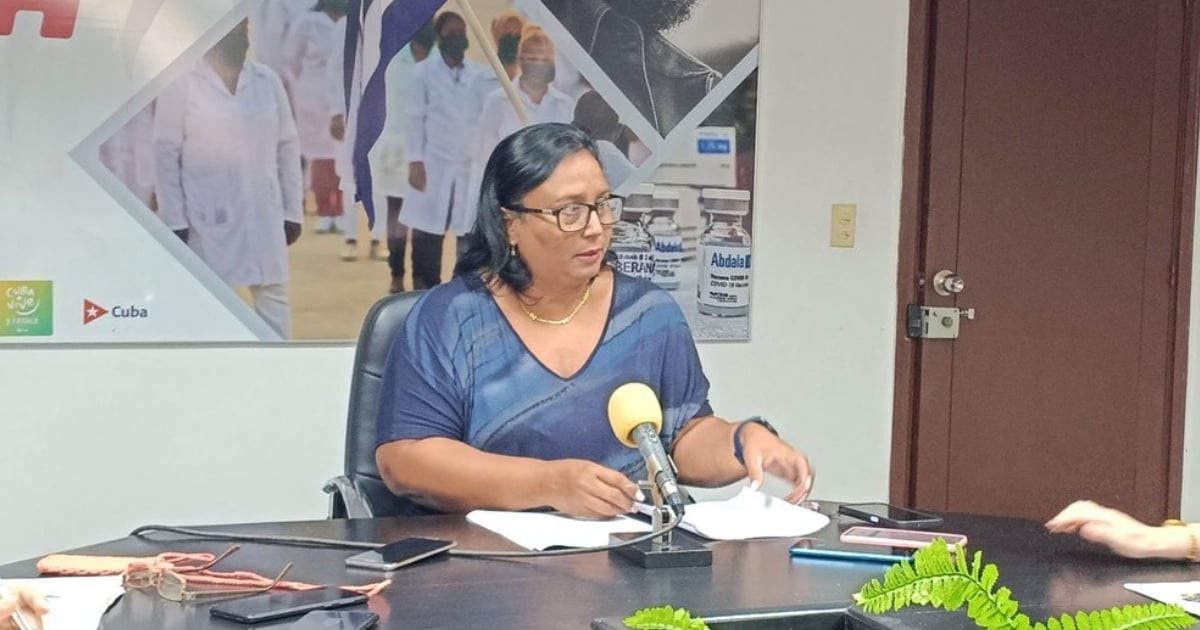
The Cuban Ministry of Public Health (MINSAP) has officially acknowledged the deaths of three individuals due to dengue fever so far in 2025. This low figure marks the first official acknowledgment of deaths from this arbovirus this year, following weeks of institutional silence and public denials in response to citizen reports warning of a surge in severe cases, particularly in the Matanzas province. The information was confirmed by Deputy Minister Dr. Carilda Peña García during a presentation to state-run media, where she also provided an update on the spread of vector-borne viral diseases in the country.
Official Recognition Amid Weeks of Denial
The three dengue-related deaths were substantiated, according to Peña, by necrological studies and prior clinical diagnoses. Neither the deputy minister nor the media covering her statements provided details regarding the ages, provinces, or clinical conditions of the deceased, leaving a concerning opacity in the management of the crisis. Nevertheless, this acknowledgment represents a significant shift from statements made by other key health sector figures in previous weeks.
Widespread Viral Activity: Dengue, Chikungunya, and Oropouche Fever
Peña García confirmed the current circulation of three active arboviruses in Cuba: dengue, chikungunya, and Oropouche fever. She noted that dengue is present in 12 provinces, while chikungunya is spreading across eight. The first chikungunya cases were identified in July in the España Republicana community in Perico, Matanzas, but the disease has since expanded to other areas. Oropouche fever is reportedly on the decline. Common symptoms include fever, headache, general malaise, and joint inflammation. Chikungunya symptoms can persist for up to 90 days in chronic cases. "The most severe or critical cases are associated with dengue," she pointed out.
Home Care and Resource Constraints
Regarding the treatment protocol, the deputy minister explained that home care remains an option for patients without comorbidities, reserving hospital admission for those with additional health issues. While this measure could be seen as a way to alleviate hospital congestion, it has sparked concern and complaints from patients left unattended at home without adequate medical follow-up or resources. Peña also flagged the conditions conducive to mosquito proliferation—deteriorating community hygiene and increased rainfall—and indicated that resources for fumigation and vector control are "allocated to areas with evidence of transmission." This statement implies a clear limitation in the availability of insecticides, fuel, and technical staff, adversely affecting non-prioritized zones.
An Official Narrative in Crisis
The announcement of these three fatalities comes after weeks of contradictions in the official narrative. On October 8, the national director of Epidemiology, Dr. Francisco Durán García, flatly denied any arbovirus-related deaths and dismissed reports of "11 deaths in one night" in Matanzas as false. The following day, Health Minister José Ángel Portal Miranda asserted in a meeting with Communist Party authorities that "there are no deaths in Matanzas from this disease. No severe or critical cases exist," and assured that "no epidemic or deaths can be hidden." The revelation of the three deaths today—albeit not directly linked to Matanzas—casts doubt on the authorities' transparency and reinforces the perception of an information policy focused on narrative control rather than public health truth.
Other Circulating Diseases
In addition to arboviruses, the deputy minister reported the circulation of seasonal respiratory viruses and outbreaks of hepatitis A in closed populations, though she offered no further details. Peña García's final call was not to underestimate symptoms: "It is imperative to see a doctor at the onset of unspecified febrile symptoms," she stated. However, this advice clashes with the daily reality: long lines, lack of reagents, and refusal to admit patients are part of the landscape reported in various regions, where the overloaded system imposes barriers to fulfilling this basic directive.
Understanding Cuba's Current Health Challenges
What are the current active arboviruses in Cuba?
The active arboviruses in Cuba include dengue, chikungunya, and Oropouche fever.
How has the Cuban government responded to the dengue outbreak?
The Cuban government has officially acknowledged three dengue-related deaths and is implementing home care protocols for certain patients, reserving hospital admissions for those with comorbidities.
What are the symptoms of dengue and chikungunya?
Symptoms of dengue and chikungunya include fever, headache, general malaise, and joint inflammation. Chikungunya symptoms can last up to 90 days in chronic cases.