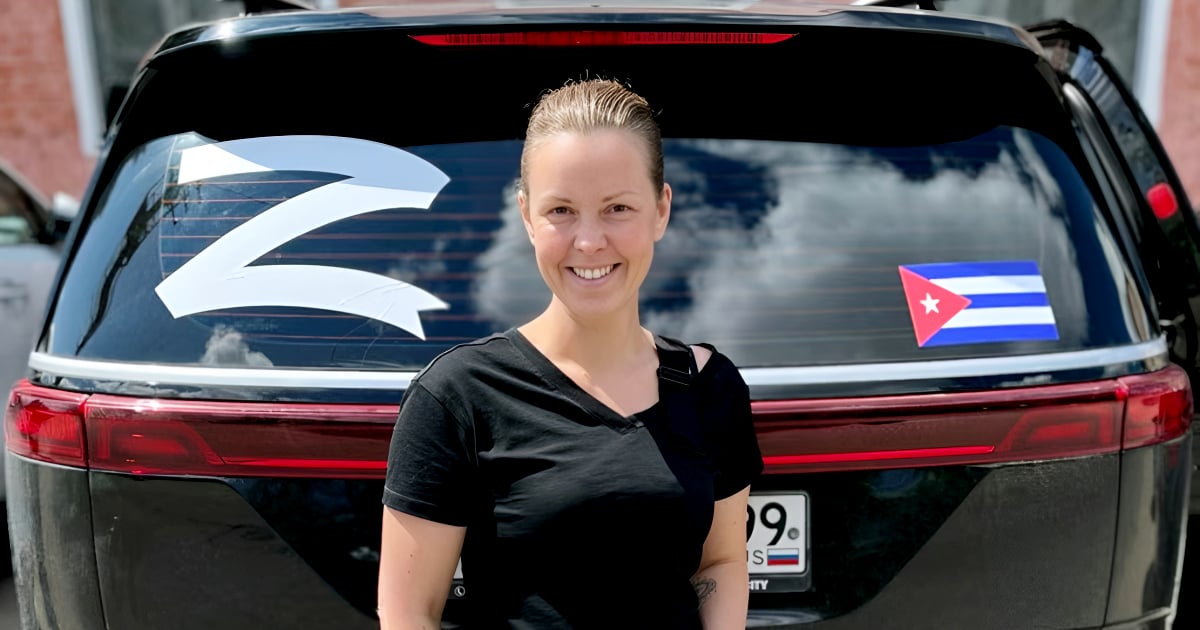
Fresh information unveiled by the Russian investigative outlet Systema, a unit of Radio Free Europe/Radio Liberty (RFE/RL), has brought new details to light regarding Yelena Smirnova. She is the Russian recruiter accused of deceiving hundreds of Cubans into fighting in Ukraine. Journalists Yelizaveta Surnacheva and Andrei Soshnikov obtained court documents revealing that Smirnova not only ran a "semi-private" recruitment network but also had ties with Russian military entities, allegedly facilitating the enlistment of over 3,000 foreigners, including a significant number of Cubans.
The report uncovered a letter dated October 23, 2024, signed by attorney Sergei Poselyagin, requesting Smirnova’s early release and detailing her involvement in transporting Cubans from Havana to Moscow. Addressed to the Russian Human Rights Commissioner, the letter claimed Smirnova covered travel and lodging expenses for the recruits, later recouping the costs by withdrawing funds from their bank accounts after they signed military contracts.
The letter was provided to the media by Ukrainian lawmaker Marian Zablotskiy, who claimed to have obtained it from undisclosed sources. According to the investigation, the document served as evidence of the functional relationship between the Kremlin and foreign recruitment networks used to bolster Russia's military efforts in Ukraine.
Recruitment Operations and Financial Exploitation
Based in Ryazan, Russia, Smirnova's scheme began in early 2023. She posted Spanish-language advertisements on social media platforms like Facebook and VK, targeting groups such as 'Cubans in Moscow' with offers of civilian jobs, signing bonuses, and salaries up to $2,000 per month, along with promises of Russian citizenship. These messages specifically targeted young Cubans eager to escape the island's dire economic situation.
Once in Russia, recruits were temporarily housed and coerced into signing contracts in Russian, which they could not comprehend. According to the investigation, Smirnova or her associates collected copies of the recruits' bank cards and withdrew an initial payment under the guise of covering travel expenses.
When the reality of being sent to the battlefield became apparent, many Cubans attempted to back out, but by then, they had already lost control over their documents and finances. "When they handed us the uniform and told us to train, I realized it wasn’t construction work at all," a recruit told Politico in September 2023. "Once you've signed the contract, desertion equals betrayal," he added.
The Cuban Connection and Diplomatic Implications
By mid-2023, several recruits began to accuse Smirnova of stealing their wages. Two formal complaints were filed in April 2024, leading to her arrest on fraud charges. RFE/RL reported that she was released from pretrial detention in 2025, though her current whereabouts are unknown.
The report also named Olga Shilyayeva, a Russian hairdresser married to a military officer, and Dayana Díaz, a Cuban resident in Russia, as Smirnova's collaborators. They managed contracts and posted job ads on social media, often featuring Cuban and Russian flags and symbols supporting the invasion.
Sources cited by Systema confirmed that Shilyayeva and Smirnova were frequently seen at the Ryazan recruitment center, processing 30 to 40 contracts daily, and were eventually sent to the Ukrainian front as part of a unit mainly composed of former Russian army convicts.
Some recruited Cubans believed they would work in construction but were instead taken directly to combat zones. The source indicated that much of the fraud was orchestrated by Díaz, who handled communications with new recruits through her Telegram account.
Broader Implications and Official Denials
Ukrainian lawmaker Zablotskiy stated that Smirnova's operations could not have occurred without the knowledge of the FSB or GRU, Russia's main intelligence services. "Tour operators have historically been a logistical front for the Russian state. In this case, Smirnova operated with the authorities' knowledge," he told Systema. Although no direct ties to these agencies were found, the recruitment network's scale suggested state approval was likely necessary.
Following the report's release, Cuba's Ministry of Foreign Affairs reiterated on October 11 that "Cuba is not part of the armed conflict in Ukraine nor does it participate with military personnel there or in any other country," emphasizing its "zero tolerance policy towards mercenarism and human trafficking." However, the new revelations suggest that the network operating from Ryazan remained active until mid-2025, with Cuban nationals involved and a level of acceptance from Russian authorities that could hardly go unnoticed.
The Smirnova case transcends a mere fraud story, confirming its role as a cog in Moscow's foreign recruitment system, where Cuban economic desperation meets the Kremlin's propaganda machinery in a war that is not theirs.
Frequently Asked Questions about Cuban Recruitment for Russian Military
What was Yelena Smirnova accused of?
Yelena Smirnova was accused of operating a recruitment network that deceived and enlisted thousands of foreigners, including Cubans, to fight in Ukraine, under false pretenses and with ties to Russian military structures.
How did Smirnova recruit Cuban nationals?
Smirnova targeted young Cubans via social media ads offering lucrative jobs, bonuses, and Russian citizenship. Once in Russia, recruits were forced to sign contracts in a language they didn’t understand and were ultimately sent to combat zones.
What role did the Cuban government play in this recruitment?
While Cuba officially denies involvement, the evidence suggests a tacit complicity, with infrastructure and diplomatic channels facilitating the movement of recruits, suggesting state-level awareness or collaboration.
Were other individuals involved in the recruitment process?
Yes, Olga Shilyayeva and Dayana Díaz were identified as collaborators who managed contracts and facilitated communications, contributing significantly to the recruitment operations.