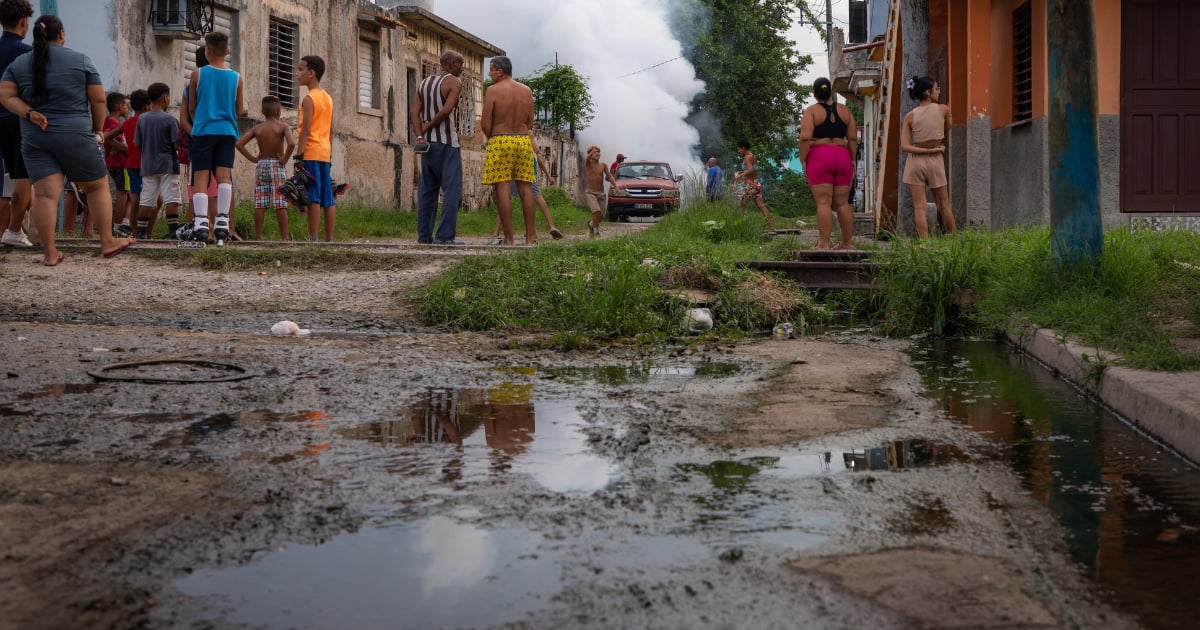
Matanzas artist Sindy San Miguel Fariñas, residing in the town of Carlos Rojas in Jovellanos municipality, has raised alarms on social media about a serious health crisis caused by a chikungunya outbreak, compounded by food shortages and a lack of medications. "I am experiencing the same pain as in the first 72 hours of the illness. I can't lift my feet; I drag them to walk, and my knees can't bend because of the pain and swelling," she shared in a public post on her Facebook profile. "I am barely able to perform basic tasks. Any slight physical exertion leads to inflammation and excruciating pain in all my joints."
Fariñas noted that after a brief period of improvement, her symptoms worsened, which she attributes to inadequate nutrition. "We need about 8,000 pesos—roughly 20 dollars—to eat at least once a day with the necessary vitamin D, as we are recovering from this virus and are severely malnourished. Eating does not always mean nourishing," she explained.
She highlighted the exorbitant prices of the few available foods that could aid recovery: "A can of tuna costs 3,000 pesos, a dozen eggs another 3,000, and one and a half liters of natural yogurt, 1,750. Who in Cuba has 32,000 pesos a month for yogurt, tuna, and eggs? And everything else..."
Her family, comprising her grandparents aged 81 and 88, her 60-year-old father, her young daughter, and herself, all contracted the virus within a month. She emphasized that home remedies like rest, paracetamol, and fluids "are not enough." "Our bodies have no means to fight this battle," she warned.
In her testimony, Fariñas went beyond the health crisis, delivering a direct message to the Cuban government: "If we don't open our eyes, we will die like abandoned street animals. We Cubans living on this island are in a horror movie, except for a small minority who remain in their glass bubbles watching us destroy each other."
"Ridiculous government, a bunch of ridiculous hypocrites, ridiculous fools. You are disgusting. Mediocre leaders. You've ruined the lives of millions of families for your own benefit. You've done it for too many years. Get out already. Before it's too late."
She concluded with a poignant sentiment that captures the despair and frustration of her message: "I read somewhere that hopefully, from so much hunger, Cubans will finally eat their fear."
Meanwhile, Matanzas health authorities have reported that "the chikungunya virus currently has a higher prevalence than dengue in the province" and assured that there have been no deaths from these diseases. Deputy Minister Carilda Peña García acknowledged resource constraints, fumigation, and screening limitations during a televised appearance with MINSAP officials, though she insisted that severe cases are due to comorbidities.
Historian and activist Alina Bárbara López Hernández has publicly accused authorities of downplaying the outbreak's severity and claims there's an order to deny deaths from arboviruses. "Their death certificates won't say 'chikungunya,' but that's what triggered the end," she stated. Journalist Yirmara Torres Hernández also shared a personal account of a neighbor's death from chikungunya, affirming, "There are no deaths, but there are."
Local media reported that the Eliseo Noel Caamaño Pediatric Hospital in Matanzas has been bolstered with an auxiliary center at the University of Medical Sciences, and 2,500 students have been mobilized to conduct screenings and eliminate Aedes aegypti mosquito breeding sites in the region.
Authorities maintain that the situation is under control, but testimonies like those of Sindy San Miguel Fariñas, along with local intellectuals and journalists' accusations, and the extraordinary deployment of human resources in the province, suggest a much more complex reality. As arboviruses continue to spread in Matanzas, thousands face the illness without basic guarantees of food, medication, or clear information about the outbreak's extent.
Understanding the Chikungunya Crisis in Matanzas
What is causing the health crisis in Matanzas?
The health crisis in Matanzas is primarily due to a chikungunya outbreak, exacerbated by food shortages and a lack of medications.
How are residents coping with the chikungunya outbreak?
Residents, like Sindy San Miguel Fariñas, struggle with severe symptoms and rely on home remedies, but they lack proper nutrition and medical supplies to effectively combat the virus.
What actions have local authorities taken?
Local authorities have reinforced the pediatric hospital with additional facilities and mobilized students to help with screenings and mosquito control, but face resource limitations.
What criticism have authorities faced?
Authorities have been criticized for allegedly downplaying the outbreak's severity and not acknowledging deaths related to chikungunya, as claimed by activists and journalists.