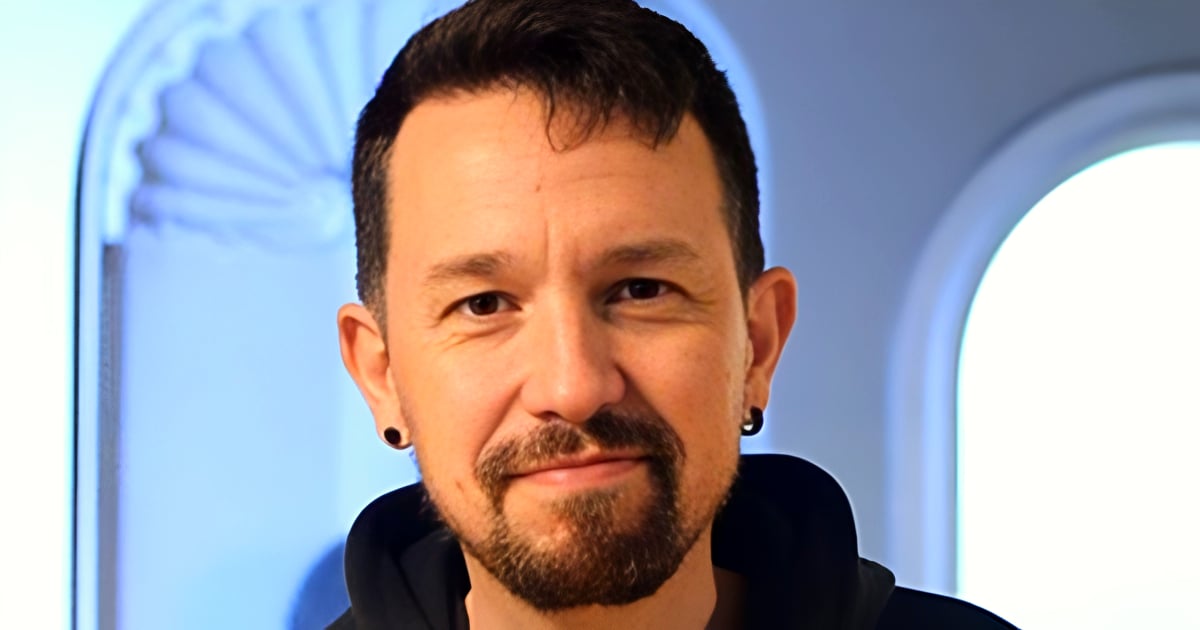
Pablo Iglesias, the former Deputy Prime Minister of Spain and founder of Podemos, stirred a storm of outrage among thousands of Cubans with his statement that post-communist Cuba would end up as “a democracy like Haiti.” This comparison, made during a conversation with Cuban activist Magdiel Jorge Castro, was perceived by many as an insult, a provocation, and a blatant display of ignorance or ideological cynicism.
What seemed like just another controversial remark from a media-savvy politician quickly became a viral phenomenon, sparking a wave of responses. Across social media, particularly on the Facebook page of CiberCuba, thousands of users delivered a clear message: "Cuba is already worse than Haiti." Rather than feeling threatened by the comparison, many saw it as an improvement.
The reactions were swift and widespread. Nearly 9,000 comments flooded in within 24 hours, coming from all corners of the globe, criticizing the Spanish politician's lack of understanding about Cuba's reality.
Realities of Life in Cuba
Some pointed out, with irony and bluntness, that if Iglesias wanted to grasp what living in Cuba truly means, he should spend a month on the island without remittances, privileges, supermarkets, or internet, surviving on $30 a month and an empty ration book.
Others highlighted a stark reality that undermines the comparison: for years, Cubans have traveled to Haiti to purchase medicines, clothing, food, and basic goods that are scarce on the island. They do this not because Haiti is a paradise, but because it is better supplied than Cuba. This is the harsh truth.
The Harsh Contrast
Many users remarked that if Cuba were like Haiti, there might at least be more hope. In Haiti, there is electricity, running water, and stocked markets. In Cuba, despite all the state propaganda about “resilience” and “sovereignty,” there is absolutely nothing.
“In Haiti, people eat; in Cuba, people survive,” one person wrote. Others made ironic remarks such as “Haiti is like Manhattan compared to Cuba” or “we wish we could be like Haiti; that would be an improvement.”
Beyond these sharp comments, a deeply rooted sentiment became evident: the comparison is not only false but insulting. For many Cubans, the reference to Haiti as an inevitable post-communist fate is not a warning but a mockery. “We already are,” some said. “We’re worse.”
A Cry for Change
Many took the opportunity to dismantle the myth that Cubans are unprepared for a democratic or free-market system. Responses emphasized that Cubans have shown, outside the island, an undeniable ability to prosper, adapt, and thrive.
In countries like the United States, Spain, Mexico, Uruguay, and Chile, thousands of Cubans have built businesses, families, and entire communities. “And they say if the regime falls, we’ll become like Haiti?” they asked angrily.
The mention of Haiti as an example of chaos following the fall of socialism is not new. For decades, Cuban official propaganda has repeated that without the Communist Party, the country would become a failed state plagued by hunger and violence. By echoing this argument from Europe, Iglesias only added a peninsular accent to an old narrative of the Cuban regime.
But times have changed. Today, with power outages lasting more than 20 hours a day, uncontrolled inflation, a collapsed health system, wages that don’t even cover basic necessities, and an unprecedented mass exodus, the contrast with Haiti weakens. “There they have poverty, yes, but they also have freedom. Here we have misery and repression,” commented one user.
Disconnection from Reality
Another recurrent point in the responses was the total disconnect between the ideological discourse of figures like Iglesias and the real experience of Cubans.
From the comfort of a European democracy, with central heating, bank accounts, stocked supermarkets, and freedom of expression, talking about what Cuba “should be” becomes, for many, an exercise in cynicism. “Come live here as one of us and then have your say,” they challenged.
Amid sarcasm and pain, the phrase “Cuba is already worse than Haiti” became more than just a reaction: it turned into a shared diagnosis. Those who have lived through extreme shortages, lack of medicine, humiliating wages, and political persecution know that Cuba today doesn’t need to collapse to resemble Haiti. It already has.
This feeling of exhaustion, frustration, and weariness over a situation that only worsens was another constant. Many stated that communism has already destroyed everything it could, and the only thing left to do is rebuild. Even if the path after the regime falls is difficult, painful, or uncertain, it will be a path with hope. “It will be tough, but it will be ours,” they said.
The controversy also made it clear that ideological blackmail no longer works. Not even for sectors that may have previously sympathized with leftist ideas. The discourse that proposes a false dichotomy between dictatorship or chaos, communism or barbarism, totalitarian order or uncontrolled hunger no longer convinces a population living the disaster firsthand.
Many Cubans rejected not only the comparison with Haiti but also the implied arrogance of those who, from afar, decide what is best for a people who have been unable to choose for over six decades. “If the price of freedom is to resemble Haiti for a while, we’ll pay it. Because what we have now is infinitely worse,” said one comment.
Anger was also directed at how the European left—or parts of it—romanticizes the Cuban process, minimizing its tragedies and justifying its crimes with abstract speeches. “They make the revolution from Madrid, but wouldn’t survive a week in Havana without their privileges,” noted another.
Ultimately, more than an offensive remark, Iglesias put his finger on an open wound. And by doing so, he provoked a massive, visceral, honest response.
Because saying that a Cuba without communism would be like Haiti is not only a historical and economic falsehood. It is disrespectful. It is a form of ideological colonialism. It is telling the Cuban people that they are not capable, not deserving, not able. And that is simply no longer tolerated.
The Cuban people do not need ideological tutors, armchair revolutionaries, or threats disguised as geopolitical analysis. What they need is freedom. And if that freedom brings challenges, the people are ready to face them.
Because after so much suffering, any path leading to change will be better than remaining in the same place. "Cuba is already worse than Haiti." And for that reason alone, whatever comes next can only be a step forward.
Understanding the Cuban Context
Why did Pablo Iglesias’ comment about Cuba cause outrage?
Pablo Iglesias’ comment comparing post-communist Cuba to Haiti was seen as insulting and ignorant by many Cubans, as it ignored the severe struggles and hardships they endure daily.
How does the current situation in Cuba compare to Haiti?
Many Cubans argue that their situation is worse than Haiti’s, as Cuba struggles with extreme shortages, lack of basic goods, and political repression, while Haiti, despite its poverty, has more available resources and freedoms.
What are the main grievances of Cubans against the current regime?
Cubans are frustrated with the severe economic hardships, lack of freedoms, and political repression under the current communist regime. Many believe that any change, even with initial challenges, would be an improvement over their current situation.