On Saturday, the state-run Radio 26 in Matanzas issued a statement defending the government, aiming to undermine the claims made by official journalist Yirmara Torres Hernández. She recently broke the silence regarding the health crisis afflicting this Cuban province. The official message from Radio 26 of Matanzas was shared on the personal Facebook page of Odalys Oriol Miranda Suárez, the provincial radio director in Matanzas.
The statement accuses foreign digital platforms of "manipulating" and "taking out of context" Torres' personal post, in which she reported deaths from chikungunya in her community, contradicting the official narrative that denies fatalities linked to the current epidemic outbreaks. "Her intention is to serve as a 'denunciation' against the system, not a legitimate concern," asserted Radio 26, diminishing the journalist's account and aligning with the Cuban state's narrative.
The radio station clarified that the journalist does not hold any managerial positions. The official message defended the authorities, claiming the health system operates with transparency and commitment. While acknowledging the outbreaks of dengue and chikungunya, it categorically denied any concealment of deaths.
The regime once again blamed the U.S. embargo for the health system's limitations, without addressing the obvious lack of epidemiological control, unsanitary conditions, and structural decay plaguing the province.
A Voice That Challenges the Status Quo
Yirmara Torres, a journalist associated with state radio in Matanzas, shared a poignant account describing how a neighbor of her son died after contracting chikungunya amid a pre-existing illness. "There are no deaths, but there are," she wrote, directly referencing the official cover-up of epidemic-related deaths.
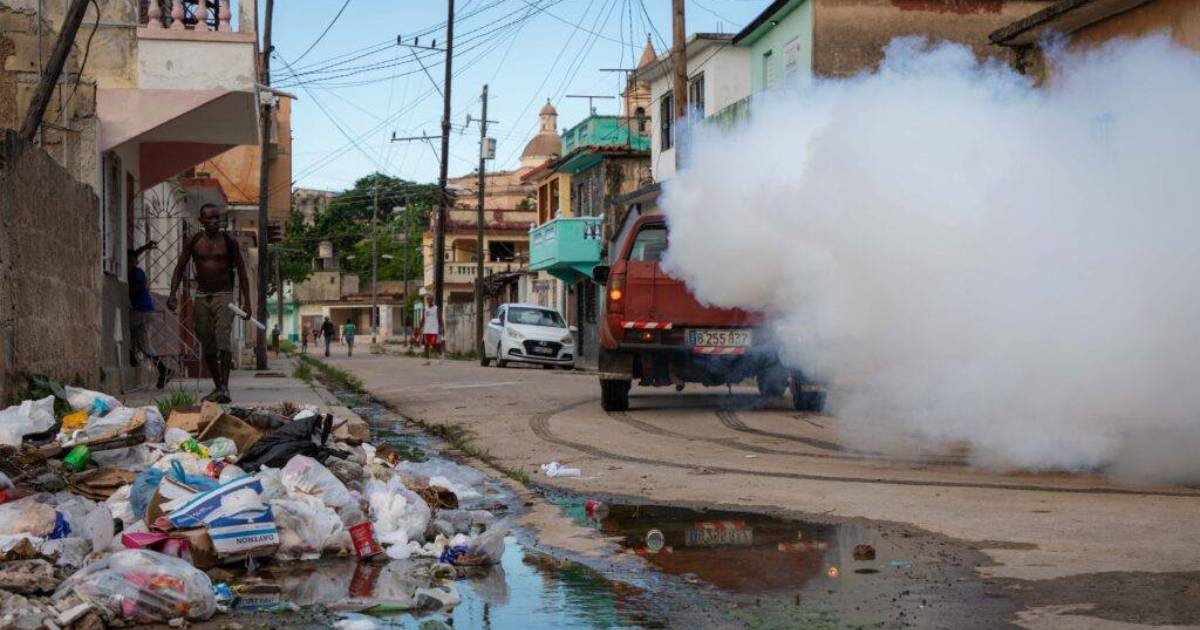
Torres criticized the health system's lack of response and the living conditions exacerbating the crisis: scarcity of medications, water, fumigation, and increasing unsanitary conditions that make mosquito control impossible. "We live in constant stress, malnourished, immunocompromised... The nights belong to the mosquitoes, rats, and cockroaches. What vector control can there be like this?" she questioned.
The journalist, who personally experienced chikungunya days earlier, had already warned about the risks posed by institutional neglect. Her message was not an attack on the system but a desperate plea from within.
Ignoring the Problem Doesn't Solve It
The Radio 26 statement does not address the health crisis but rather the political impact of an uncomfortable truth. Instead of tackling the causes of the collapse, the official machinery has focused on discrediting a personal post, as if the post were the problem, not the deaths.
Cuba is sinking into an epidemiological crisis that adds to its economic, food, energy, and migration woes. Yet the regime continues to mask figures and suppress testimonies, even when they originate from its own information apparatus. As hospitals collapse and families bury their dead without answers or statistics, the priority remains saving face, not lives.
Understanding the Chikungunya Crisis in Cuba
What is causing the chikungunya outbreak in Matanzas?
The outbreak is attributed to poor sanitary conditions, inadequate mosquito control, and a lack of resources for effective public health interventions.
How has the government responded to reports of epidemic-related deaths?
The government has denied any concealment of deaths, blaming foreign media for misrepresenting the situation, and attributing health system limitations to the U.S. embargo.
What are the main challenges in controlling the chikungunya outbreak?
Key challenges include a lack of medical supplies, insufficient fumigation efforts, and deteriorating infrastructure that hampers effective disease control.