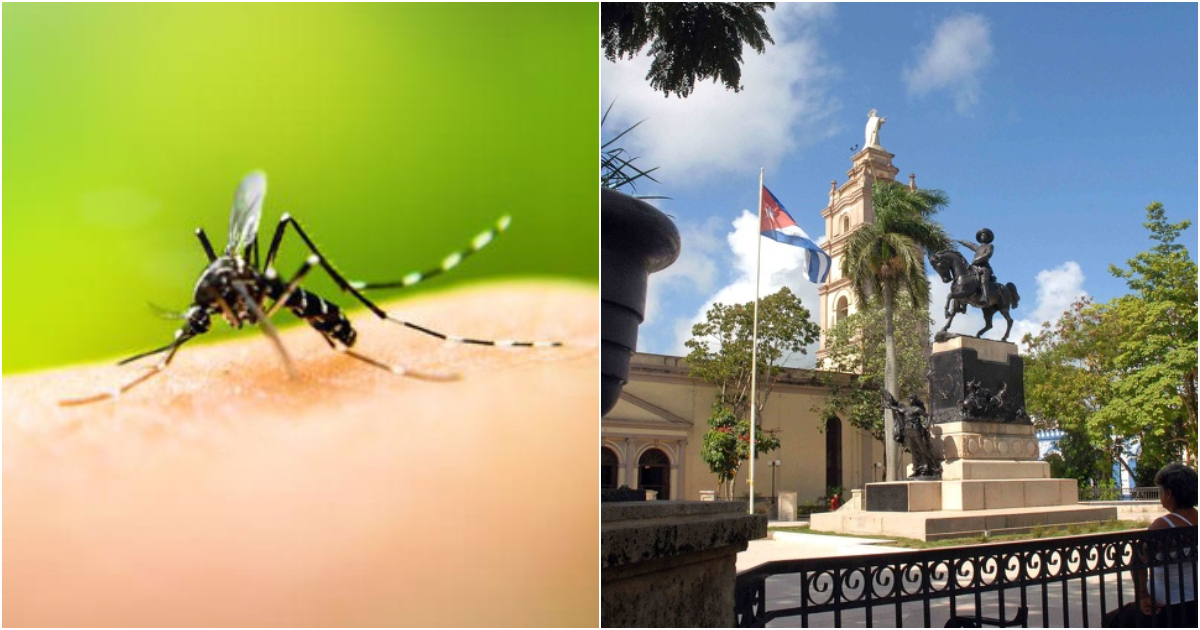
An internal message from the Municipal Health Directorate in Camagüey, intended exclusively for medical professionals, has confirmed the presence of chikungunya cases among patients in the Finlay and Pirre health areas and raised concerns about the potential spread of the Oropouche virus. Cuban journalist José Luis Tan Estrada accessed the document and shared it on his Facebook profile, emphasizing the need for "maximum seriousness" in identifying febrile cases and conducting epidemiological surveillance.
The document highlights the critical importance of monitoring febrile patients without positive IgM (Immunoglobulin M) antibodies, or those showing symptoms suggestive of arboviruses other than dengue. Health professionals are urged to promptly report any suspicions, enhance health education, and carry out vector control measures. Moreover, the message suggests that other viruses might be present in areas with prevalent fever and diarrhea, necessitating urgent differential diagnosis.
Community Concerns Over Lack of Resources
Despite the rise in febrile cases and the confirmation of mosquito-borne diseases, health authorities have yet to issue a public alert. The internal message concludes with an unusual warning: "No complacency. Stay vigilant about what's happening and, please, alert about potential outbreaks without fear."
On social media, residents of Camagüey have expressed alarm over the shortage of medical supplies, reagents, and medications. Comments indicate that garbage accumulation, water leaks, and lack of fumigation have facilitated the spread of the Aedes aegypti mosquito. "They try to hide diseases that are impossible not to detect, but the people know the real reasons," one user remarked. Others pointed out that "Cuba is a dump" and "mosquito-borne diseases can't be stopped" as cities remain unsanitary and hospitals lack basic resources.
Official Silence and Public Distrust
The government's silence on the outbreak adds to the perception of deliberate secrecy in a country where information about epidemics is often shrouded in opacity, even as infections impact multiple provinces, most notably Matanzas. Health officials in Matanzas have warned that "dengue kills," yet they have denied any deaths from chikungunya or dengue in the province, despite a recent spike in febrile cases and mounting pressure on the healthcare system.
Similarly, Cuba's Minister of Public Health, José Ángel Portal Miranda, declared that no deaths from dengue or chikungunya have occurred in Matanzas, despite reports of healthcare system collapse and increasing febrile cases. Cubans have criticized recent statements by Dr. Francisco Durán García, who claimed there have been "no reported deaths" from arboviruses in Matanzas and that "there is no collapse in health services" in the country.
The insistence on "no fatalities" contrasts sharply with citizen complaints and unofficial medical reports indicating a much direr situation, especially in a province where the healthcare system's collapse is evident. The scarcity of reagents, fumigation fuel, and laboratory equipment exacerbates the deficiencies of the Cuban healthcare system.
In this scenario, the institutional refusal to acknowledge viral coinfection and associated deaths is driven more by political motives than scientific ones. Admitting the combined circulation of various viruses would be seen as a failure in epidemiological control and public health management. As a result, the official narrative carefully avoids the term "combined arboviruses," opting instead to attribute deaths to "comorbidities," a strategy that deflects state responsibility amid a clear healthcare crisis.
Meanwhile, thousands of Cubans endure fevers, joint pain, and lengthy waits at healthcare centers, often without access to proper diagnostics or therapies. From a scientific perspective, denying epidemiological evidence has a harmful effect: it renders the viruses invisible without stopping their spread. With the Aedes aegypti freely circulating and healthcare resources limited, allowing this invisibility constitutes institutional negligence.
Understanding the Health Crisis in Camagüey
What diseases have been confirmed in Camagüey?
Chikungunya cases have been confirmed, and there is a possible circulation of the Oropouche virus.
Why is there concern over the government's silence?
The lack of a public alert despite rising cases contributes to the perception of secrecy and inadequate response to health crises.
What challenges do residents face in dealing with these outbreaks?
Residents face shortages of medical supplies, inadequate fumigation efforts, and unsanitary conditions, which exacerbate the spread of mosquito-borne diseases.