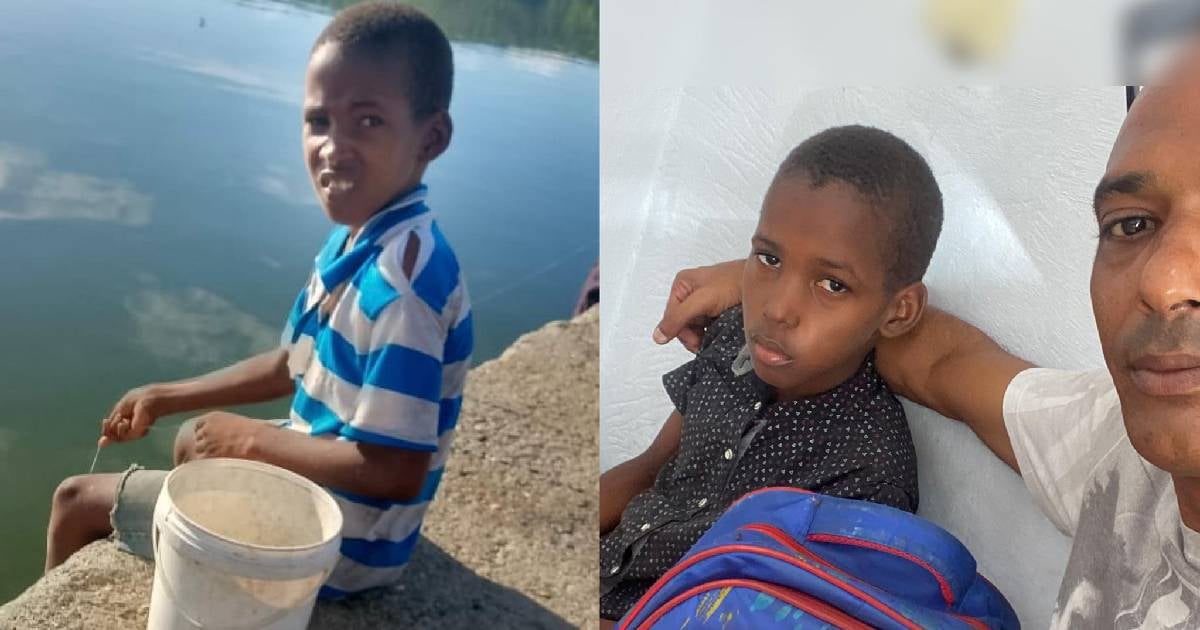
Michael, the 11-year-old boy reported missing in Santiago de Cuba, was discovered unharmed this past Friday at the Cayo dock, where he had spent two nights sleeping outdoors. His recovery was made possible through community support and the swift sharing of his case on social media.
A young man known as Anyelito Con Talento recognized Michael after seeing the search post and stayed with him until he was safely returned, as reported by independent writer Yasser Sosa Tamayo on Facebook. "There are still people who don't wait for someone else to act," wrote one of Michael's family friends, expressing gratitude for the solidarity that enabled his rescue.
Michael, who had left home voluntarily, was reunited with his mother and placed under the supervision of child authorities, who will aim to provide specialized support to address his emotional state. Close sources indicate this isn't the first time Michael has run away. "Not from hunger, but from apathy. Not from rebellion, but from unseen wounds. From those voids no one fills and absences that weigh heavier than any blow. I won't say more, out of respect," commented Sosa.
His story, which rapidly spread across social media, sparked a wave of empathy and reflection on the vulnerability of children in Cuba. The family and volunteers involved in his search thanked everyone who shared the information. "This time," they said, "social media was not noise, but a rescue."
The inefficacy of the public rapid alert system and the silence of official media have forced families with missing loved ones to seek help in the digital realm. In recent years, desperation has migrated to social networks, where photos and crucial information are shared to begin locating the missing.
The lack of state response has driven citizens to self-manage these searches, creating parallel channels like Facebook groups and WhatsApp chains. While these platforms are vital for sharing leads and testimonies, they highlight the absence of effective official protocols and the precarious situation families face.
Earlier in September, the teenager Betsy Scull Estévez, 16 years old, was found safe after six days of distress during which her family and activists desperately sought help to find her. A Cuban teenager named Deyriland Hernández Peralta, aged 17, has been missing since August 11, 2025. His uncle, Enrique Peralta, has appealed on social media for community assistance in locating him.
FAQs on Missing Children in Cuba
How was Michael found?
Michael was found thanks to the community's involvement and the wide circulation of his case on social media. A young man named Anyelito Con Talento recognized him from a search post.
What challenges do families face when a child goes missing in Cuba?
Families often face a lack of effective state response and must rely on social media and community efforts to locate missing children, highlighting the need for improved official protocols.
What role do social media play in finding missing persons in Cuba?
Social media platforms have become crucial for disseminating information about missing persons, allowing for rapid sharing of photos and details that can aid in their recovery.