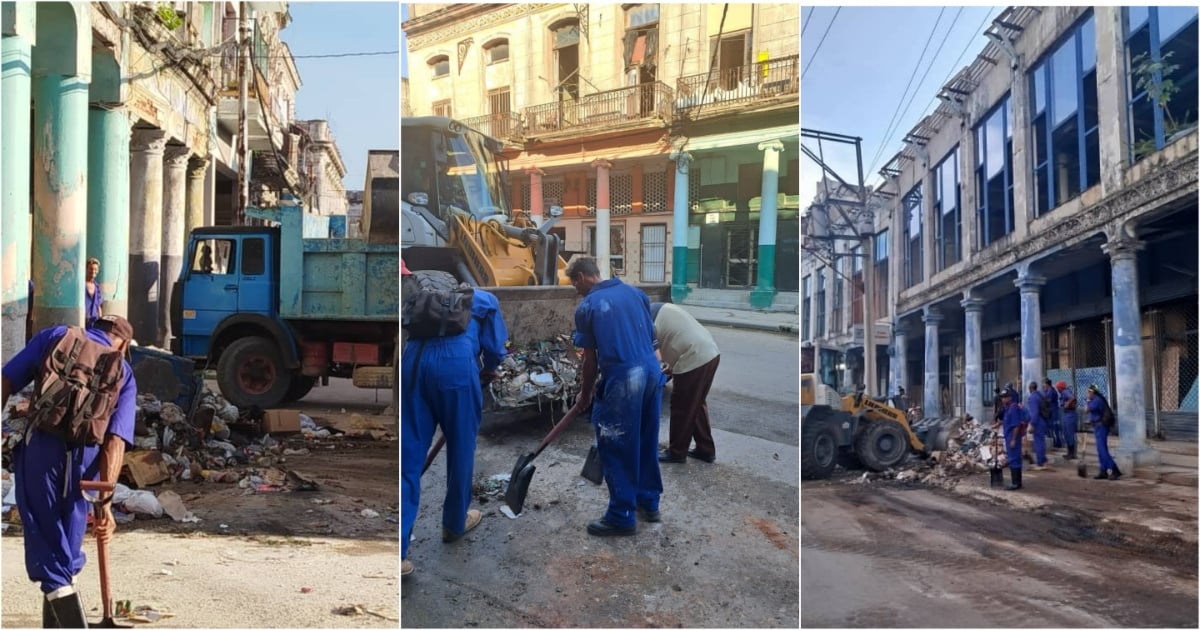
Over the weekend, employees of the Unión Eléctrica (UNE) in Cuba were acknowledged with a diploma for their efforts as they were reassigned by the regime to tackle "cleaning duties" in a Havana overwhelmed by trash. "Today, our organization received recognition for our dedication and commitment to the cleaning, sanitation, and beautification efforts in the Cerro municipality from the highest municipal authorities," the UNE shared on X.
The UNE circulated images of its workers removing debris and managing garbage in the streets of Havana, alongside the diploma celebrating their "commitment and dedication." This comes amid one of the most severe energy crises Cuba has faced in years, with blackouts exceeding 20 hours in several provinces. The regime's decision to redirect UNE workers to such tasks has sparked criticism among a weary population.
Last Thursday, these workers were also dispatched to the José Martí Anti-Imperialist Tribunal in Havana for a solidarity event with Palestine. This move, occurring during the near-total shutdown of the national electrical system, has incited outrage among citizens, who view it as another instance of the regime's skewed priorities.
"What they need to do is head to the thermoelectric plants to see if they can solve the blackout issues," remarked one frustrated father. "Since they got up early, they should figure out how to generate electricity because they have Cuba in the dark," another user criticized.
For the public, the scene is infuriating: while Cuban families are deprived of electricity, water, food, and medicine, the very workers responsible for keeping the lights on are diverted to support the regime's political agenda.
Public Reaction to UNE's Reassignment
Why were UNE workers redirected to street cleaning instead of addressing power issues?
The Cuban regime reassigned UNE workers to street cleaning tasks as part of their agenda, despite the ongoing energy crisis, which has led to public criticism.
What events led to the public's outrage regarding UNE's role?
Citizens expressed outrage as UNE workers were redirected from resolving energy issues to political events and cleaning tasks, highlighting the regime's misplaced priorities during a severe crisis.
How has the energy crisis in Cuba affected daily life?
The energy crisis has led to extended blackouts, severely impacting access to electricity, water, and essential services, thereby affecting the daily lives of Cuban families.