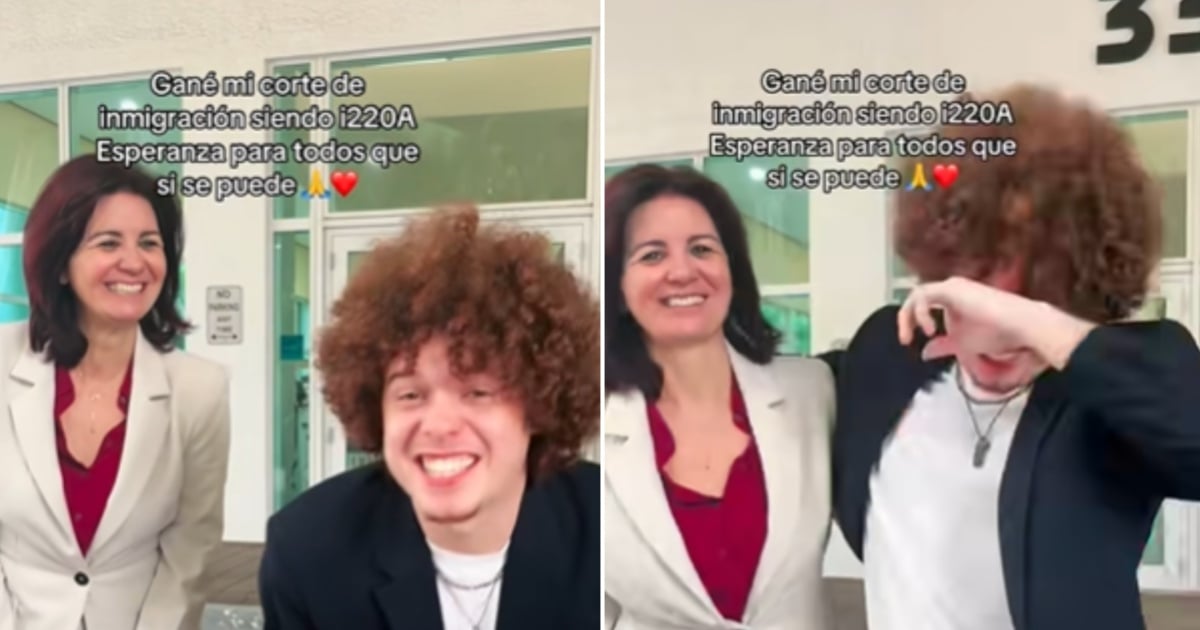
Cuban rapper David "El Rojo" Acosta has been granted political asylum in the United States after a Miami immigration court hearing that lasted four hours. During the session, he presented compelling testimony and evidence of persecution, according to sources close to the case.
Immigration attorney Liudmila Armas Marcelo shared on social media that Acosta successfully convinced the judge he met the requirements for asylum, effectively resolving his previous immigration status. "Family, I'm beyond happy. I just left my immigration court," he expressed tearfully in a video, thanking his legal team for their efforts.
The congratulatory statement emphasized the contributions of paralegal Yakelin Caraballo and the entire legal team who worked tirelessly during the cross-examination and evidence presentation. "I'm no longer I220A, I'm no longer I220A!" El Rojo shouted in excitement.
Lawyer Armas noted, "With his testimony and background, El Rojo proved he deserves protection in this country." She added that the judge had to ask him to stop speaking due to the powerful way he articulated the persecution he might face in Cuba.
This legal victory follows months of political activism from the musician while in exile, with recent tracks like "Me Duele Cuba" and "I220A," the latter reflecting his own immigration journey. His work has garnered support from exiled figures such as Willy Chirino, who invited him to perform alongside other artists in Miami, a gesture El Rojo described as crucial for his career.
Addressing his audience, the rapper expressed gratitude to his family, supporters, and the professionals who managed his case, urging those in similar situations to seek expert advice. With asylum granted, he plans to continue his musical endeavors and activism for democracy in Cuba from the U.S.
El Rojo, joined by Néstor Meneses and the iconic Willy Chirino, has collaborated on a heartfelt musical project focused on Cuba's freedom. The song captures the nation's pain from repression and decline, while also embodying the enduring hope of millions dreaming of a Cuba free from dictatorship.
Understanding Political Asylum for Cuban Artists
What evidence did David "El Rojo" Acosta present to secure asylum?
David "El Rojo" Acosta presented both testimony and evidence demonstrating persecution in Cuba, which convinced the judge of his eligibility for asylum in the U.S.
How has El Rojo's music influenced his political activism?
El Rojo's music, including tracks like "Me Duele Cuba" and "I220A," has been a platform for his political activism, highlighting issues of repression and advocating for democracy in Cuba.
Who supported El Rojo in his asylum case?
El Rojo received significant support from his legal team, including attorney Liudmila Armas Marcelo, paralegal Yakelin Caraballo, and the broader exile community, including artists like Willy Chirino.