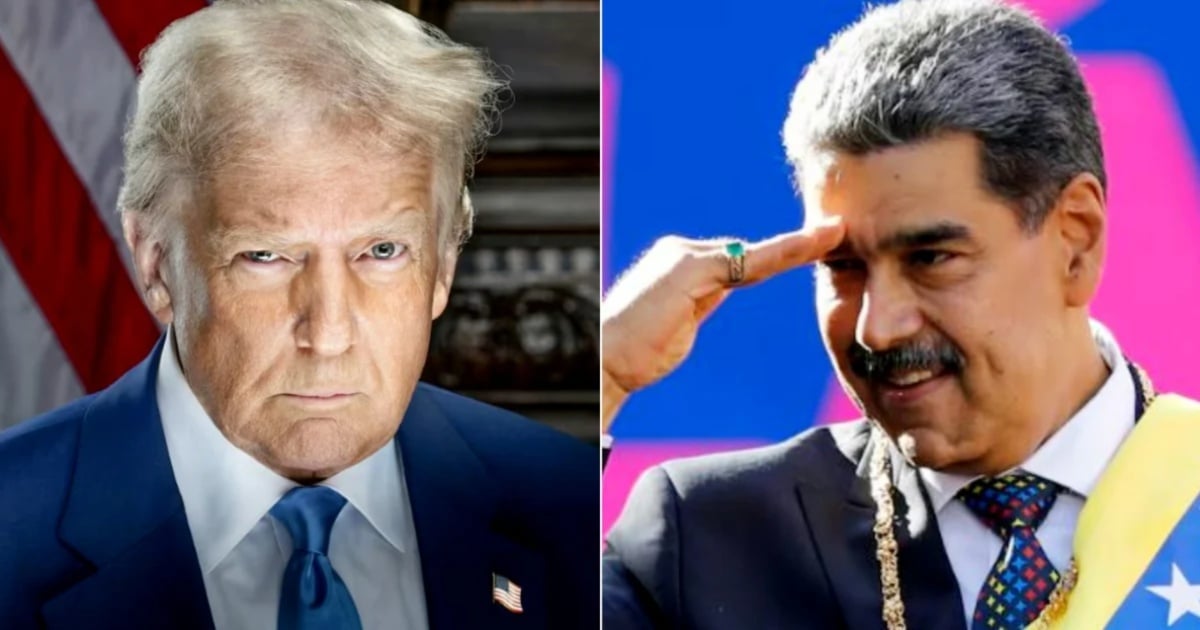
In a bid to avert a potential U.S. military intervention, President Nicolás Maduro proposed opening up Venezuela's oil and mining sectors to American companies and drastically limiting agreements with nations considered rivals to Washington. As reported by The New York Times, Maduro even went as far as to curtail crude oil shipments to Cuba, exacerbating the island's already dire energy crisis.
Secret discussions between Venezuelan and U.S. officials extended over several months, exploring the possibility of giving the United States a significant stake in Venezuela's oil and granting preferential contracts to American companies. Simultaneously, Maduro suggested redirecting crude exports from China to the U.S. market as a strategy to de-escalate military tensions in the Caribbean.
Despite progress on economic discussions, the Trump administration halted negotiations last week. This decision came after Marco Rubio, Secretary of State and a key advocate for a hardline approach toward Caracas, warned that any deal with Maduro would "legitimize a fugitive from U.S. justice."
Sources cited by the newspaper indicated that the Venezuelan leader was willing to sever ties with Beijing, Moscow, and Tehran as a "necessary price" to avoid direct conflict with the United States. This shift in oil exports left Cuba, Venezuela's principal political ally, without the fuel it heavily relies on to sustain its electrical system.
Meanwhile, U.S. companies Chevron and Shell received Treasury Department licenses to resume operations in Venezuela, a move interpreted as a sign that Washington still considers economic engagement with Caracas. Nevertheless, Maduro's diplomatic maneuver failed to achieve its intended goals of commercial normalization and sanction relief.
This strategy not only highlighted the exhaustion of the Chavista model but also demonstrated the extent to which the Venezuelan regime is willing to sacrifice its closest allies to retain power.
In late September, the Trump administration announced a tactical shift in its anti-drug campaign focused on Venezuela, moving operations from maritime to land routes. The Pentagon is contemplating the use of armed drones for targeted strikes against drug leaders and laboratories within Venezuela, although the final decision rests with Trump.
This escalation follows the Southern Command's largest mobilization since the 1980s, deploying around 7,000 troops, more than 15 warships, and F-35 fighters to Puerto Rico. During these operations, the U.S. has already sunk at least three vessels from Venezuela, in an incident resulting in 11 deaths, which Washington attributed to the terrorist organization Tren de Aragua.
The Trump administration accuses Maduro of leading the so-called Cartel of the Suns and maintains a $50 million reward for information leading to his capture, an allegation the Venezuelan government denies.
On October 3, Cuba's Minister of Energy and Mines, Vicente de la O Levy, admitted on state television that "the fuel won't last the entire month of October," and that Cuba only has reserves "for a few days."
This acknowledgment of a new fuel crisis comes just two years after the government promised an "energy recovery" following the collapse of 2023. However, last month, Cuba witnessed a significant increase in Venezuelan oil supply, with ships returning to its ports after months of shortage.
In September, the island received the largest amount of oil this year, averaging 52,000 barrels per day (bpd), an increase of nearly 80% compared to the 29,000 bpd received in August. In July, 31,000 bpd of crude, gasoline, and jet fuel arrived from the South American nation, according to data and documents.
It should be noted that Cuba received up to 96,300 bpd of crude from the state-owned Petróleos de Venezuela S.A (PDVSA) in 2011.
Cuba is currently facing its most severe energy crisis in recent history, driven by an outdated National Energy System (SEN) and power plants operating far beyond their functional capacity. The lack of necessary fuel for generation has worsened the situation. Despite announcements of new investments and import agreements, the country remains trapped in a cycle of breakdowns and extended maintenance.
With power outages exceeding 20 hours a day in many areas, public frustration is mounting, contrasting with the official narrative that continues to blame external factors rather than acknowledging the government's direct responsibility.
Impact of Venezuelan Oil Cuts on Cuba's Energy Crisis
What led to the reduction of Venezuelan oil shipments to Cuba?
Nicolás Maduro reduced oil shipments to Cuba as part of a strategy to avoid a U.S. military intervention by opening up Venezuelan oil projects to American companies and limiting agreements with rivals of Washington.
How has the reduction in oil affected Cuba?
The cutback in oil shipments has exacerbated Cuba's severe energy crisis, leading to fuel shortages that significantly impact the island's electrical system and result in prolonged power outages.
What actions has the Cuban government taken in response to the energy crisis?
Cuban authorities have acknowledged the fuel shortages and are attempting to manage the crisis, though the country remains trapped in a cycle of breakdowns and extended maintenance despite new investment and import agreements.