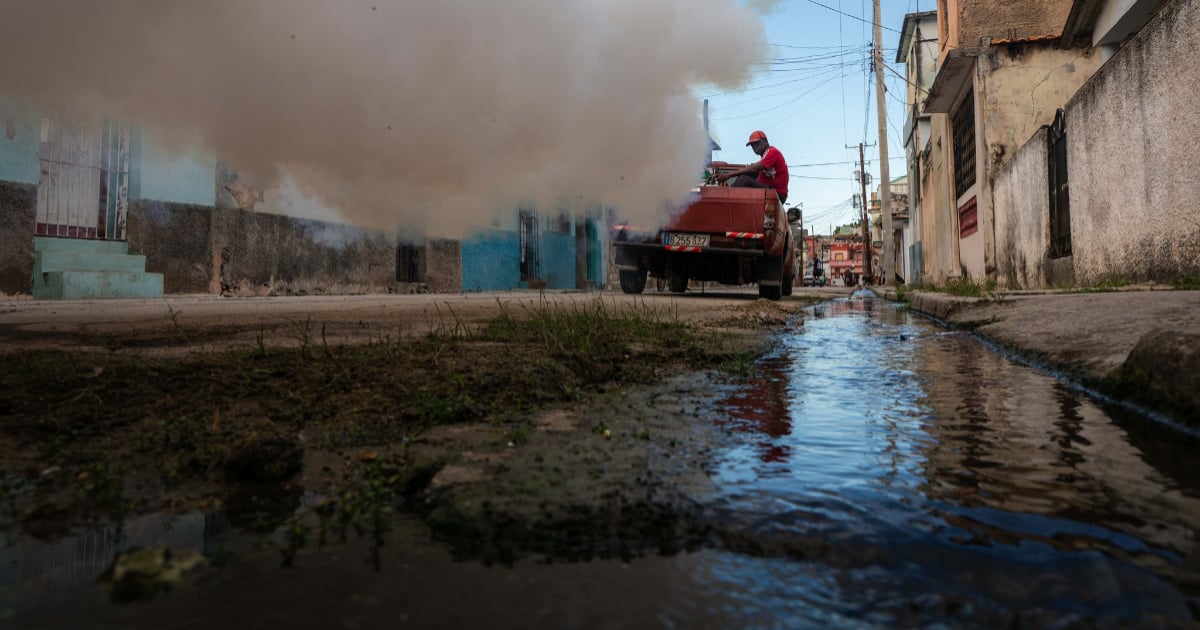
Alina Bárbara López Hernández, a Cuban historian and activist, has accused both national and provincial authorities of distorting the reality of a severe health crisis impacting Matanzas province. "I am appalled by the manipulation, deceit, and justifications given by political and medical authorities at both the national and provincial levels concerning the dire situation in Matanzas," she expressed in a Facebook post.
According to López, there is an explicit directive to deny deaths caused by arboviral diseases. "The directive to deny deaths from arboviral diseases is in place, confirmed by Dr. Durán, the Minister of Health, and Matanzas authorities," she stated. While acknowledging that chikungunya is not typically fatal, she warned that it can lead to complications resulting in deaths, particularly among infants under one year, the elderly over 65, and those with chronic conditions such as hypertension or diabetes. "Their death certificates won’t list 'Chikungunya,' but that is what triggered the end," she added.
The academic also highlighted the ongoing shortage of essential medications. "For several months, pharmacies in the province have not stocked antihypertensives, diuretics, diabetes medications, or blood glucose testing reagents," López noted. "It was only yesterday that enalapril became available after a prolonged absence."
Regarding access to pain relief and fever-reducing medications during the outbreak, she remarked, "Pharmacies have hardly sold any paracetamol or rehydration salts, and when they have, it’s been symbolic: two sachets of salts per clinic, which can serve over a thousand patients."
She questioned the official narrative of no reported deaths: "If, as authorities claim, there has been no increase in fatalities, how do they explain the 'bottleneck' at Faustino Pérez Provincial Hospital's morgue last weekend? The delay in coffin delivery was because the coffin liners were also sick. Is it normal for so many people to die over a weekend?"
Official Denial: No Deaths, No Collapse
Dr. Francisco Durán García, the national director of Epidemiology, stated on October 8 that "no deaths have been reported" due to the circulating viruses and that hospitals have not collapsed. "While healthcare pressure is high, there are no fatalities," he claimed.
The Minister of Public Health, José Ángel Portal Miranda, supported this stance during a meeting with Communist Party officials in Matanzas. "There are no deaths in Matanzas from this disease. There are no severe or critical cases. No one can hide an epidemic or the dead," he declared.
Public and Journalistic Opposition to Official Claims
Official statements have sparked a wave of critical reactions from citizens. One user wrote, "Dr. Durán, with all due respect… you can’t hide the sun with a finger. People, including children and the elderly, are dying… Hospitals are disgusting, there aren’t even resources for a basic test."
Another internet user accused, "That man stands before the public to manipulate statistics. His job should be to demand the government and the Ministry of Public Health address this situation." Matanzas journalist Yirmara Torres Hernández, former president of the Union of Cuban Journalists (UPEC) in Matanzas, also broke her silence. "There are no deaths, but there are," she recounted, sharing the story of a neighbor who died from chikungunya and criticizing the constant stress, poor nutrition, and weakened immunity. "Mosquitoes, rats, and cockroaches dominate the nights… What kind of vector control can exist under these conditions?"
"The pain comes from neglect. The pain comes from insults to our intelligence. The pain comes from mockery," she concluded.
A Defiant Voice
Alina Bárbara López’s history as a critical intellectual and activist has made her one of the most prominent voices of dissent in Cuba. Expelled from the UNEAC in 2024 for openly criticizing the regime, she has faced arrest, beatings, and smear campaigns. Currently, she faces a four-year correctional labor sentence without internment for alleged crimes of "contempt, disobedience, and assault" following her arrest en route to a peaceful protest.
In this context, her words carry significant weight. "The minister tried to sound calm but instructed the visiting Health Ministry delegation to extend their stay," she revealed in her post. Amidst institutional silence, social distrust, and healthcare precariousness, López left no room for doubt: "This is called an EPIDEMIC."
Understanding the Health Crisis in Matanzas
What is causing the health crisis in Matanzas?
The crisis in Matanzas is attributed to an outbreak of arboviral diseases, including chikungunya, exacerbated by a shortage of essential medications and a lack of adequate healthcare resources.
How has the Cuban government responded to the health crisis?
The Cuban government has officially denied any fatalities or hospital collapses due to the crisis, asserting that healthcare facilities are managing despite the increased pressure.
What are the criticisms against the government's handling of the crisis?
Critics, including citizens and journalists, argue that the government is downplaying the severity of the situation, manipulating information, and failing to provide necessary medical supplies and vector control.