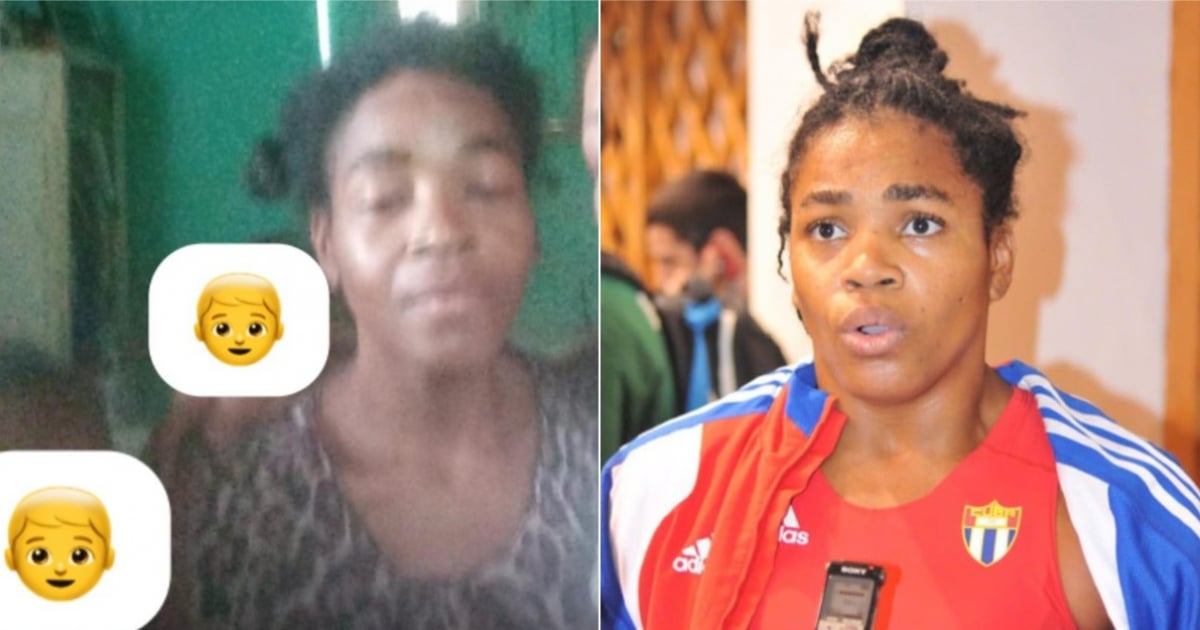
Lisset Hechavarría Medina, a former Cuban wrestler and Pan American champion, who was also a trailblazer for women’s wrestling in Cuba, is currently facing a dire situation that has shocked the sports community. As revealed by former wrestler and social media influencer Roly Damaso on Facebook, Hechavarría is living in severe poverty with clear psychiatric issues, residing in a decrepit home, while her two young children, aged six and eight, depend on her.
Damaso explained that during moments of clarity, Lisset returns to her dilapidated house, but she spends much of her time homeless. Her health condition is alarming, and her behavior signals a deterioration that urgently requires medical attention. “She is not employed. Her living conditions are unacceptable given her sports achievements and the dignified, entrepreneurial life she once led,” he emphasized.
Accountability of Cuban Authorities
The whistleblower also pointed fingers at official institutions. “This former athlete needs professional medical care, a stable job, and improved living conditions. The INDER of Santiago de Cuba and the Cuban government are the only ones who can guarantee this. The support from her team members is commendable but not enough nor sustainable,” he stated.
A Sports Icon Forgotten
The saga of Lisset Hechavarría is underscored by accomplishments that once brought pride to Cuban sports. Born on April 28, 1984, in Santiago de Cuba, she was among the first Cuban women to achieve international wrestling success, paving the way for future generations. Her accolades include a gold medal at the 2011 Pan American Games in Guadalajara, seven medals in Pan American Championships (gold in 2013 and 2014), and another gold in the 2014 Central American Games in Veracruz.
However, her current reality starkly contrasts with her past glory: she endures institutional neglect, a lack of specialized medical care, and social hardship.
Censorship and Public Outcry
Following the public outcry, Damaso claimed that the Cuban regime ordered the denial of the athlete’s situation, which he regarded as yet another instance of official censorship: “This is how the leadership acts without fear of God,” he expressed. The public’s comments reveal a mix of outrage and sadness.
“These communist mercenaries use them and then abandon them,” wrote one Cuban from Pinar del Río. Coach Yoennis Chapman Toledo from Las Tunas urged athletes and sports legends from Cuba and around the world to join forces to help their fellow athlete: “She is a warrior both on and off the wrestling mats. It’s time to help.”
Another wrestling coach in the United States lamented the severity of the case: “Nerve issues are delicate and complex to treat. We’ll see how we can all support.” A surprised resident of Santiago de Cuba recalled speaking with Lisset last year. “I saw her nervous, but I didn’t think it would come to this point.”
Other users were more critical: “This is what many of our sports legends experience: abandoned and in precarious situations. The younger ones won’t escape this fate. It’s happening to everyone, not just sports legends, but also doctors, teachers, and workers in general.”
A Fall That Questions the System
The tragic condition of Lisset Hechavarría reflects a pattern that affects many Cuban athletes after retirement: neglect, poverty, and lack of institutional support. While the government boasts about the historical achievements of Cuban sports in official events, the life stories of those who won those medals reveal the other side: hardship and abandonment.
“Only with the truth can we demand solutions from the competent authorities,” Damaso concluded in his post.
FAQs on Lisset Hechavarría's Situation
What are Lisset Hechavarría's major achievements?
Lisset Hechavarría has won a gold medal at the 2011 Pan American Games in Guadalajara, seven medals in Pan American Championships, and another gold at the 2014 Central American Games in Veracruz.
What is the current situation of Lisset Hechavarría?
Lisset Hechavarría is living in severe poverty, facing psychiatric issues, and lacks stable housing. She is not employed, and her living conditions are dire.
What actions have been taken to help Lisset Hechavarría?
Her former teammates are providing support, but it is not enough. Calls have been made for the Cuban government and INDER to provide professional medical care and stable living conditions.