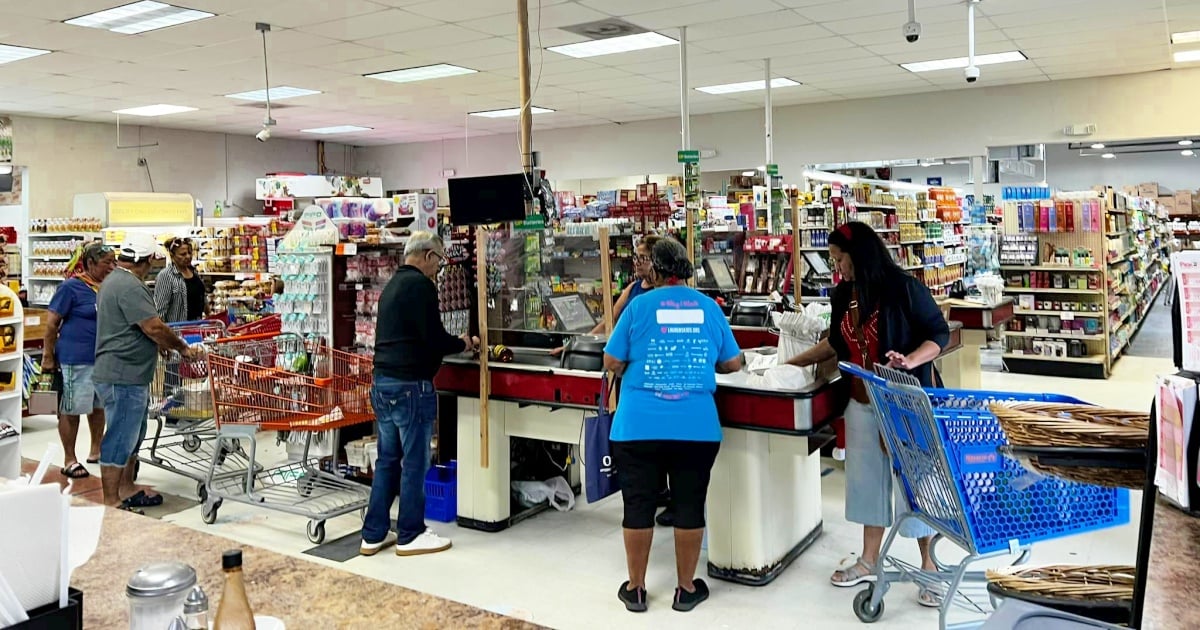
The El Miri Supermarket, located at 1574 W. 39th Place in Hialeah, has been hit with five suspension-of-use orders from the Florida Department of Agriculture and Consumer Services. Inspectors found multiple severe violations concerning hygiene and food safety at the store. Among the issues discovered were unprotected raw foods, equipment contaminated with food debris, refrigerators failing to maintain the correct temperature, and a lack of essential cleaning and disinfection facilities.
The official report, referenced by the Miami Herald, stated that "all open food processing/distribution equipment and utensils" and "all food equipment and utensils" were prohibited from use. These measures were taken by inspectors Francis Odio and Caridad Delgado during an inspection conducted last Thursday, with findings published on the department's website on Tuesday.
While such inspections don't automatically lead to the closure of a supermarket—unlike restaurants, which are governed by a different state agency—the suspension orders can disable key areas or equipment, directly impacting the store's operations.
Key Hygiene Issues and Equipment Contamination
One of the most critical violations found at Miri Supermarket was the complete absence of hand-washing stations in food processing areas, preventing staff from maintaining basic personal hygiene standards. Additionally, the store lacked a three-compartment sink, crucial for the manual cleaning, rinsing, and disinfecting of kitchen utensils.
As a direct result, the use of numerous food-contact equipment was suspended, including a band saw with "old food debris embedded" and a slicer with "old residues and dirt accumulation behind the blade." The absence of probe thermometers needed to ensure food safety temperatures led to a suspension order on food processing activities at the location.
Refrigeration Issues and Unsafe Food Storage
Refrigeration problems were also prevalent. The store's coolers, both in the back and retail areas, were operating at temperatures exceeding 50 degrees Fahrenheit, far above the maximum allowable limit of 41 degrees for preserving perishable goods. Consequently, items such as raw chicken breast and pork chops reached internal temperatures between 47 and 50 degrees, leading to an immediate suspension of their sale.
Structural Concerns and Pest Control Failures
The inspection uncovered significant structural and sanitary deficiencies. Inspectors reported a "black mold-like substance buildup" on a wall in the produce area, "dead flies in the bulk meat cooler," and "flying insects throughout the store." Foam trays for meat were found unprotected, food shelves were rusted, and an insect control device was hanging directly over a slicer on the same table where open foods were prepared.
Moreover, an employee was caught handling food without washing their hands first, a direct violation of health regulations. The report also cited "water damage to ceiling tiles, missing ceiling tiles, and missing floor tiles throughout the establishment," posing further contamination risks.
To complicate matters, the supermarket was operating without a valid food permit for 2025, exacerbating its legal issues with authorities.
Steps Required for Resuming Operations
According to the report, the suspension orders can only be lifted if the supermarket implements several corrective measures, including:
- Installing a three-compartment sink.
- Incorporating chemical sanitizer with test strips.
- Adding a functional hand-washing station with hot and cold water.
- Providing a thin-probe thermometer for temperature control.
A Community Safety Wake-Up Call
Although these penalties don't automatically shut down the store, they serve as a wake-up call to both consumers and authorities. The Florida Department of Agriculture and Consumer Services maintains an online portal where inspection results are published, allowing citizens to review the history of each establishment.
FAQs on Supermarket Violations and Public Safety
What are the consequences of failing a health inspection for supermarkets?
Failing a health inspection can lead to suspension orders, which may disable essential areas or equipment, affecting operation. It can also result in legal action and damage to the store's reputation.
Why is refrigeration temperature important for food safety?
Proper refrigeration is crucial for preventing bacterial growth and preserving food quality. Temperatures above 41 degrees Fahrenheit can lead to spoilage and foodborne illnesses.
How can consumers check the safety record of a supermarket?
Consumers can visit the online portal maintained by the Florida Department of Agriculture and Consumer Services to view inspection results and the history of any establishment.