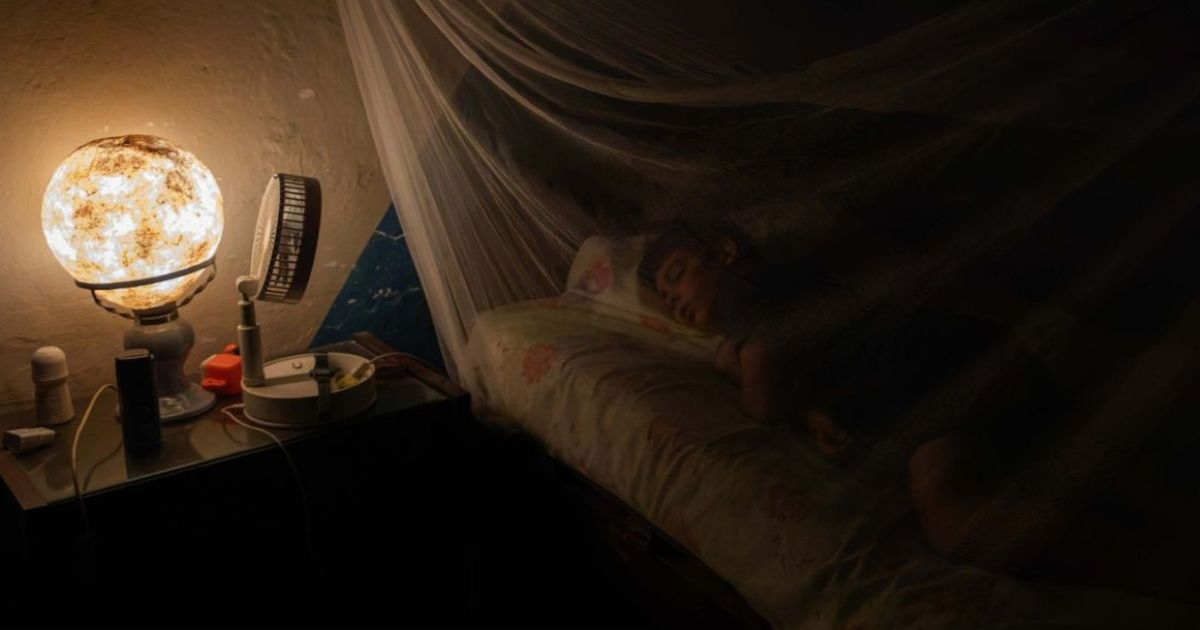
The current health crisis in Matanzas has deeply unsettled many Cubans, worried about the diseases plaguing the region and the secrecy that shrouds the government's response. This silence fuels fears that the situation might be more dire than the authorities are willing to admit. Recently, these concerns gained momentum when a voice from within the official ranks dared to speak out.
Yirmara Torres Hernández, a journalist associated with local radio, took to Facebook to share a poignant message. She exposed the deaths in her community linked to a chikungunya outbreak, directly opposing the official narrative that denies any fatalities. "They say there are no deaths, but there are," she declared on Thursday, recounting the heartbreaking story of her son's neighbor, an elderly woman who succumbed to chikungunya while battling another illness.
The story, shared by Torres's own son, highlights the deep personal impact of these tragedies, directly challenging the regime's denial of deaths due to the epidemics hitting Matanzas. The journalist also shared other accounts from Matanzas residents, including a former university professor who revealed that her grandmother's husband died at the Faustino Pérez Provincial Hospital after just one day of treatment for one of these viruses.
Breaking Through the Official Narrative
Previously, Torres had warned about her own experience with the illness, urging people to look past the government's optimistic rhetoric. "When the fever began to subside and I could hold my phone, I wrote about my chikungunya experience... I warned about what could happen if nothing was done," she noted, admitting that she was aware of fatal cases even then, though they weren't officially attributed to the virus. "Many people privately messaged me to share their stories of deceased loved ones," she confessed.
Her words echo the dark days of the COVID-19 pandemic when the Cuban government publicly denied fatalities, despite the public's knowledge to the contrary. Torres also highlights the structural issues exacerbating the crisis: the scarcity of water, medicines, electricity, growing unsanitary conditions, and the complete neglect of vector control measures.
A Cry Against Official Apathy
"We live under constant stress, malnourished, immunocompromised..." she lamented. "The nights belong to the mosquitoes, rats, cockroaches... How can there be vector control in such conditions?" Torres doesn't hide her disillusionment with the official stance that insists everything is "under control."
"What hurts is the abandonment. What hurts is the insult to our intelligence. What hurts is the mockery," she asserts, her words starkly contrasting the usual official and obscurantist rhetoric surrounding epidemics in Cuba. Her message has sparked a significant reaction, not only because of its raw honesty but also because it comes from a journalist within the system, in a province where the Public Health Ministry has downplayed the crisis, and the government has hastily set up hospitals due to the collapse of pediatric centers.
Amid censorship, misinformation, and fear, Torres's words stand out as a rare display of sincerity from within the state-controlled media: "Many families, neighbors, and the doctors and politicians who haven't lost their humanity know this."
Understanding the Health Crisis in Matanzas
What diseases are currently affecting Matanzas?
Matanzas is currently dealing with an outbreak of chikungunya, among other health issues, which has been exacerbated by the lack of effective response from the authorities.
How has the government responded to the health crisis?
The government has largely downplayed the severity of the situation, denying fatalities and failing to provide adequate resources or measures to control the outbreak.
What are some of the structural issues worsening the crisis?
The crisis has been worsened by a lack of basic necessities like water and medication, insufficient electricity, poor sanitary conditions, and neglect of vector control efforts.