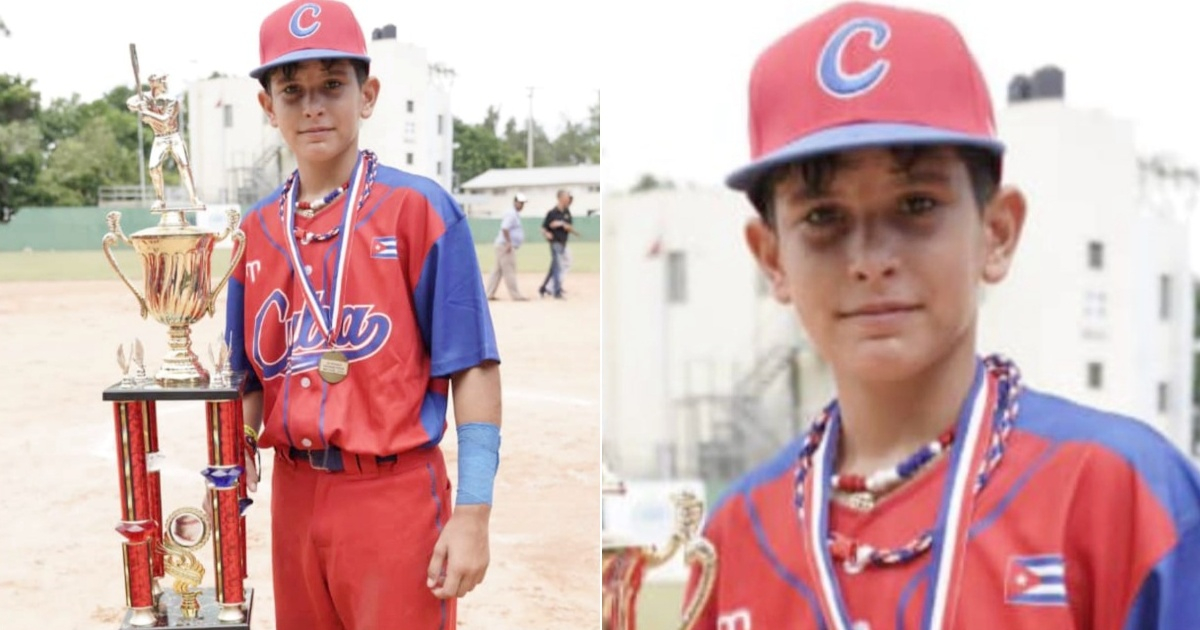
The exodus of Cuban baseball talent continues to unfold with the recent departure of 12-year-old outfielder Aniel Oscar Ramírez. Accompanied by his father, he has left Cuba for the Dominican Republic, an event that has triggered renewed discussions on youth sports emigration, the state of baseball in Cuba, and the impact of family decisions on young athletes' futures.
Hailing from Matanzas, Ramírez was part of the Cuba U-10 team in November 2022, representing the nation in a Mexican tournament. He will now train at the esteemed academy run by coach Javier Rodríguez, with the potential to sign with a Major League Baseball team as early as 2030 when he turns 16. Journalist Francys Romero highlighted Aniel's remarkable height for his age, indicating significant physical potential. "Ramírez is 1.76 meters tall and shows great promise," noted Romero, adding that since 2022, seven players from the Cuba U-10 team have left the island.
Aniel also participated in the XII Pan American U-12 tournament in the Dominican Republic and was part of the Cuban preselection for the 2024 Pan American tournament in Panama, although health issues prevented his attendance, according to a comment made by his mother.
Controversial Choices: Risk or Future Investment?
The young player's departure has ignited a flurry of social media reactions, showcasing a divide between those who view the decision as a gateway to development and professional success, and those who see it as premature and risky. One commenter labeled it a "grave error" by the father, arguing that Cuba still offers a comprehensive sports training system. "Five years before he can sign... all the investment during these years will be charged at the end if he signs. Leaving a year before the signing period would have been enough."
Conversely, another user defended the context and challenges faced by families on the island: "You have to start early here, my friend."
Educational Concerns: What About School?
A recurring worry is the neglect of academic education when children emigrate at such a young age to focus solely on training. One Cuban remarked, "Academic education should go hand in hand, which doesn't happen with these athletes who arrive at academies without receiving any education... Most don't even reach ninth grade." Another comment pointed out the poor educational quality in Cuba: "In Cuba, after 11-12, there are neither teachers nor any sports equipment available."
Challenges and Opportunities in Cuban Sports
Amid differing opinions, many agree that the decision to leave is a reflection of the systemic crisis in Cuban sports, characterized by a lack of materials, coaches, and genuine opportunities for advancement. "What future exists for this sport?" questioned a user, emphasizing the structural limitations trainers and athletes face in the country.
A Cuban went further, stating, "Often, you're a good athlete, but due to 'connections'... you don't get anywhere. Opportunities arise not when you want them but when they appear." Some believe that without a professional league or real ties with the MLB, the exodus will continue across all categories.
Despite the debate, Aniel's story has also drawn a wave of solidarity, congratulations, and well-wishes from both known and anonymous supporters. Even skeptics recognize the difficulty of the decision and the legitimacy of aspiring for a better future outside the country.
An Unstoppable Exodus
Aniel's journey is not isolated. In recent years, other young Cuban baseball players, aged 12 or 13, have also left the country seeking similar opportunities. Kendry Enrique Abreu, Mario Serra, Samuel Palencia, Luisban Sánchez, Yosmín Fuentes, and Cristian Lías are among those who've taken this path. Each story adds to a growing pattern defining the present state of Cuban youth baseball: leaving young, training abroad, and dreaming big from an early age.
Aniel Oscar Ramírez's departure is another chapter in a deepening trend: families risking everything for a dream, confronting a system that offers no viable alternatives within the island. His journey represents not only the start of a sports career but also a reflection of today's Cuba, where young talent faces adult decisions driven by urgency, progress aspirations, and fear of being left behind.
FAQs on Cuban Youth Baseball Exodus
Why did Aniel Oscar Ramírez leave Cuba?
Aniel Oscar Ramírez left Cuba to train in the Dominican Republic under a renowned coach, seeking better opportunities and the possibility of signing with a Major League Baseball team in the future.
What are the concerns about young athletes leaving Cuba?
Concerns include the neglect of academic education, the risks of leaving at a young age, and the pressure of family decisions on young athletes' futures.
What challenges does Cuban baseball face?
Cuban baseball struggles with systemic issues, including a lack of materials, coaches, and opportunities for players to advance competitively.