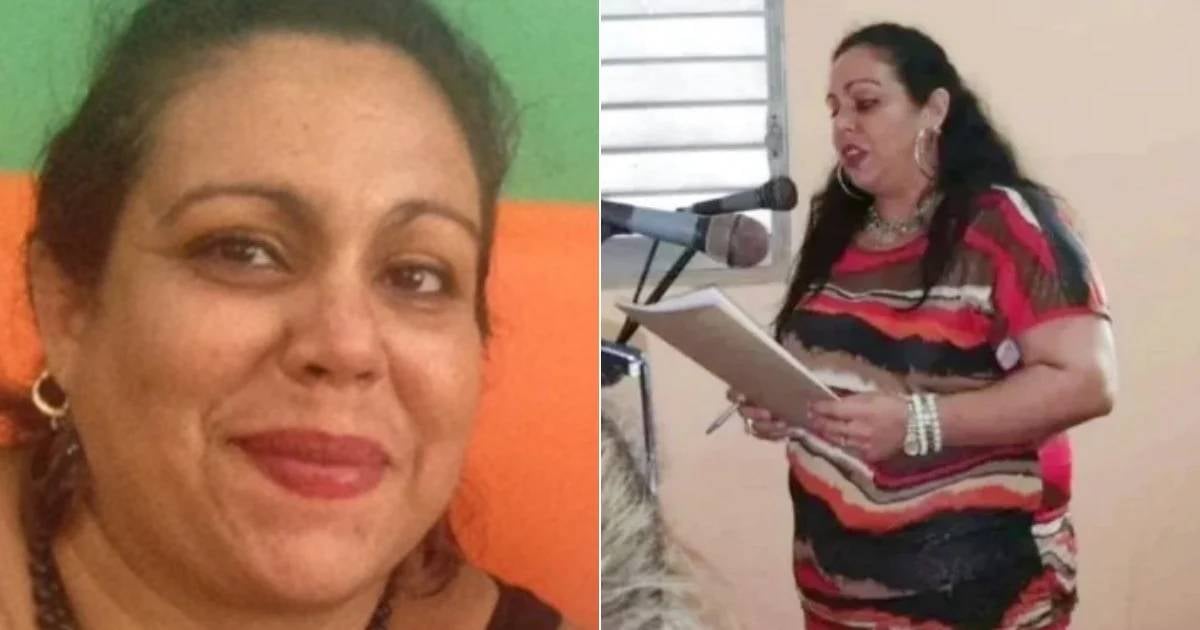
Upon her return to Cuba, former judge Melody González Pedraza, recently deported from the United States, was questioned by state security forces, as confirmed by multiple sources to Diario de Cuba. González Pedraza, who once presided over the Municipal Court of Encrucijada in Villa Clara, was expelled from the United States on September 25, four months after a U.S. immigration judge denied her political asylum request. Upon landing in Cuba, she was separated from other deportees and taken to an office where she was interrogated by officials from the Ministry of the Interior. The Cuban government has remained silent on her repatriation and has not provided any information regarding her current status.
"An Interview to Assist Her"
According to a source close to the former official, the authorities of the Cuban regime claimed the meeting was meant to "assist her" by assessing her health, immediate plans, and the source of statements she made to Diario de Cuba during her detention in the United States. The conversation was abruptly cut short when González, who suffers from hypertension and diabetes, began to feel unwell. However, before it ended, the agents informed her that she would not be allowed to hold any position within the Cuban judicial system again.
Speculation of Legal Proceedings
In Villa Clara, legal sector sources report rumors of potential legal action against the former judge due to her public statements criticizing the lack of judicial independence in Cuba. During an internal meeting of prosecutors in Santa Clara, some officials suggested this possibility, though others opposed any retaliatory measures. A young prosecutor even stated she would resign if González Pedraza were prosecuted, as reported by one of the attendees. Most participants believed the former judge should be allowed to rebuild her life "in peace and freedom," as the cited media, which has closely followed the story, reported.
Living Under Surveillance
Currently, González Pedraza and her husband, William Hernández Carrazana—who was also deported months earlier—live in a borrowed apartment under precarious conditions. Both have chosen to keep a low profile and avoid contact with people outside their immediate family circle. Before emigrating, the former magistrate lived in government-assigned housing. Now, she remains under discreet surveillance and is unemployed, according to local sources.
From Judicial Bench to Failed Asylum Bid
The former judge traveled to the United States on May 30, 2024, as part of the humanitarian parole program initiated by the Biden Administration. In later interviews, she admitted to having acted under State Security coercion when convicting four young men of assault without sufficient evidence—a case for which she expressed regret. Nevertheless, U.S. authorities denied her political asylum after discovering she had been an active member of the Communist Party of Cuba until shortly before her departure, which undermined her legal grounds to remain in the United States.
A Family Divided
Her brother, Ruber González Pedraza, remains detained by U.S. Immigration and Customs Enforcement (ICE) after being arrested on September 16. According to family members, he signed voluntary departure papers, allowing him to potentially reapply for entry in ten years. In contrast, his sister and brother-in-law, having been officially deported, could face an entry ban of ten to twenty years, or even permanently.
The case of Melody González Pedraza highlights the contradictions and dangers faced by former Cuban officials who break away from the system and seek refuge abroad: a return marked by isolation, fear, and the threat of further reprisals.
Understanding the Repatriation of Cuban Officials
What led to Melody González Pedraza's deportation from the United States?
Melody González Pedraza was deported from the United States after her request for political asylum was denied. U.S. authorities did not find sufficient grounds for her asylum claim, primarily because she had been an active member of the Communist Party of Cuba prior to her departure.
What are the potential consequences for González Pedraza upon her return to Cuba?
Upon returning to Cuba, González Pedraza faces the possibility of legal proceedings due to her public criticisms of the Cuban judicial system. Additionally, she has been informed that she will not be allowed to hold any judicial position again.
How is González Pedraza currently living in Cuba?
González Pedraza and her husband are currently living in a borrowed apartment under difficult conditions. They have chosen to lead a low-profile life and have limited contact with others outside their family.