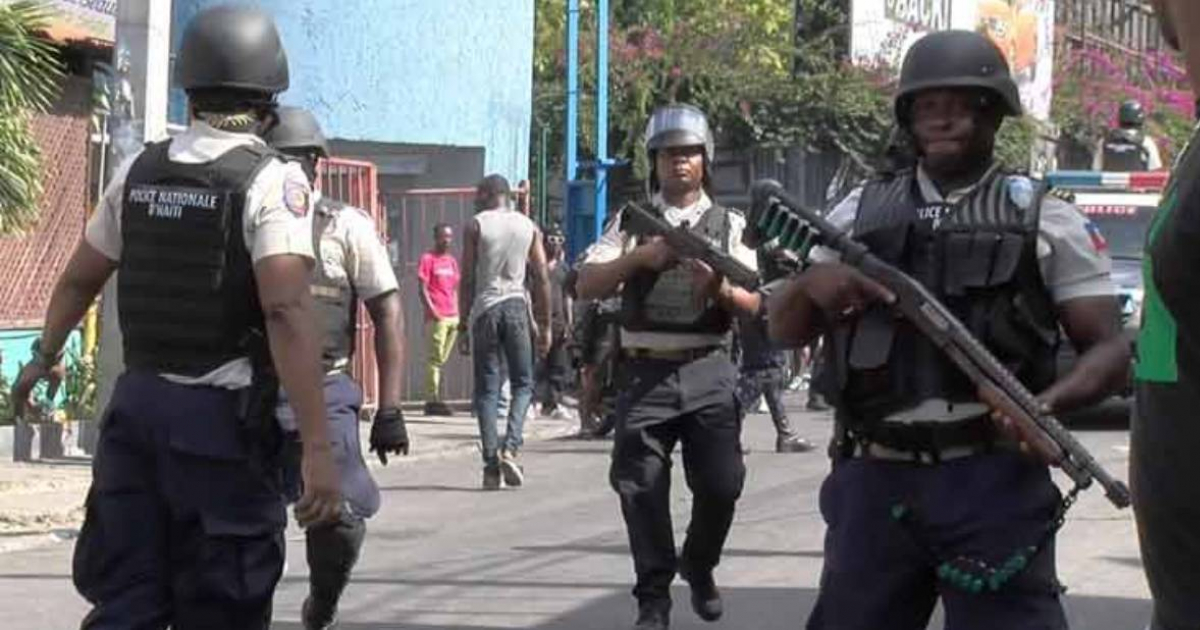
At least twenty Haitian police officers, injured in battles against gangs, are currently stuck in Cuban hospitals without state support, compelled to pay for their treatments out of pocket. This revelation comes from an investigation by the Haitian media outlet AyiboPost. These officers, many suffering from bullet wounds and traumatic injuries, were transported to Cuba by the Haitian government. However, once on the island, the Cuban healthcare system demands payment for every service, without exception, despite a severe shortage of medications in the country.
"I don't regret joining the police force, but we're treated like replaceable parts," stated one of the affected officers, who had to fund two surgeries himself after his insurer refused to cover the costs. According to Vikerson Garnier, director of the Office of Accidents, Illnesses, and Maternity of Haiti (OFATMA), the officers’ treatments are contracted through the private firm "Good Money," which acts as an intermediary between the Haitian government and the Cuban healthcare system.
Good Money, which lacks a physical office or official website, receives a commission of 3% to 4% for each treatment and is supposed to transfer the funds to the Cuban hospital once the medical plan is executed. However, numerous officers report that payments have not been made, leaving them without essential medical attention or medications.
"Cuban doctors do not provide care without the corresponding payment," asserted Mathieuny Sidel, spokesperson for the Haitian National Police Union (SYNAPOHA), who described the situation as inhumane and opaque. The issue reached a critical point with the death of Haitian inspector Jean Bernard in a Cuban hospital on June 28. The officer, suffering from terminal cancer, died alone, pleading to be repatriated to Haiti to spend his final days with family.
"Without my family's help, I would already be dead," confessed another officer injured during an operation in Delmas in March 2024, who has spent large sums on medications without receiving any reimbursement from his insurer. In another instance, a police officer who arrived in Cuba in October 2024 after being shot in the leg claims his treatment was incomplete because the medical commission refused to cover his sciatic nerve injury. He is now back in Haiti, without rehabilitation.
Cuban doctors themselves admit the medication shortage is critical due to the U.S. embargo. Most antibiotics, painkillers, and drugs for chronic diseases must be imported with dollars, which are scarce in the country due to the downturn in tourism. This has led Good Money to seek medicines in Jamaica or Panama, yet patients remain underserved.
The situation raises serious questions about the suitability of Cuba as a destination for treating critically injured individuals. Between June 2024 and June 2025, at least 33 Haitian police officers died, 48% during operations against armed gangs, according to figures from the Réseau National de Défense des Droits Humains (RNDDH). Despite documented complaints and deaths, neither the Haitian National Police nor the institution’s medical management has provided official statements. Similarly, the Cuban state has not addressed the charges for services to patients supposedly transported for humanitarian reasons.
"Most of us don't complete our treatment because they charge us for everything. The agency only covers the bare minimum, and the rest is up to us," lamented one officer from his bed in a Cuban hospital.
Frequently Asked Questions about Haitian Police Officers in Cuban Hospitals
Why are Haitian police officers being treated in Cuba?
Haitian police officers were transported to Cuba by the Haitian government for medical treatment after being injured in combat against gangs.
What challenges are these officers facing in Cuban hospitals?
The officers are required to pay for their treatments despite a lack of financial support from their insurer and face issues due to a severe shortage of medications in Cuba.
What role does the company 'Good Money' play in this situation?
'Good Money' acts as an intermediary between the Haitian government and the Cuban healthcare system, responsible for transferring funds for treatments, although many payments remain unfulfilled.