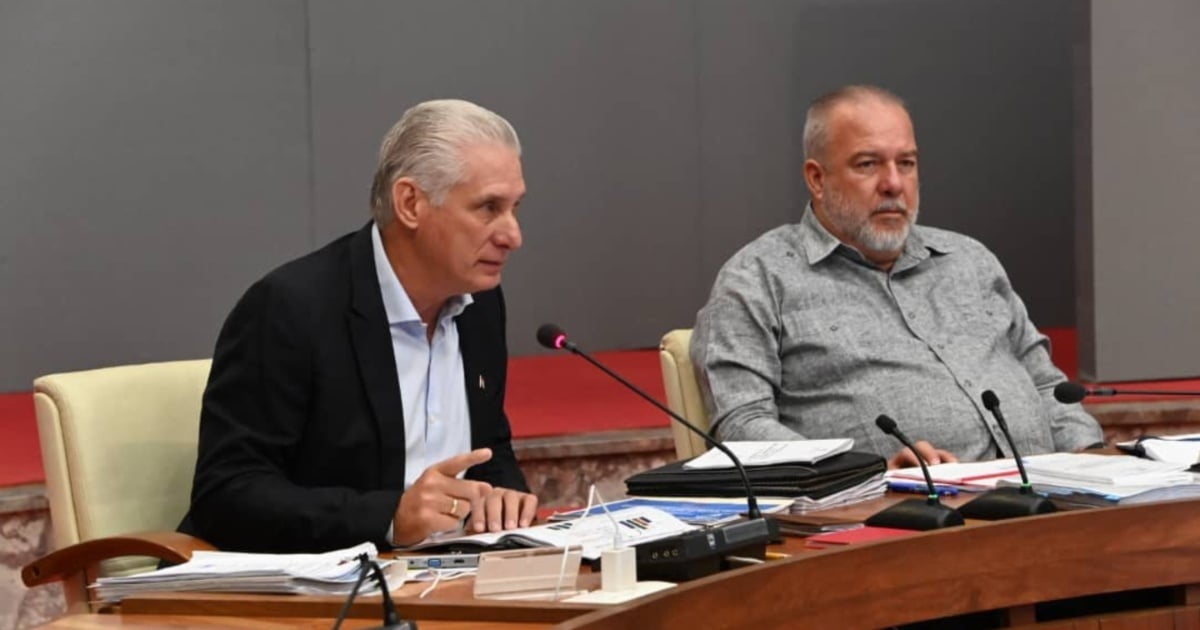
The Cuban regime has unveiled an updated version of its plan to "address distortions and jumpstart the economy," which has been approved by the Political Bureau. This plan will be the foundation for a nationwide process of discussion and analysis.
During the Council of Ministers meeting, Prime Minister Manuel Marrero outlined the steps taken since July and the key changes in the document. This plan will be reviewed with state structures, political organizations, and mass groups to define specific responsibilities for its implementation.
The report highlights the need to clarify the scope of the 10 general objectives and updates 39 specific goals, including their timeline and the actions planned from September to December. The methodological guide for the study process aims to achieve a "comprehensive understanding" of the program and align objectives, goals, and actions in every part of the country.
However, no concrete data was provided on how these measures have impacted the daily lives of Cubans, which are plagued by inflation, shortages, and the collapse of basic services. Simultaneously, the Council of Ministers assessed the execution of the State Budget as of the end of August.
The Finance and Prices Ministry reported "favorable" results compared to the plan, noting a significant reduction in the fiscal deficit due to higher-than-expected revenues and a current account surplus, allowing for a focus on capital expenditures. However, there were warnings about unspent current and capital expenditures due to unmet activity levels.
Local Budget Outcomes
According to official reports, local budgets showed positive results. Marrero urged a deeper territorial analysis to ensure provinces and municipalities achieve better outcomes by increasing revenues and management capabilities. "A municipality will never fully develop if it does not achieve a surplus status," he emphasized.
The government also reviewed the actions of the Comptroller's Office concerning budget execution, focusing on the use of current transfers in the non-budgeted business sector. There was a call to strengthen accounting, enforce contracts, demand ethical behavior from managers and workers, increase labor collective participation in management, and improve internal control at all levels.
Focusing on Short-Term Goals
With this roadmap, the government aims to align goals and resources in the short term (September–December) and strengthen fiscal discipline and control as the pillars of economic adjustment. While official rhetoric is filled with technical jargon and timelines, it avoids any critical assessment.
The lack of self-criticism regarding the impact of these measures and transparency in the results is evident. It's a familiar script: meetings, reports, objectives, and the eternal promise that the worst is about to be overcome.
In reality, Cubans understand that these grandiose statements do not translate into economic improvement. The propaganda seeks to mask with words what everyday experience starkly reveals: a nation where wages are insufficient to afford food, the currency is collapsing, and the future remains mortgaged.
Understanding Cuba's Economic Challenges
What is the focus of the updated economic plan?
The updated plan aims to address economic distortions and restart growth by clarifying objectives, updating goals, and aligning resources and actions across the country.
How are local budgets performing according to the report?
Official reports indicate positive outcomes for local budgets, with a push for deeper analysis to enhance revenue and management capabilities in provinces and municipalities.
What criticisms are not addressed in the government's plan?
The plan lacks critical self-assessment of its impact on everyday life, with no transparency in the results or acknowledgment of ongoing economic hardships faced by Cubans.