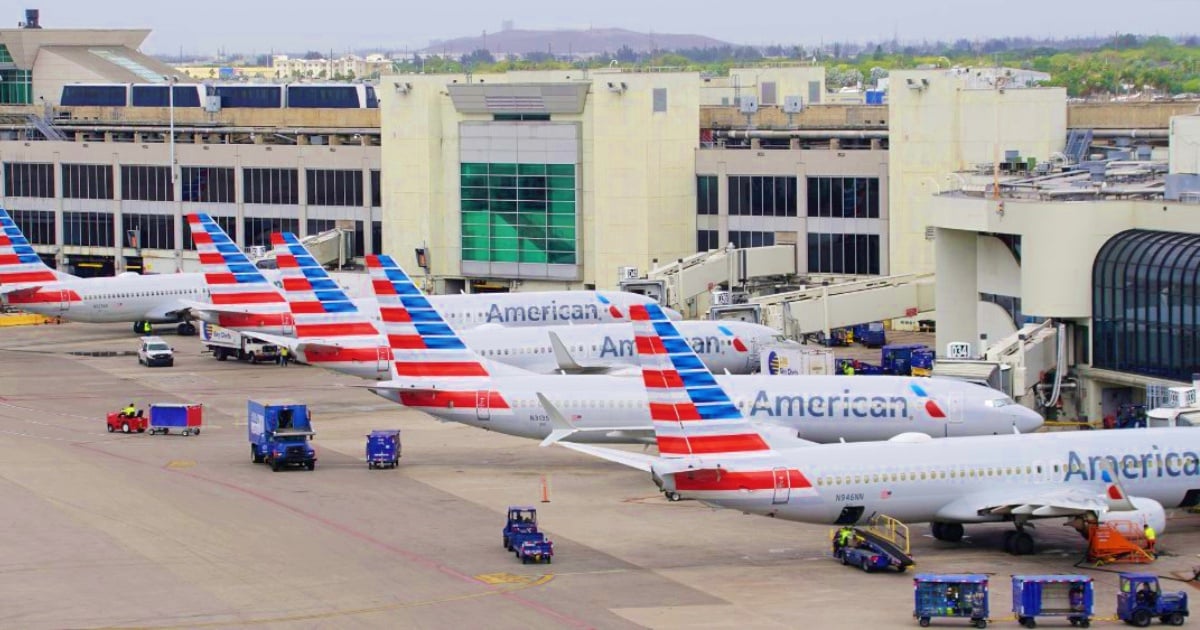
The ongoing federal government shutdown in the United States is exacerbating a shortage of air traffic controllers, leading to temporary suspensions at major airports and widespread delays nationwide. As reported by CNN, the shutdown's impact on air travel has become increasingly evident.
The Federal Aviation Administration (FAA) has issued warnings about a severe scarcity of controllers at several key airports. This has resulted in the temporary closure of control towers, halted operations, and ground restrictions for numerous flights across the country. For instance, Chicago's O'Hare International Airport, one of the busiest in the U.S., was informed on Tuesday that it would face a significant lack of personnel in its control tower for at least nine hours. By the afternoon, average ground delays for flights heading to O'Hare had reached 41 minutes.
Nashville Airport experienced a similar situation, where its approach facility, which guides aircraft during arrivals and departures, was shut down for five hours the same night. Flights bound for Nashville had to coordinate with the regional air traffic control center in Memphis, with expected delays averaging up to two hours. Additionally, on Monday, the tower at Hollywood Burbank Airport in California was forced to close. In its absence, pilots took over using the common traffic advisory frequency (CTAF), a method usually reserved for smaller, towerless airports.
Just a week into the government shutdown, this scenario is also affecting other critical hubs, such as Houston, Newark, Las Vegas, Boston, Atlanta, Philadelphia, Dallas, and Jacksonville, Florida. All these locations are operating with reduced staffing in their control towers during parts of the night, according to FAA operational plans. Jacksonville, specifically, was mentioned as suffering from understaffing in its traffic control facilities, potentially leading to delays despite no full closures being reported.
The root of this crisis lies in the federal shutdown's prohibition on hiring new staff, which also demoralizes current employees. Many controllers are deemed essential workers, meaning they must continue working without pay assurances during the budget impasse. According to CNN, Transportation Secretary Sean Duffy confirmed an increase in sick leave reports from controllers since the shutdown began. Although organized labor actions like strikes are illegal, even minor unscheduled absences can disrupt operations due to the FAA's structural staffing shortages.
"The system was already fragile," said Nick Daniels, President of the National Air Traffic Controllers Association (NATCA), in a CNN interview. "We have critical staffing levels and unreliable equipment. This stress is an unnecessary distraction that leads to fatigue," he emphasized. While controllers have not yet missed paychecks, the looming uncertainty grows as payroll dates approach. If the shutdown persists, only work done before October 1 will be paid on October 14, with October 28 marking the first payday with no compensation.
The situation not only causes delays but also directly impacts air safety. At Burbank, where pilots temporarily managed traffic without tower support, there were over two and a half hours of flight delays during that period. This required pilots to coordinate movements over a common radio "chat line," adding an extra layer of risk. "It's feasible but not as safe as having full air traffic control," warned transportation analyst Mary Schiavo, comparing it to "the difference between a crossing guard and a stop sign."
Despite NATCA advising members against using sick leave as protest, the fear of unpaid wages is growing among workers. President Donald Trump's administration has stated it will use tariff revenues to fund priority programs like WIC (nutrition assistance for mothers and children) but has yet to offer specific assurances for air traffic controllers or other federal employees forced to work without pay. On Monday night alone, at least 11 FAA facilities were operating short-staffed, including towers in Phoenix, Denver, Newark, Jacksonville, Chicago, Washington, and Indianapolis.
As the shutdown drags on, intermittent delays and closures may become commonplace in the national air network, affecting both flight operations and overall system safety. The shutdown's repercussions extend beyond air travel, impacting immigration processes. Services like residency interviews, document renewals, and asylum hearings are experiencing disruptions. Although agencies like USCIS remain partially funded through fees, the uncertainty is slowing critical processes for thousands of migrants, including Cubans with ongoing cases.
Amid mounting concerns over the shutdown's cumulative effects, President Donald Trump defended the measure, arguing that his administration is unwilling to finance unrestricted programs. "We don't want to give away money to other people," he stated, referring to social programs and federal aid. Meanwhile, sectors like transportation, air safety, and immigration management continue operating under strain, with overworked staff and limited services.
Key Concerns About the U.S. Government Shutdown's Impact on Air Travel
How is the government shutdown affecting air traffic control?
The shutdown has led to a severe shortage of air traffic controllers, causing temporary tower closures and widespread flight delays across the U.S.
Which airports are most impacted by the controller shortages?
Major airports like Chicago's O'Hare, Nashville, and Hollywood Burbank are significantly affected, along with key hubs in Houston, Newark, and more.
Are air traffic controllers being paid during the shutdown?
No, controllers deemed essential must work without current pay, with uncertainty about future compensation if the shutdown continues.