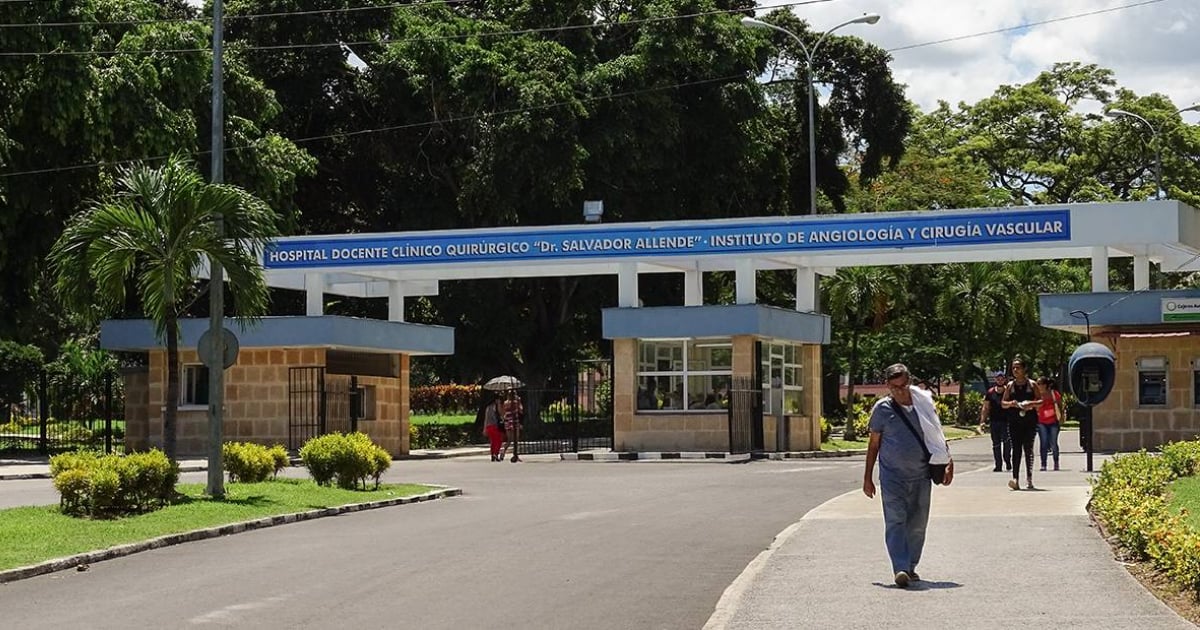
The "Salvador Allende" Clinical-Surgical Hospital, commonly referred to as La Covadonga, is on the brink of a partial shutdown due to an alarming increase in dengue and chikungunya cases in Havana. Insiders from the hospital have revealed to CiberCuba that a provincial committee visited the facility on October 7 to assess the feasibility of converting several wards into units dedicated to patients infected with arboviruses. This comes as the epidemiological situation in the Cuban capital grows increasingly precarious.
While an official closure of the hospital has not yet been implemented, there are plans to gradually suspend services in the Internal Medicine, Ophthalmology, Urology, Orthopedics, and Geriatrics departments. These facilities would be repurposed to care for individuals suffering from dengue, chikungunya, and other mosquito-borne illnesses. Additionally, outpatient services at the adjacent polyclinic are expected to be halted. For the time being, only the six surgical wards will remain operational, although they too might be repurposed if patient numbers continue to surge.
"The situation is challenging, and we've been informed that we might have to cease consultations to convert everything into inpatient care. La Covadonga has been utilized in past health crises like COVID-19, and it's likely to happen again," a source linked to the hospital mentioned.
Havana has now joined the list of provinces with confirmed chikungunya transmission, alongside Matanzas, Guantánamo, Santiago de Cuba, and Pinar del Río. According to recent data from the Ministry of Public Health (MINSAP), the disease was initially identified in the Perico municipality of Matanzas and has since spread to other areas. In the Cuban capital, cases have been reported in municipalities such as Arroyo Naranjo, Cerro, and Playa. Dengue and oropouche are also present in at least 12 provinces, though health authorities maintain that there are no critical patients or hospital collapses at present.
The rise in diseases transmitted by the Aedes aegypti mosquito coincides with deteriorating sanitary conditions in several regions, exacerbated by power outages, garbage accumulation, and persistent rainfall—factors that promote mosquito breeding.
Dr. Francisco Durán, the national director of Epidemiology, has noted that chikungunya can cause severe joint pain even after the acute phase of the illness has passed, raising concerns among both the public and healthcare workers. Despite increased fumigation efforts, focal treatments, and the removal of breeding sites, cases continue to rise, especially in territories like Matanzas, where numerous patients exhibit fever and alarm symptoms.
Impact of Arbovirus Outbreak in Cuba
What are the main diseases causing concern in Havana?
The primary diseases raising alarm in Havana are dengue and chikungunya, both transmitted by the Aedes aegypti mosquito.
How is the hospital "La Covadonga" responding to the outbreak?
La Covadonga is considering partial closure and repurposing several wards to accommodate patients with arbovirus infections, while also potentially suspending outpatient services.
What measures are being taken to control the mosquito population?
Authorities are intensifying fumigation, applying focal treatments, and eliminating mosquito breeding sites to control the Aedes aegypti population.