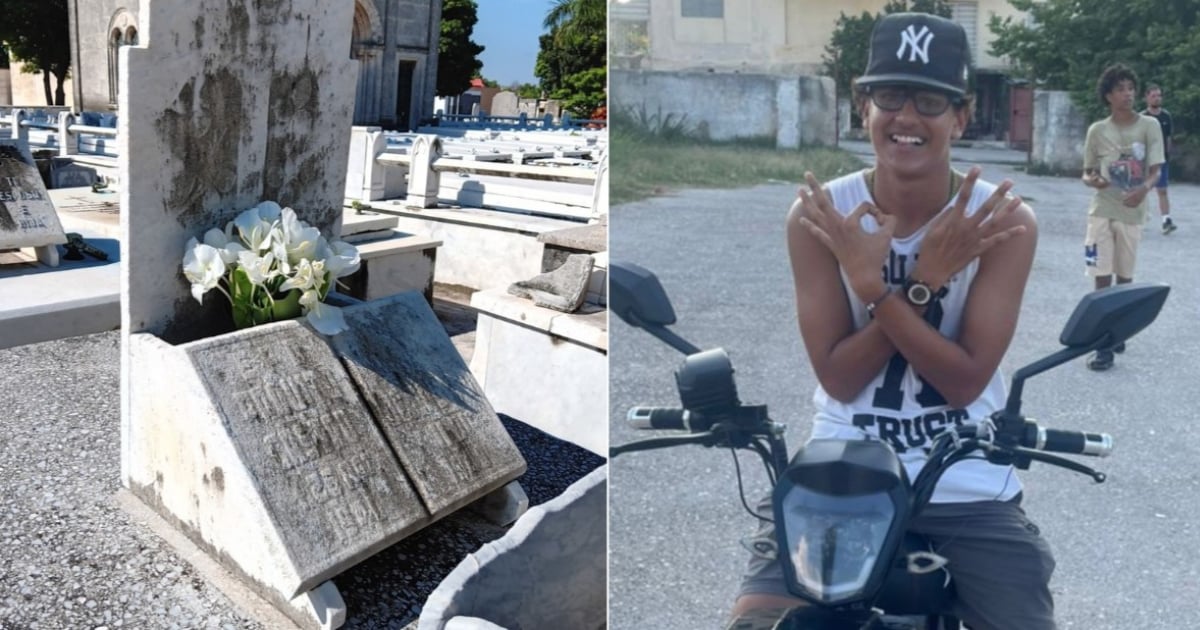
Mercedes Roque, the grieving mother of young Cuban Antonio Rassi Roque, who tragically died on August 18 while fulfilling his duties in the Compulsory Military Service (CMS), is calling for a thorough investigation and accountability from the military officers responsible for the unit where the incident occurred. In a heartfelt message shared on Facebook, she voiced her sorrow and frustration over the lack of justice following her son's passing: "Today, I visited a place where you shouldn't have been yet... your departure was a consequence of inhumane actions. I demand a meeting with the unit's chief, the political officer, the platoon leader, and the guard officer."
Antonio, only 18 years old, died at Military Unit 50 del Calvario in Havana, just a few hours after speaking with his mother on the phone: “What happened between 8:55 in the morning when I spoke with my son and 2:45 p.m.? They know, just as I do, that something happened,” she questioned.
Roque firmly believes her son's death was a result of a hostile and negligent environment within the military unit: "It was simply a reaction to an action provoked in the unit." She highlights several irregularities, particularly the lack of attention to her son's emotional and physical state.
"Where were the officials who didn't notice his depressive state, his lack of hygiene, and his dirty uniform, since he only had one?" she asks. She also claims she was never informed about her son's deteriorating condition, although other recruits noticed it.
Moreover, Roque revealed her attempts to reach out to the military unit were often ignored: “I went on the 15th and 24th and was not attended to. On September 30, after insisting, I was met by a commission with a lieutenant colonel from the Prosecutor's Office who had no direct connection to the incident.”
She asserts that she still hasn't received a clear explanation or been heard by the authorities responsible for her son's well-being during his final days.
Antonio Rassi's case once again sheds light on the controversial Compulsory Military Service in Cuba, established in 1963, which has faced numerous allegations in recent years regarding the unexplained deaths of young recruits. Independent organizations and affected families accuse the Cuban military system of fostering a culture of impunity and secrecy.
According to reports by the outlet elTOQUE, at least seven young men died between July and August 2025 while serving in the CMS. One of the most prominent cases was that of Félix Alfredo González, the father of a recruit who died in 2021, who has become a vocal critic of the system. "The government turns a deaf ear," González stated, demanding justice for his son and other victims.
In July, another 18-year-old died in Quivicán, Mayabeque, after suffering physical distress without receiving proper medical care. His family had requested to take him home due to his declining health, but the unit refused.
In her post, Mercedes Roque emphasizes that she will not remain silent: “I have the right to demand a meeting with the officers in charge. I handed him over healthy on July 28. Today, I demand answers.”
Up to now, the Ministry of the Revolutionary Armed Forces has not made any official statements regarding this case or others that have occurred this year.
Understanding the Cuban Military System's Impact on Families
What is the Compulsory Military Service in Cuba?
The Compulsory Military Service (CMS) in Cuba requires young men to serve in the military, a mandate established in 1963. It has been increasingly criticized for the lack of transparency and accountability regarding the treatment of recruits.
How has Mercedes Roque responded to her son's death?
Mercedes Roque has publicly demanded a transparent investigation and accountability from the military officials at her son's unit. She has expressed her determination not to remain silent until she receives answers.
What are the main criticisms of the Cuban military system?
Critics argue that the Cuban military system is characterized by a culture of impunity and opacity, especially concerning the unexplained deaths of young recruits. Families and independent organizations have repeatedly called for increased transparency and accountability.