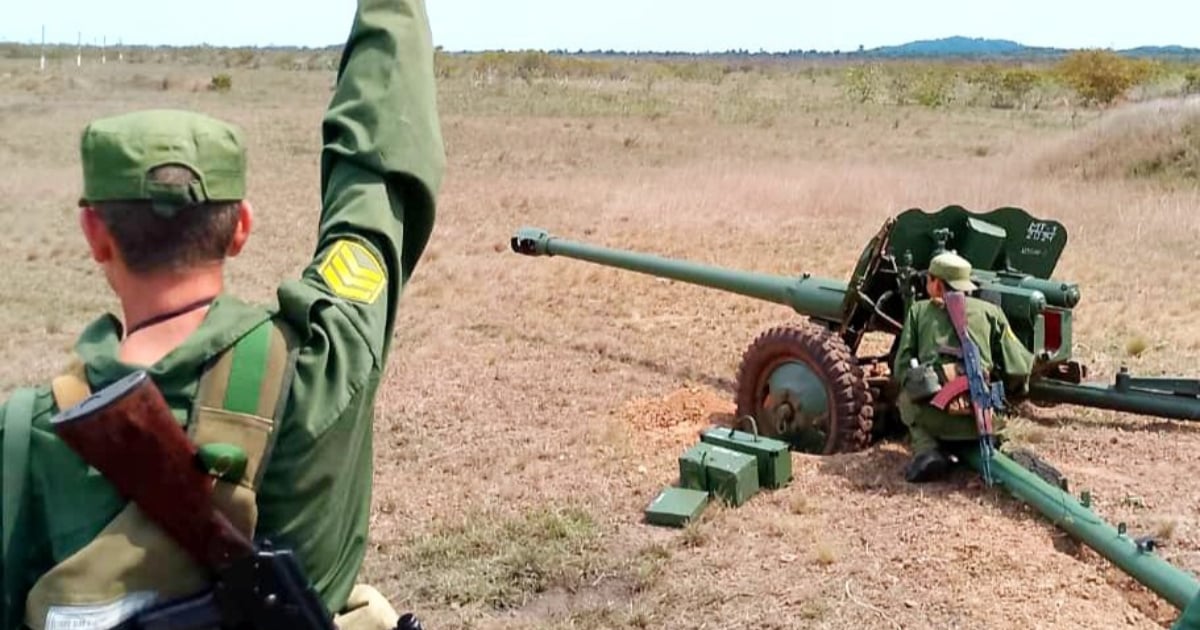
The Russian State Duma has officially endorsed a military cooperation agreement with Cuba, as the United States raises concerns over the recruitment of Cuban nationals as mercenaries in the ongoing conflict in Ukraine. This move by Russia’s lower house of Parliament further solidifies the precarious strategic partnership between Moscow and the Cuban regime during a time of war and mounting accusations from Washington regarding Cuban involvement in the Kremlin’s military operations.
The agreement, initially signed in Havana on March 13, 2025, and later in Moscow on March 19, was submitted to the legislature by the Russian Cabinet of Ministers. They defended it as essential to "establish the legal frameworks necessary for defining the goals, directions, and forms of bilateral military cooperation," as reported by the EFE agency. Official statements from the Duma claim that ratifying the agreement will "strengthen and develop military relations between Russia and Cuba" and protect the interests of Russian citizens engaged in tasks outlined by the agreement, according to pro-government outlet RT.
This decision coincides with U.S. allegations that Havana is a primary source of foreign fighters for the Russian military. A recent internal State Department memorandum shared with diplomats suggests that between 1,000 and 5,000 Cubans may have been recruited as mercenaries to fight in Ukraine, allegedly with the Cuban government’s complicity. The document warns, “After North Korea, Cuba has emerged as the largest source of foreign mercenaries for the Russian army,” criticizing Havana for failing to shield its citizens from becoming pawns in the Russia-Ukraine conflict.
In May, the Miami-based Cuban Resistance Assembly claimed that Russia, with support from the Cuban government, had recruited as many as 20,000 Cuban nationals, with 200 to 300 reported casualties in combat, as highlighted by EFE. The ratification of this military pact deepens the collaboration between Moscow and Havana, who have been allies since the Soviet era, amidst Cuba’s most severe economic crisis in three decades, characterized by shortages, inflation, and deteriorating basic services.
The timing of this military agreement between Moscow and Havana coincides with the Kremlin intensifying its confrontational rhetoric against the West, once again placing nuclear issues at the forefront of its strategy. In 2024, a senior member of the Russian Duma proposed deploying nuclear weapons in Cuba, echoing Cold War tensions and asserting that Russia must "respond forcefully" to NATO pressures.
Recently, the Russian government has further inflamed global tensions by discussing potential nuclear weapons deployment outside its territory, a move analysts interpret as a direct warning to the United States and its European allies. These statements align with the growing military cooperation between Russia and the Cuban government, officially framed as “technical and strategic assistance.”
Amid this escalating rhetoric, Vladimir Putin has asserted that Russia will respond immediately to any hostile actions from the West, reinforcing a narrative of total confrontation and positioning Cuba as a political ally in Latin America. Although symbolically significant, the military alliance with Havana serves as a potent propaganda tool in Russia’s strategy to challenge Washington.
In the U.S., former President Donald Trump has criticized both Putin and the Cuban regime, pledging to intensify sanctions if he returns to the White House. His remarks underscore how the Moscow-Havana axis is once again being wielded as a political asset in U.S. electoral debates, amid escalating global rivalry and mutual distrust.
Key Questions on Russia-Cuba Military Alliance
What is the significance of the Russia-Cuba military agreement?
The agreement strengthens military ties between Russia and Cuba, highlighting their strategic partnership amid global tensions and mutual opposition to U.S. policies.
How many Cubans are allegedly involved as mercenaries in Ukraine?
Reports suggest that between 1,000 and 5,000 Cubans may have been recruited to fight in Ukraine, with claims of government complicity from Havana.
How does the U.S. view the Russia-Cuba alliance?
The U.S. is critical of the alliance, viewing it as a challenge to its influence and a source of instability, especially with allegations of Cuban mercenaries supporting Russian military efforts.