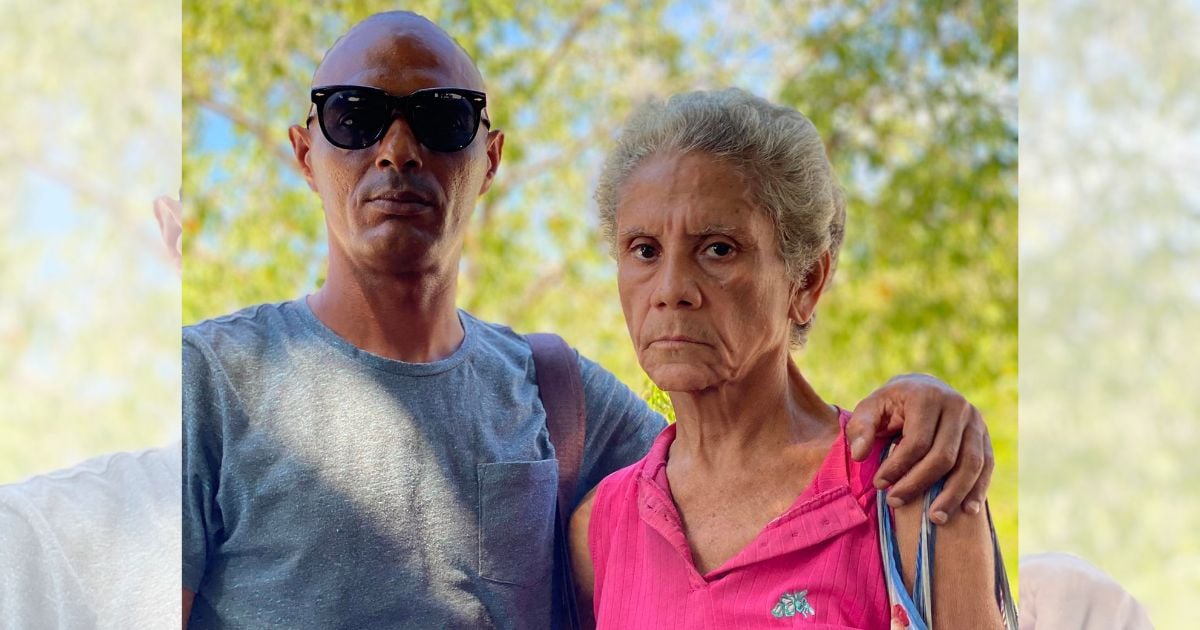
Stories like this expose the harsh reality behind the so-called "humanism" of the Cuban regime: praise while individuals are useful, abandon them when they're no longer needed. Aleida Palomo Sánchez, a former high-performance athlete and Cuban professor, has been seen wandering the streets of Santiago de Cuba, ill and disoriented, seeking help to survive.
This scene was shared on Facebook by Santiago-based writer and activist Yasser Sosa Tamayo, who often assists vulnerable individuals. According to Sosa's account, Palomo—who represented Cuba in the 1991 Pan American Games—walks unsteadily, clad in worn-out clothing, and marked by a vacant gaze.
"Her frail body and shabby clothing paint the cruelest picture of neglect," the activist wrote in a post shared on Tuesday. Palomo was once celebrated both on the sports field and in the classroom. She not only defended the Cuban flag in international competitions but also dedicated herself to teaching new generations the value of perseverance as a professor.
"That woman who once elevated Cuba's name now walks invisible among us," lamented Sosa Tamayo, who also described the emotional impact of their encounter. "I felt my heart constrict, and all I could do was give her everything I had with me. It wasn't much, but it was my way of saying: you're not alone," the activist emphasized.
The situation has sparked outrage on social media, with users demanding a response from the authorities, especially INDER, regarding what they view as another instance of state neglect towards individuals who were once national pride.
"Aleida needs our help right now: a message, a meal, a visit, a gesture. Anything, but something," the activist concluded. In the comments section, Sosa also posed the question: "What does true glory mean to you: medals or the humanity we extend to others?" inviting users to reflect.
Palomo's case is not isolated. Across various Cuban cities, similar stories reflect the same abandonment faced by those who were once pillars of education and value formation. Recently, Sosa discovered his former Chemistry teacher living alone and sick in a rundown facility after years of service to education without receiving the necessary institutional support.
Just days ago, the story of a retired university professor surfaced, surviving by selling goods on the streets to afford food. His testimony, filled with resignation, highlighted how educators who contributed to the country's development for decades now face old age without adequate pensions or state support.
Another poignant case is that of Juan Bautista, a science teacher and composer, now trapped in poverty and forgotten by institutions. His story encapsulates the fate of many professionals who, after years of dedication and talent, end up living on the margins, without recognition or basic care.
Understanding the Plight of Former Cuban Athletes and Educators
What happened to Aleida Palomo Sánchez?
Aleida Palomo Sánchez, a former athlete and professor, has been seen ill and disoriented on the streets of Santiago de Cuba, seeking help to survive.
How has social media reacted to Aleida's situation?
Aleida's case has sparked outrage on social media, with users demanding a response from authorities, especially INDER, regarding state neglect of former national figures.
Are there similar cases of neglect in Cuba?
Yes, there are similar stories of abandonment across Cuba, involving former educators and athletes who are now living without adequate support or recognition.