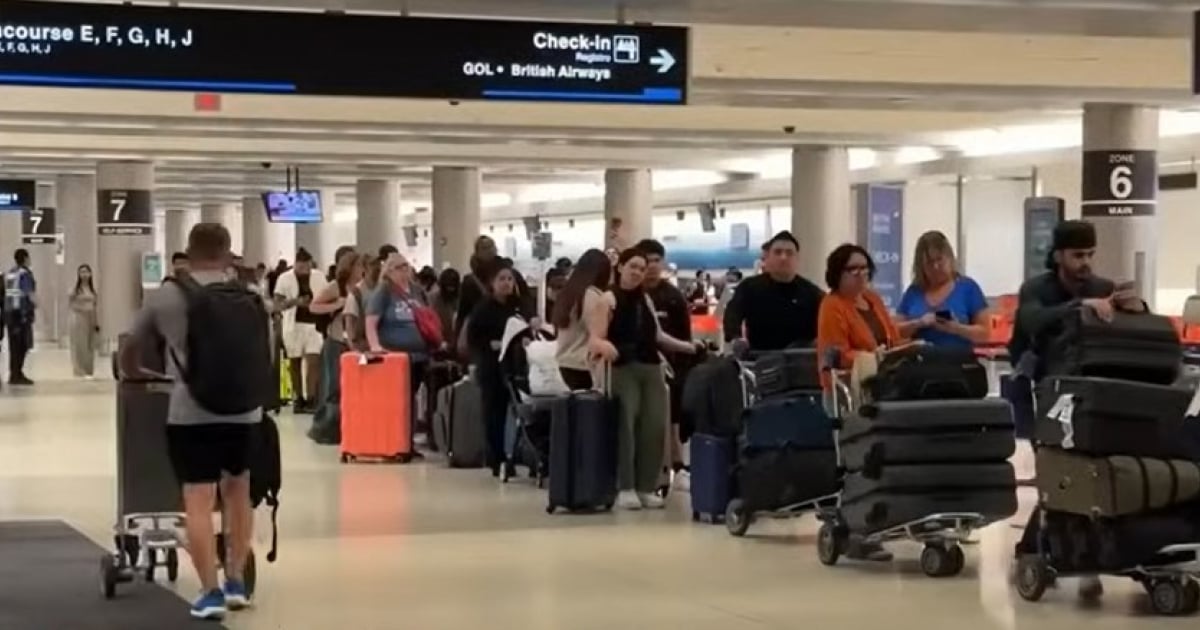
The ongoing partial shutdown of the federal government, now into its second week, is beginning to significantly affect the American aviation sector. Air traffic control (ATC) staff, deemed essential and thus required to work during this budgetary standstill, are currently doing so without pay. This situation is leading to heightened stress levels and increased absenteeism among these crucial workers.
During a press briefing at Newark Liberty International Airport, Transportation Secretary Sean Duffy highlighted the escalating issue: “The current government shutdown is amplifying stress on air traffic controllers, who already face an incredibly demanding job,” he stated. Adding to the pressure is the financial insecurity faced by thousands of federal employees.
“While they manage our airspace, these controllers are also worrying about personal financial challenges: paying the mortgage, the car, and putting food on the table for their families,” Duffy explained. “They’re working six days a week, and now they’re considering taking on a second job, like driving for Uber, just to make ends meet,” he added.
With aviation safety potentially at risk, Secretary Duffy issued a stern message to lawmakers: “Our air traffic controllers deserve to work without the distraction of a government shutdown that threatens their and their families' well-being. Stop politicizing Americans' safety and reopen the government!” he wrote on X.
He emphasized the emotional toll: “They have bills to pay, and this is on their minds while they control our skies, which is not ideal. We want them to leave their personal issues at the doorstep when they start their shifts,” Duffy expressed to CNBC. He noted that the issue is not localized but systemic: “It’s not a consistent location... a small issue at one facility gets resolved but then crops up somewhere else. The system is facing widespread problems.”
Initial Signs: Delays and Unmanned Towers
The lack of personnel has already led to delays at key airports. According to Travel Market Report, on Monday, delays were reported at Newark (EWR), Denver (DEN), and Hollywood Burbank (BUR) airports. Notably, the Burbank tower was unmanned from 4:15 PM to 10:00 PM and operated remotely from San Diego.
Though the percentage of affected flights remains low, authorities acknowledge the potential for escalation if the situation persists. “We’ve seen a slight uptick in sick calls. Expect delays as a result. Our priority is safety, so if we get more calls, we’ll slow down the flow to ensure public safety,” Duffy stated. He was unequivocal about maintaining airspace safety: “The Department of Transportation will not allow flights if there are issues in the airspace. We will shut it down,” he warned.
Training New Controllers at Risk
The aviation system is already grappling with a personnel shortage that has worsened over recent years. CBS News reports that over 90% of towers nationwide are staffed below optimal levels. Duffy noted that while the air traffic controller academy in Oklahoma City remains open due to prior funding, there is a real risk of instructor layoffs if funding is not restored. “I’m concerned about the impact on hiring and training new controllers to address the ongoing shortage,” he remarked.
Small Communities Most Vulnerable
The shutdown poses a critical threat to the Essential Air Services (EAS) program, which supports flights to rural communities. “Funding will run out this Sunday. Hence, many small communities across the nation will lose their ability to ensure air service,” Duffy cautioned. “This program enjoys strong bipartisan support and is a vital resource for many small towns, especially in Alaska, where flying is often the only means of travel,” he asserted.
Union's Message: Work with Dignity
The National Air Traffic Controllers Association (NATCA), representing over 20,000 professionals, has urged its members to remain responsible. “Striking could lead to removal from federal service. It’s not only illegal but undermines NATCA’s credibility and our ability to effectively advocate for your interests and those of your families,” the union communicated to its members.
In a TikTok video, NATCA President Nick Daniels addressed the human impact: “The government shutdown creates uncertainty and hardship for our members.” However, he also called for immediate congressional action: “We need to end this shutdown so the Federal Aviation Administration and the professionals dedicated to aviation safety can focus entirely on their critical work, free from distractions.”
A Shutdown with a Troubling Precedent
During the 2018-2019 government shutdown, which lasted 35 days, 10% of TSA staff called in sick, causing chaos at security checkpoints and halting flights. Today, with a structural shortage of controllers, experts warn that the effects could be felt more swiftly and severely. The Federal Aviation Administration promises retroactive payment once the government reopens, but the daily pressure on workers remains intense.
The U.S. government officially entered its first shutdown in nearly seven years on October 1st. The stalemate between Democrats and Republicans over the 2026 fiscal budget has led to a governmental paralysis with tangible consequences for millions nationwide. The White House has blamed Democrats for the shutdown.
Congress failed to approve a temporary funding plan that would have kept essential services running while budget negotiations continued. The conflict revolves around health subsidies and spending cuts pushed by President Donald Trump, who, in his second term, has aggressively aimed to shrink the federal government.
Understanding the Impact of the U.S. Government Shutdown on Aviation
What is causing stress among air traffic controllers during the shutdown?
Air traffic controllers are working without pay during the shutdown, causing financial stress and concern about their personal finances, which adds to the already high-pressure nature of their jobs.
How is the shutdown affecting flight operations at major airports?
Major airports are experiencing delays due to staffing shortages, with some towers unmanned and operated remotely, increasing the risk of further disruptions if the shutdown continues.
What could be the long-term effects of the shutdown on air traffic control training?
The shutdown threatens the funding for air traffic control training programs, potentially leading to instructor layoffs and exacerbating the existing shortage of controllers in the long term.