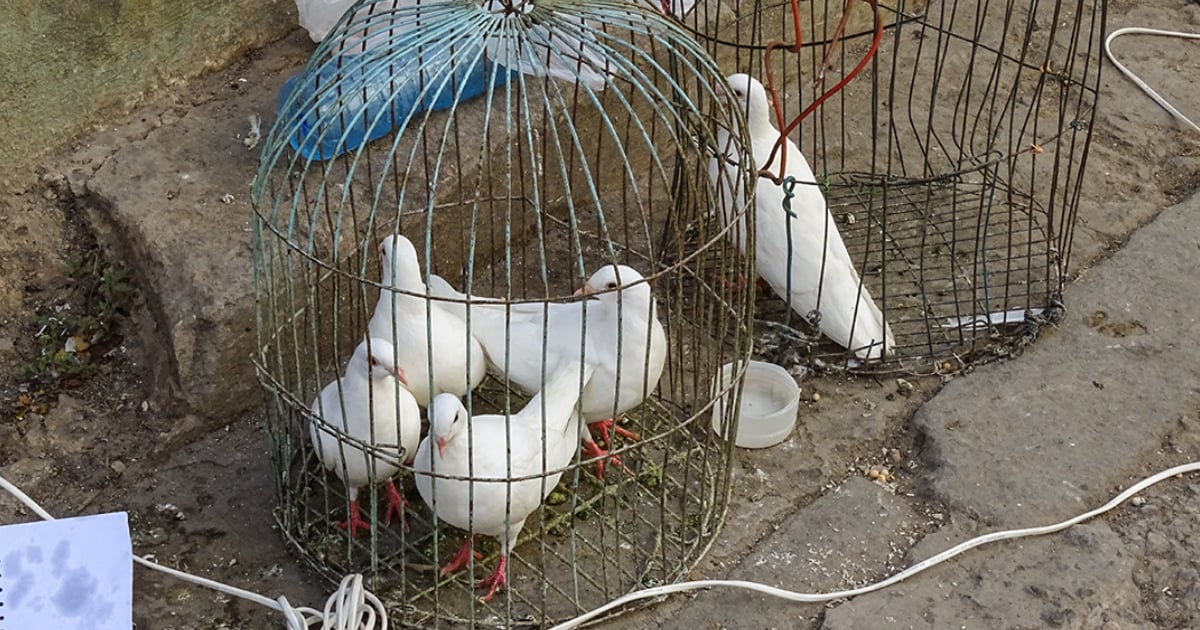
The animal welfare group BAC-Habana, representing the Animal Welfare in Cuba's capital, has reported facing threats and acts of intimidation following their exposure of animal cruelty within religious rituals conducted on the island. Their statement on Facebook directly accuses a man named Jorge Goliat of committing acts of animal cruelty under the guise of Afro-Cuban religious practices.
"Should any harm come to our team members or collaborators, we hold Jorge Goliat directly accountable," states the official communication from the organization. The document describes an escalating situation of harassment that, according to its members, has overstepped "all boundaries of decency, ethics, and human respect."
BAC-Habana claims that these attacks originate from the social and religious circles surrounding Goliat, and that their members have received "violent, offensive, and degrading messages" due to their public denouncement of an animal sacrifice case. "Religious people? If this is religion, then we are discussing a religion of hatred," the group declared, accusing the aggressors of using faith as a pretext for violence.
Escalation and Legal Actions
The organization asserts that Jorge Goliat engaged in ritual practices involving the mistreatment and sacrifice of a dog, an act they deem a criminal offense under current Cuban law. "What this man did to that poor dog constitutes a punishable crime. Additionally, his activities as a so-called healer pose a direct threat to public health, as they involve unsterilized and unhygienic practices," the entity stated.
According to BAC-Habana, there are testimonies from individuals accusing Goliat of negligence and causing the deaths of several animals and even humans under the guise of healing or purification rituals. The organization has demanded immediate action from health and judicial authorities, warning that if any of its members are harmed, Jorge Goliat will be held primarily responsible.
International Involvement
The group further communicated that, according to their sources, the accused individual is currently in the Dominican Republic, leading them to formally transfer the case to the authorities there. The complaint has been forwarded to the Dominican National Police, the Animal Protection Unit of the Public Ministry, and the Ministry of Environment and Natural Resources.
The dossier, which includes screenshots of messages, graphic evidence, and testimonies, has also been escalated to the Dominican Republic's Presidential Office and Press Directorate to demand oversight and transparency in legal proceedings. "We will not tolerate impunity sheltering cruelty against innocent beings," emphasized the group, which has also called for public cooperation in providing additional evidence.
Media Silence and Public Outcry
The organization criticized the lack of media coverage in Cuba and announced plans to bring the case to Dominican and regional media outlets to exert public pressure on the authorities and prevent the case from going unresolved. In a broader publication titled "Cuba Between Blood and Garbage: Animal Sacrifice Disguised as Religion," BAC-Habana addressed the phenomenon of ritual animal sacrifice in Afro-Cuban religious practices such as the rule of Ocha, Palo Monte, or Santería, condemning its degradation into acts of cruelty and environmental contamination.
"Animal sacrifice disguised as religion is an atrocity that has ceased to shock, but it should disturb anyone with a shred of conscience," the group wrote. "In the streets, there are remains of slaughtered animals, bloodied dolls, and black candles. What some call offerings, we see as a crime against life and dignity," they stated.
The publication, accompanied by images of animal remains discarded in parks and sidewalks, denounces the lack of action by health, environmental, and religious authorities in what they describe as "an ethical and ecological crisis." "There is no spirituality where there is torture. There is no faith where there is death. What is happening in Cuba is not religion: it is crime," the text concludes.
Debate on Religious Practices and Animal Cruelty
BAC-Habana has been a prominent voice in Cuba addressing the link between religious fanaticism and animal cruelty, a sensitive topic that divides public opinion. While some defenders of Afro-Cuban religions argue that these are ancestral traditions protected by freedom of worship, activists and environmentalists call for stricter regulations and the prohibition of animal sacrifice in rituals.
Despite Cuba's approval of its Animal Welfare Law in 2021, activists claim that the law is applied unevenly and lacks effective protection mechanisms. "Reports of animal cruelty end in silence or without investigation," they argue.
In Cuba, the use of animals in religious rituals has sparked a growing social controversy, particularly due to the suffering inflicted during these acts. Recently, a Catholic priest publicly denounced an Afro-Cuban sacrifice conducted in front of his church in El Vedado, where dying turtles and dead roosters were left abandoned.
The incident sparked criticism over the state's permissiveness and the lack of regulation to ensure respect for public space and animal rights. Complaints are not limited to animals sacrificed in Afro-Cuban religious contexts. In another widely shared case on social media, the beheading of a stray dog as part of an offering was denounced, generating outrage among activists and citizens who demand that these practices be classified and punished more firmly under existing animal welfare legislation.
Understanding Animal Cruelty in Afro-Cuban Rituals
What is BAC-Habana's main concern?
BAC-Habana is primarily concerned with exposing and stopping animal cruelty carried out under the guise of Afro-Cuban religious practices.
Who is Jorge Goliat according to BAC-Habana?
Jorge Goliat is accused by BAC-Habana of committing acts of animal cruelty as part of religious rituals and is held responsible for any harm to the organization's members.
How has BAC-Habana escalated the case internationally?
BAC-Habana has transferred the case to the Dominican Republic's authorities, including the National Police and the Ministry of Environment, seeking international oversight and transparency.
How does BAC-Habana view the animal sacrifices in religious practices?
BAC-Habana views these sacrifices as crimes against life and dignity, condemning them as acts of cruelty and environmental harm disguised as religious rituals.