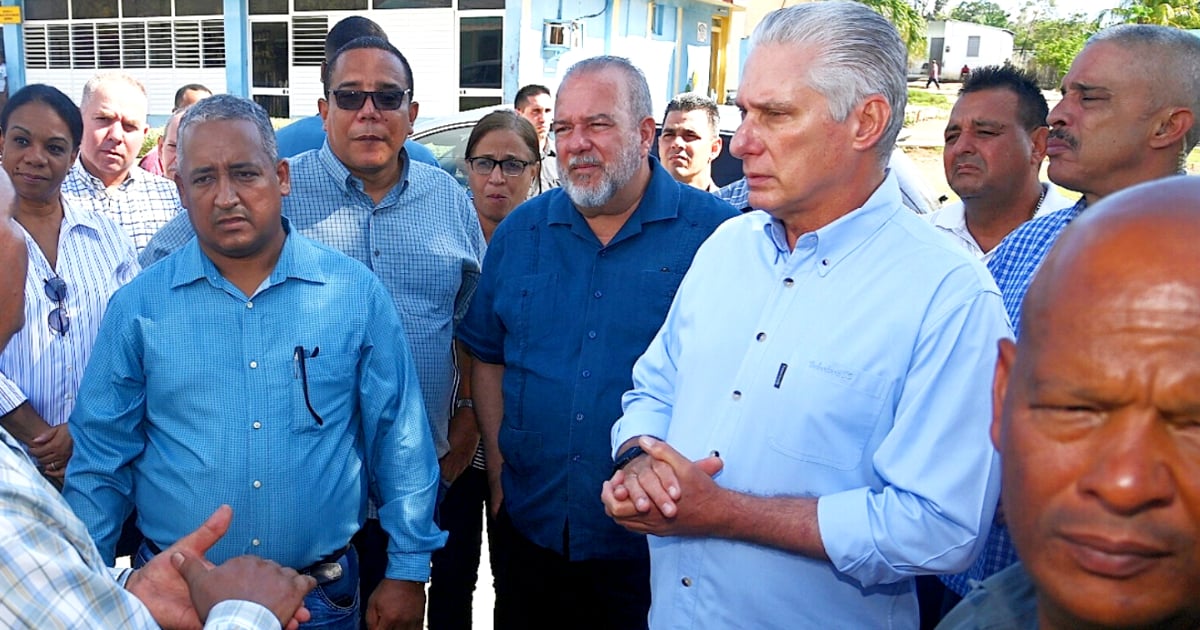
This past Saturday, Cuba's head of state, Miguel Díaz-Canel, issued a stern warning to private businesses on the island, cautioning that failure to adhere to designated electricity consumption plans could result in closures. This directive stands despite proprietors' ability to pay their bills, amid one of the island's most severe energy crises in recent years. The official account of the Cuban Presidency on social media platform X (formerly Twitter) shared Díaz-Canel's words during a meeting addressing Havana's critical issues, emphasizing, "We must visit non-state sector centers to ensure they are adhering to their electricity consumption plans. Waste cannot be allowed, even if they can afford the electricity. Any place that fails to comply will be shut down."
The message was part of a broader string of updates wherein the Presidency outlined Díaz-Canel's leadership of a "support operative" since Thursday, targeting garbage collection, water supply, and electricity provision. These areas have been acknowledged by the government as suffering from "accumulated deterioration" and growing "popular dissatisfaction," which has led to street protests.
Official Pressure on Emerging Businesses
In a climate marked by daily blackouts, rising tariffs, fuel shortages, and restrictions on the private sector, Díaz-Canel's comments come as no surprise. The State accuses many micro, small, and medium enterprises (SMEs) of "energy wastage" even though they often rely on generators and foreign currency-bought fuel to operate.
In November 2024, a new regulation, Decree 110/2024, was introduced, mandating that SMEs and other non-state economic actors independently generate at least half of their electricity needs by 2028. This decree also requires compliance with energy-saving plans and maintaining air conditioning above 24 degrees Celsius. Failure to meet these requirements could result in fines up to 20,000 pesos and a 72-hour electricity suspension.
Electricity and Fuel Challenges
While the government has prolonged the tariff exemption for importing electric plants and solar panels until 2026, this only partly alleviates the crisis. Fuel for generators is only available in freely convertible currency (MLC) and under strict conditions. In some areas, gas stations demand that owners physically transport their generators for refueling, further complicating operations.
Electricity tariffs increased by 25% in 2024 for consumers exceeding 500 kilowatt-hours monthly, and the State continues to charge high prices to a private sector that must also endure daily blackouts and risk confiscation or sanctions for "excess consumption."
The Paradox of Economic Growth Against State Control
Although the Cuban regime presents SMEs as "pillars of economic restructuring," its policies reflect ideological distrust and political control. Since their legalization in 2021, the private sector has steadily grown, creating jobs and supplying markets, compensating for State shortages. However, this growth has sparked a mix of fear and hostility from the government towards these new economic entities.
The state tolerates private activity out of necessity but simultaneously monitors, regulates, and penalizes it with almost inquisitorial zeal. Moreover, many businesses are indirectly controlled through proxies serving the governing elite, an oligarchy driven by extractive ambitions.
Frequent inspections, disproportionate fines, arbitrary confiscations, and shifting demands regarding prices, licenses, or energy consumption create a discouraging environment for investment and encourage corruption. In practice, Cuban entrepreneurs operate under constant legal uncertainty, dependent on permits, controls, and "authorizations" that can be revoked by any official or inspector.
Additionally, the fiscal and bureaucratic pressures are immense, with the government blaming SMEs for rising living costs, accusing them of "hoarding" and "speculation," thus justifying further controls and sanctions while avoiding responsibility for inflation, shortages, and the country's productive decline.
Understanding Cuba's Energy Crisis and Private Sector Challenges
What are the new energy regulations for private businesses in Cuba?
Cuban private businesses must generate at least 50% of their electricity needs by 2028, comply with energy-saving plans, and maintain air conditioning above 24 degrees Celsius under Decree 110/2024. Non-compliance could lead to fines and power suspensions.
How does the fuel situation impact Cuban businesses?
Fuel for generators is sold only in freely convertible currency and under strict conditions, such as the requirement to transport generators to refueling points, complicating the operation of private businesses.
Why does the Cuban government impose strict controls on SMEs?
The government imposes strict controls due to ideological distrust and a desire to maintain political control, despite needing the economic contributions of SMEs to compensate for State inefficiencies and shortages.