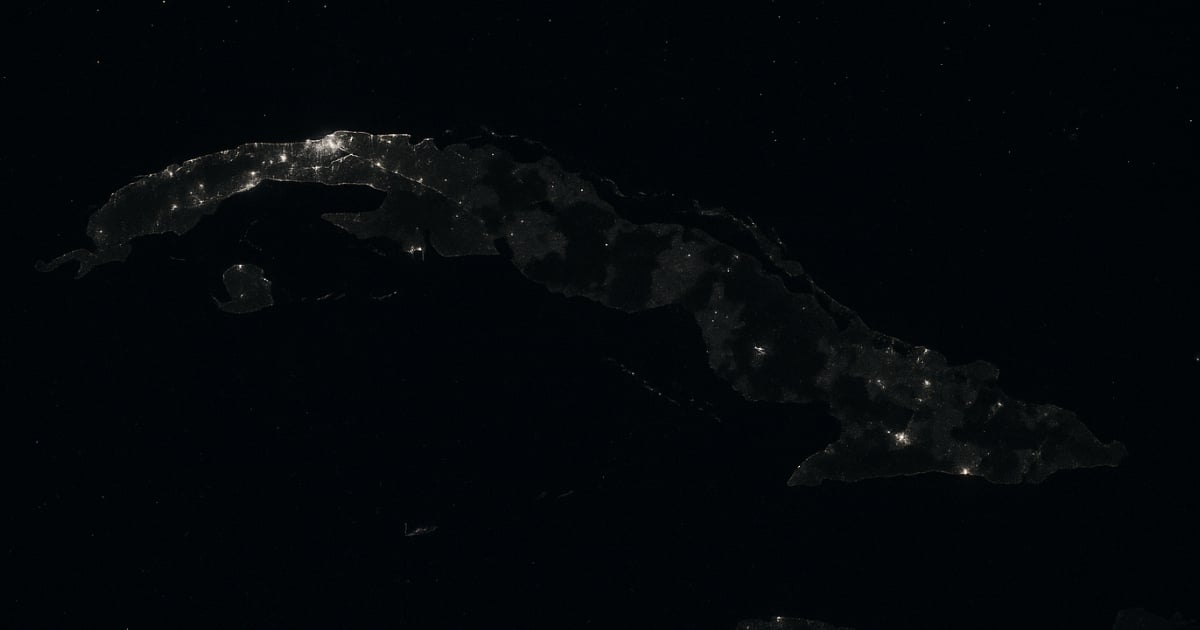
The National Electric System (SEN) commenced operations on Monday, October 6, 2025, with an available capacity of 1,770 megawatts (MW) against a demand of 2,730 MW. This shortfall resulted in a 975 MW deficit in generation capacity, as per the official report from the Electric Union (UNE). Projections for midday estimate a 1,200 MW deficit, and during the evening peak, availability might increase to 1,820 MW, while demand could reach 3,350 MW, leaving a shortfall of 1,530 MW. If current conditions persist, this would translate to a 1,600 MW impact.
The report highlights that on Sunday, the service was disrupted for 24 hours, with interruptions continuing into Monday morning. The previous day's maximum outage reached 1,636 MW at 7:40 p.m., exceeding expectations due to the shutdown of unit 3 at the Santa Cruz del Norte Thermoelectric Plant (CTE).
Among the primary issues, the UNE notes failures in units 2 of Felton, 3 of Santa Cruz, 8 of Mariel, and 3, 5, and 6 of Renté. Maintenance is ongoing in units 1 and 2 of the Santa Cruz CTE and unit 4 of the Carlos Manuel de Céspedes CTE in Cienfuegos. Thermal limitations have sidelined 272 MW, while fuel and lubricant shortages impact 44 distributed generation plants (297 MW), leaving an additional 227 MW unavailable. This totals 524 MW affected by these issues.
Despite the integration of 32 new solar photovoltaic parks, which generated 3,145 MWh with a peak power of 497 MW, the contribution remains insufficient to meet national demand.
Energy Crisis Deepens Amidst Fuel Shortages
In Havana, the provincial Electric Company reported a 10-hour and 23-minute interruption on Sunday, with a peak impact of 126 MW at 7:40 p.m., and full restoration by 1:40 a.m. Monday. The company confirmed that due to the new SEN adjustment, blackouts will occur in all the capital's blocks throughout Monday, October 6, and the early hours of Tuesday, October 7, as per system requirements.
The energy deficit has slightly decreased compared to last week—when it nearly reached 2,000 MW—but remains significant. Recently, the UNE noted a slight relief in disruptions; however, the unexpected shutdown of the Santa Cruz thermoelectric unit 3 exacerbated the situation once again.
This crisis unfolds amid an acknowledged fuel shortage, as admitted by Energy and Mines Minister Vicente de la O Levy, who stated that "fuel won't last for the entire month of October" and that reserves would suffice "for just a few days." Over 600 MW remain out of service due to a diesel shortage, further weakening the national electric system.
Simultaneously, Vice Prime Minister Inés María Chapman sparked controversy by suggesting during a televised meeting that televisions be taken to the streets and connected to generators so people could watch news programs during blackouts. This proposal drew criticism and ridicule on social media.
Despite repeated recovery announcements, the structural deficit of the SEN and dependency on imported fuel keep the island in a prolonged electrical crisis. Daily disruptions, scheduled blackouts, and constant malfunctions highlight that system stability remains a distant goal.
Understanding Cuba's Ongoing Power Crisis
What is causing the power outages in Cuba?
Cuba's power outages are primarily caused by a deficit in generation capacity, fuel shortages, and maintenance issues within the National Electric System (SEN).
How is the Cuban government addressing the electric crisis?
The government has incorporated new solar parks and announced recovery plans, but the ongoing fuel shortage and structural issues in the electric system continue to pose significant challenges.
What impact do the blackouts have on daily life in Cuba?
The blackouts disrupt daily activities, hinder economic productivity, and affect access to essential services, creating widespread inconvenience and hardship for the population.