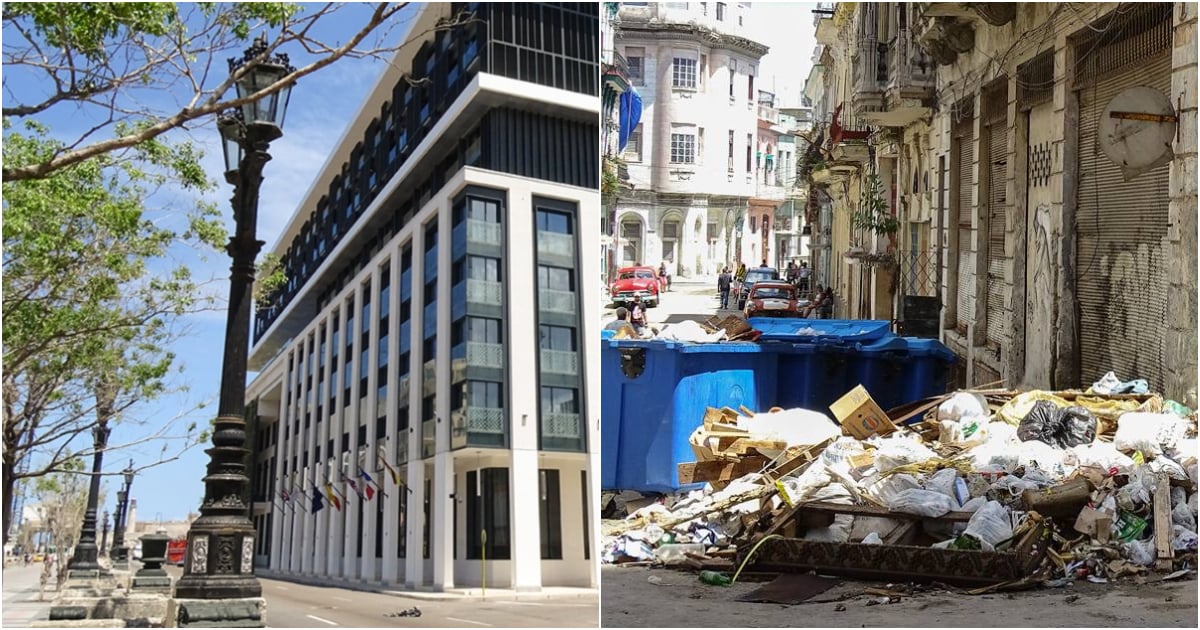
In 2023, the allocation of funds to "hotels, business services, and real estate activities" accounted for half of all investments in Havana, according to official data revealed by Cuban economist Pedro Monreal. He highlighted that this amount is ten times greater than what was allocated to electricity, gas, and water supplies, and a staggering 70 times more than what was invested in community services responsible for urban maintenance and city cleanliness.
Monreal pointed out the disconnect between official narratives blaming negligence for Havana's severe issues and the central government's lack of accountability. This perspective, shared on his Facebook page "El Estado como tal," challenges the authorities' attempts to shift blame onto citizens. He also criticized the recent establishment of "working groups" led by local authorities to address public grievances.
"What, then, is the role of the 1,335 municipal delegates, 140 provincial delegates, and 72 national deputies in Havana?" Monreal questioned sarcastically. His remarks followed a series of meetings led by Miguel Díaz-Canel, the head of the Communist Party of Cuba (PCC) and government leader, to discuss Havana's "main problems."
These governmental meetings occurred after protests erupted in Central Havana on the night of October 2nd, with residents banging pots, chanting "Freedom!", and lighting fires in the streets. Peaceful protests blocked several intersections, even involving minors, in response to over 12 hours of power outages affecting a large portion of the capital.
On October 3rd, at a meeting of the Provincial Party Committee, Díaz-Canel led discussions focused on the crisis in basic services. Prominent figures such as Prime Minister Manuel Marrero Cruz, FAR Minister Álvaro López Miera, PCC Organization Secretary Roberto Morales Ojeda, and Secretary of the Council of Ministers José Amado Ricardo Guerra were present. The official report stated that work teams were formed to "integrate with local authorities and the population" to address issues like water scarcity, blackouts, and garbage accumulation.
The government brought in resources from the Revolutionary Armed Forces (FAR) and the Ministry of the Interior (Minint) for what it described as a "rapid and intense attention" to the city's problems. During the meeting, Díaz-Canel stressed the need to "organize and clean the city," urging an end to passivity. He called for adherence to blackout schedules and "strict control" over fuel and water distribution.
In his address, Díaz-Canel warned that citizen complaints must be made "decently and civilly," cautioning against disruptive protests. The government, he stated, would act against public disorder, which he deemed "unacceptable." Despite the mobilization rhetoric, his speech acknowledged "irregularities" in key sectors and a lack of resource management.
The Prime Minister added that "there is still much call to action needed" and urged institutional leaders to focus on "solving problems on the ground." The glaring disparity between investment figures and the deterioration of urban services indicates that rescue plans for Havana are belated and misprioritized.
While the government calls for "organizing and cleaning the city," half of the capital's investment remains locked in hotels and real estate, as Monreal notes, diverting resources from the most urgent needs of Havana's residents. Official data from the first half of 2025 confirms the collapse of international tourism in Cuba, with declines in visitors, revenue, overnight stays, and a hotel occupancy rate of just 21.5%, one of the lowest in the region, highlighting the failure of billions invested in the sector.
Despite these figures, the Havana government continues to channel vast resources into hotel construction amid an internal economic crisis, with underutilized tourist infrastructure and no clear short-term recovery prospects. The "tourism first" approach has led to the systematic degradation of other productive sectors, yet the regime clings to a strategy that yields no results, ignoring warnings from various deputies about the need to settle debts, decentralize payment schemes, and align supply with real demand.
Experts and citizens have questioned this strategy, arguing it fails to address the real demand or the country's urgent needs. This deepening contrast is devastating: magnificent hotels are erected while overflowing trash piles up on Havana's corners, and more citizens endure lives marked by deprivation.
Key Questions About Havana's Investment Strategy
Why is there a focus on hotel investment in Havana over community services?
The government prioritizes tourism as a key revenue source, diverting resources to hotels and real estate despite the pressing need for improved urban services.
How have recent protests in Havana influenced government policies?
Protests have prompted government meetings and the formation of working groups to address basic service issues, though critics argue these measures are insufficient and misdirected.
What are the consequences of the investment imbalance in Havana?
The imbalance leads to a deterioration of urban services, affecting residents' quality of life, while tourism infrastructure remains underutilized amidst economic struggles.