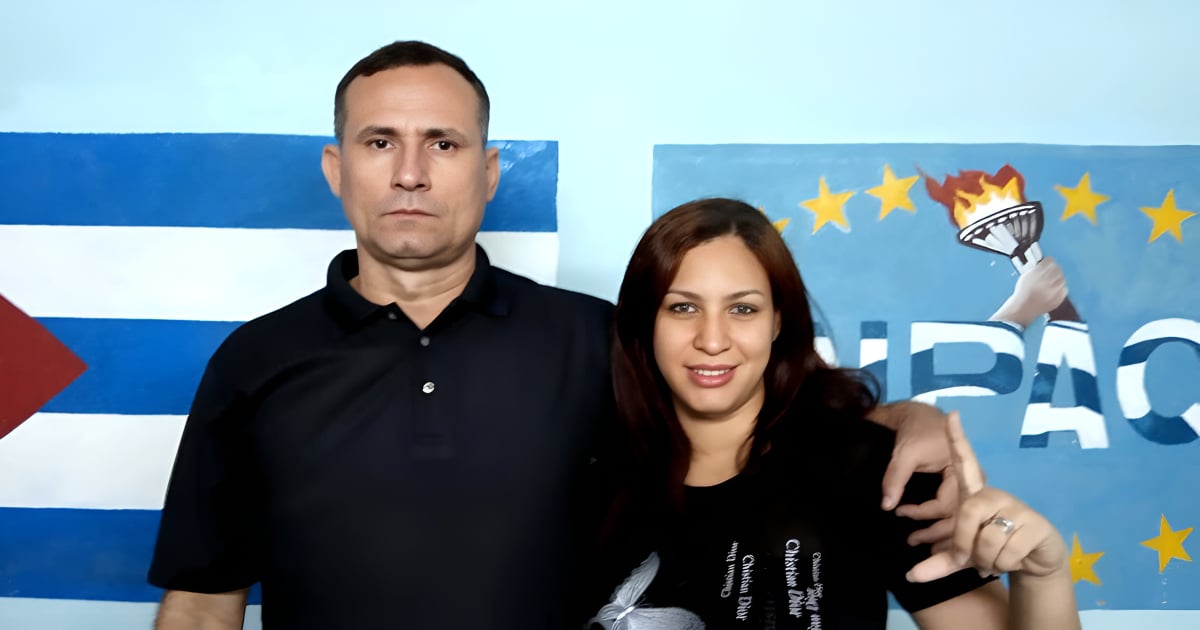
The Cuban dissident José Daniel Ferrer García, who leads the Patriotic Union of Cuba (UNPACU), might soon be released as part of a political negotiation between the Cuban regime and international actors, according to sources close to his family and recent statements on social media. However, the arrangement—which would involve his exile along with his family—remains uncertain due to conditions that Havana is allegedly trying to impose on its potential interlocutors in exchange for his departure from the country.
In a message posted on her official X account, Ferrer's sister, Ana Belkis Ferrer García, alleged that the dictatorship "has done everything possible and impossible to obtain certain benefits that they have obviously not achieved, nor will they achieve," while expressing gratitude for the numerous shows of support following the dissemination of her brother's letter from prison. "We demand justice, freedom, and life for my brave brother and all the detained and political prisoners," added the activist, who has been actively exposing and sharing the plight faced by her brother and other political prisoners at Mar Verde prison in Santiago de Cuba.
Ferrer, aged 54, agreed to go into exile after more than two years of imprisonment and torture. In a letter dated September 10, 2025, he revealed that his choice was made "under extreme pressure from the regime" and motivated by the need to protect his wife and children. "I am ready to die, but not to live without honor, without dignity," he wrote from his cell, describing inhumane conditions and an environment of constant harassment.
Recently, his family, particularly his wife Nelva Ismarays Ortega, accused the Cuban authorities of preventing his exit from the country and subjecting the dissident to "psychological torture" while prolonging negotiations to gain diplomatic advantages. Ortega stated that the regime is attempting to pressure Ferrer into making favorable statements about a potential dialogue between Cuba and the United States, which he has firmly rejected.
Historical Pattern of Trading Prisoners for Concessions
This maneuver aligns with a longstanding pattern of the Cuban regime using political prisoners as bargaining chips during periods of diplomatic isolation or crisis. Over six decades, Havana has conditioned releases or exiles on negotiations with third-party nations, particularly the Vatican, Spain, and the United States.
For instance, in 2010, the government of Raúl Castro freed 52 prisoners from the "Group of 75"—incarcerated during the Black Spring of 2003—following an agreement brokered by the Catholic Church and then-Spanish Foreign Minister Miguel Ángel Moratinos. Most were sent directly into exile in Madrid on the condition of leaving the country.
A similar strategy was repeated in subsequent years when Cuban authorities managed the release and exile of prominent dissidents such as Eliécer Góngora (UNPACU), Jorge Luis García Pérez “Antúnez” (Orlando Zapata Tamayo Civic Resistance Front), or independent journalist José Luis García Paneque, in operations carefully presented as "humanitarian" gestures.
In practice, these releases were responses to the regime’s political needs, aimed at easing international pressure or facilitating diplomatic contacts with the West. Ferrer's case seems to follow the same logic: a partial release—under the guise of forced exile—used as a negotiating card for potential international engagements or diplomatic mediations.
However, unlike previous episodes, the current situation is more uncertain: the administration of Donald Trump and his Secretary of State, Marco Rubio, have toughened their stance against the dictatorship, rejecting any negotiations that involve concessions to the Castro regime.
Mounting International Pressure
The situation involving the opposition leader has sparked a wave of condemnation in recent weeks. Congresswoman María Elvira Salazar labeled the regime as "cruel and cowardly," while her colleague, Mario Díaz-Balart, hailed Ferrer as a "hero" and assured that he will be welcomed as such by the Cuban exile community. Meanwhile, Rosa María Payá, who promoted the citizen platform 'Cuba Decide' alongside Ferrer, emphasized that "saving oneself is an act of resistance, it is defending the dignity of an entire people."
The Ferrer case has thus become a new point of tension between the Cuban regime and the international community. The government's refusal to finalize his release reinforces the perception that Havana uses the suffering of political prisoners as a tool for diplomatic pressure.
Meanwhile, Ferrer's family continues to await news. "They have taken almost everything from us, but not our morals," declared Nelva Ismarays Ortega recently. Her words echo decades of political repression in Cuba, where a man's freedom still hinges on the negotiations of a totalitarian state that views human dignity as a bargaining tool, not a right.
Understanding the Political Climate in Cuba
What is the current status of José Daniel Ferrer?
José Daniel Ferrer remains imprisoned amidst ongoing negotiations for his potential release and exile, which are currently stalled due to conditions imposed by the Cuban regime.
Why is the regime hesitant to release Ferrer?
The Cuban regime is reportedly trying to leverage Ferrer's release to gain diplomatic concessions, aligning with its historical practice of using political prisoners as bargaining chips.
Has the international community responded to Ferrer’s situation?
Yes, there has been significant international condemnation, with figures such as Congresswoman María Elvira Salazar and Mario Díaz-Balart voicing support for Ferrer and criticizing the Cuban regime.