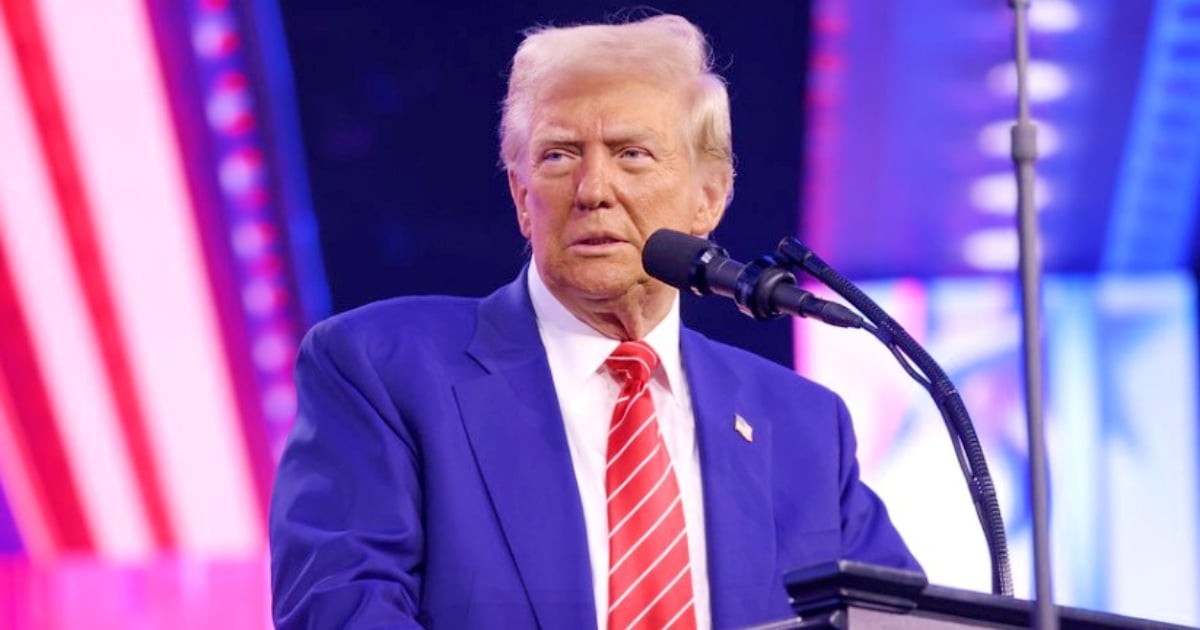
The ongoing legal battle against former President Donald Trump's controversial executive order aimed at ending birthright citizenship in the United States has encountered another judicial obstacle. The First Circuit Court of Appeals in Boston has joined other courts in blocking the president's measure, emphasizing that the right to citizenship is deeply rooted in the Constitution and cannot be revoked by presidential decree.
An Executive Order Under Judicial Scrutiny
Signed on the day Trump took office in January, the executive order sought to halt automatic citizenship for children born on U.S. soil to parents who are in the country illegally or temporarily. This move sparked a wave of lawsuits across the nation, spearheaded by states like California and civil rights organizations, which denounced it as unconstitutional.
This past Friday, the Boston appeals court ruled that the plaintiffs are likely to succeed in their argument that Trump's policy violates the 14th Amendment of the U.S. Constitution, which unequivocally states that “all persons born or naturalized in the United States, and subject to the jurisdiction thereof, are citizens.” As a result, the court upheld the lower courts' temporary injunctions blocking the order's implementation.
The panel of three judges did not mince words in warning against tampering with one of the most firmly established principles of American constitutional law. They stated, “The lessons of history give us every reason to distrust this latest effort to break from our settled tradition of recognizing birthright citizenship.” They further added that altering this principle “would make citizenship dependent on the actions of parents rather than - except in very narrow circumstances - the mere fact of being born in the United States.”
A State Coalition Defending Citizenship Rights
California Attorney General Rob Bonta, representing one of nearly 20 states that sued the Trump administration, hailed the ruling as a victory for fundamental rights. “The president's attack on birthright citizenship blatantly challenges the 14th Amendment,” he stated in a release. “A nationwide injunction is the only reasonable way to protect against its catastrophic implications,” he added.
The plaintiffs in the Boston case argue that Trump overstepped his executive powers by signing an order that “brazenly attempts to strip hundreds of thousands of U.S.-born children of their citizenship based on their ancestry,” which they labeled as unprecedented and unconstitutional.
Conflicting Interpretations of the 14th Amendment
The heart of this legal debate revolves around the interpretation of the 14th Amendment's citizenship clause. While the plaintiffs and federal courts argue that anyone born on U.S. soil is a citizen regardless of their parents' immigration status, the Trump-era Department of Justice contended that the phrase “subject to the jurisdiction of the U.S.” excludes children of undocumented immigrants or those with temporary status. This stance, however, clashes with long-standing legal precedents.
In 1898, the Supreme Court ruled that a child born in San Francisco to Chinese parents was a U.S. citizen by birth, establishing a clear legal foundation that has endured for over a century.
An Inevitable Path to the Supreme Court
Despite these judicial setbacks, the Trump administration has not retreated. In September, the government petitioned the Supreme Court to review the case and uphold the executive order. White House spokesperson Abigail Jackson remarked, “The court is misinterpreting the 14th Amendment. We hope the Supreme Court will side with us.”
Back in June, the nation's highest court indicated that lower courts generally cannot issue nationwide injunctions. However, they left room for exceptions, such as class actions or state-led cases, allowing the legal fight to persist.
Meanwhile, federal judges in Maryland and New Hampshire have also issued nationwide injunctions against the order, and an appellate court in San Francisco affirmed another lower court's block. The Supreme Court is anticipated to take up the case and deliver a definitive ruling by the summer of 2026, potentially reshaping how the United States understands and ensures citizenship for millions of children born on its soil.
Key Questions on Birthright Citizenship and Legal Challenges
What is the basis for challenging Trump's executive order on birthright citizenship?
The challenge is based on the argument that the executive order violates the 14th Amendment of the U.S. Constitution, which guarantees citizenship to all individuals born or naturalized in the United States.
How has the legal system responded to the executive order?
Several courts, including the First Circuit Court of Appeals, have blocked the order, citing its unconstitutionality and the established legal precedent that affirms birthright citizenship.
What is the significance of the 14th Amendment in this context?
The 14th Amendment is significant because it clearly defines citizenship in the U.S., stating that all persons born or naturalized in the country are citizens, regardless of their parents' immigration status.