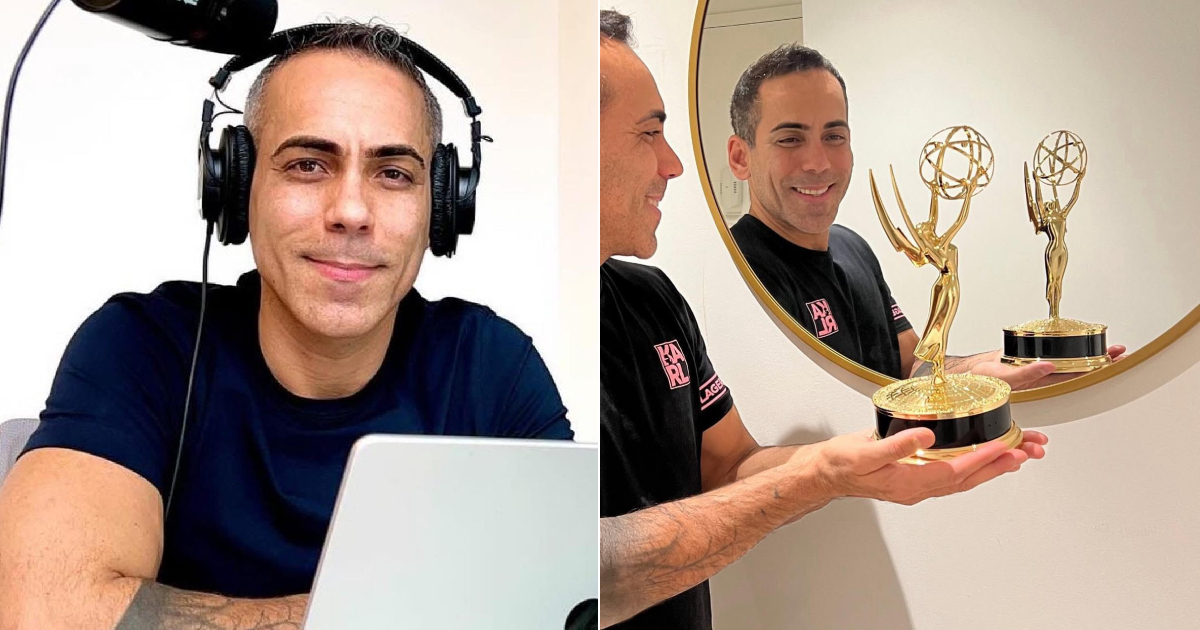
Life is a tapestry of experiences and daily encounters that bring diversity, color, and joy to our existence. I had the pleasure of meeting an extraordinary individual: Piter Ortega Núñez. Born in the quaint rural town of Los Palos, within the municipality of Nueva Paz in present-day Mayabeque province, this remarkable human being is set to achieve another dream on October 9th—launching his new book, "How to Interpret a Work of Art?" in New York City, published by Art-Sôlido. It's an honor to be interviewed by you, bringing me double satisfaction. This book aims to make art accessible to the wider public, especially the Latino community, using language that is both approachable and profound, coinciding with Hispanic Heritage Month celebrations.
Why did you decide to write this book?
It stems from something both simple and ambitious: the desire to share with others the true meaning of engaging with art. I have always believed that art serves as a tool for healing the soul. In our image-saturated world, we often lack the ability to truly understand them. I felt compelled to create a straightforward, poetic guide for anyone, especially Latinos, to find not just beauty but also strength and solace in art.
An Educational Turn in Writing
Is there something unique about this book compared to your previous works?
Yes, unlike my earlier publications, this book has a broader educational focus. My prior texts were more specialized, leaning towards critical essays. Here, I opted for a clearer, more relatable style. My background in journalism greatly aided this transition, as journalism teaches you to communicate directly and without pretense. I wanted this book to be welcoming to everyone, regardless of their academic background.
Timing with Hispanic Heritage Month
Why release this book during Hispanic Heritage Month?
It seemed like the perfect opportunity. Hispanic heritage encompasses more than music, food, or family traditions; it includes art, sensitivity, and the ability to see the world differently. In a time of many challenges for our community, I felt this book could be an affirming and hopeful gesture. Art belongs to all of us, and I want Latinos in the U.S. to feel entitled to interpret it and make it their own.
Personal Reflections on Art
Is there a particular artwork mentioned in the book that resonates deeply with you?
Yes, "Con la fuerza del ejemplo" by Lázaro Saavedra. This painting depicts the Virgin of Charity rowing in a boat with three Cuban rafters. Having lived through the Special Period in Cuba during the 1990s, this image profoundly impacts me. The Virgin is not on her altar; she's in the struggle, rowing with her people. I couldn't help but write from a personal perspective, recalling the countless Cubans who took to the sea. This artwork encapsulates faith, pain, and resilience, reminding me that art can be a collective mirror of our history.
How did your journey begin in Los Palos?
From Los Palos, I moved to San Nicolás de Bari, then to Havana in 2001 to study Art History at the prestigious university. I graduated with honors, earning the title of the most outstanding student in my class. In 2008, I received the "Guy Pérez Cisneros" National Art Criticism Award, and in 2011, I published my first book, "Contra la toxina," through the Cuban Institute of Cultural Research Juan Marinello.
The Transition to the U.S.
How did you transition from Cuba to the United States?
In 2013, I arrived in Miami through an art gallery that invited me to give a lecture on contemporary Cuban art. I held a tourist or cultural exchange visa, I don't recall exactly. It was during Obama's presidency, a favorable time for cultural exchanges. I stayed and eventually applied for residency under the Cuban Adjustment Act after a year and a day.
How did you adapt to life in New York?
My path wasn't easy. After moving to Miami, I worked as a waiter in Peruvian restaurants, a country I deeply admire. My partner is Peruvian, and my upcoming book explores shamanic experiences in the Amazon rainforest. I later engaged with art galleries in Wynwood, contributed to El Nuevo Herald, and appeared on América TeVé discussing Cuban issues. I published books such as "El peso de una isla en el amor de un pueblo" and "La generación del milenio. Arte cubano 2001–2016." In 2017, I moved to New York for a Master’s in Journalism at CUNY, graduating in 2018. My journalism career flourished, culminating in an Emmy award in 2022.
Future Prospects and Personal Life
What's next after your book launch in New York?
Next year, I plan to present the book in Miami and Havana. Concurrently, I'm working on a different project, documenting my experiences with ancestral medicines and shamanism in the Amazon. These were intense months of spiritual learning, and I wish to share them. My YouTube channels, "TV Mi Gente" and "TVG Arte," will continue to expand, promoting access to art and knowledge.
How's life treating you personally?
Personally, I'm in a very happy place. I have a stable relationship and plan to marry my boyfriend next year. I feel aligned in body, mind, and spirit.
What are your thoughts on the current situation in Cuba?
Cuba is enduring its worst period in 66 years. Having lived through the Special Period, I can say that the current situation is even more dire. I frequently visit Cuba to see my family, and each time, I witness increasing despair—not just physical decay but a loss of spiritual, civic, and human values. Our people deserve a future filled with hope and opportunities. Despite the hardships, Cubans remain resilient and kind-hearted.
In summary, why should someone read your book?
Reading "How to Interpret a Work of Art?" offers a chance to understand ourselves through art. It's about finding beauty, truth, and healing. My book invites everyone to view art not as an exclusive domain of experts but as a shared human right and opportunity.
Insights into Piter Ortega Núñez's Work and Life
What inspired Piter Ortega Núñez to write his latest book?
He was inspired by the desire to share the true meaning of engaging with art and to provide a guide for understanding art's beauty, strength, and solace, especially for the Latino community.
How does Piter Ortega Núñez's background influence his work?
His background in Cuba gave him a passion for art and critical tradition, while his journalism experience in New York taught him to communicate clearly and directly, blending both influences in his writing.
Why is "How to Interpret a Work of Art?" significant during Hispanic Heritage Month?
The book emphasizes that Hispanic heritage includes art and sensitivity, encouraging the community to see art as an inclusive and accessible part of their cultural identity.
What are Piter Ortega Núñez's future plans?
He plans to present his book in Miami and Havana, continue expanding his YouTube channels, and work on a new book about his experiences with shamanism in the Amazon.