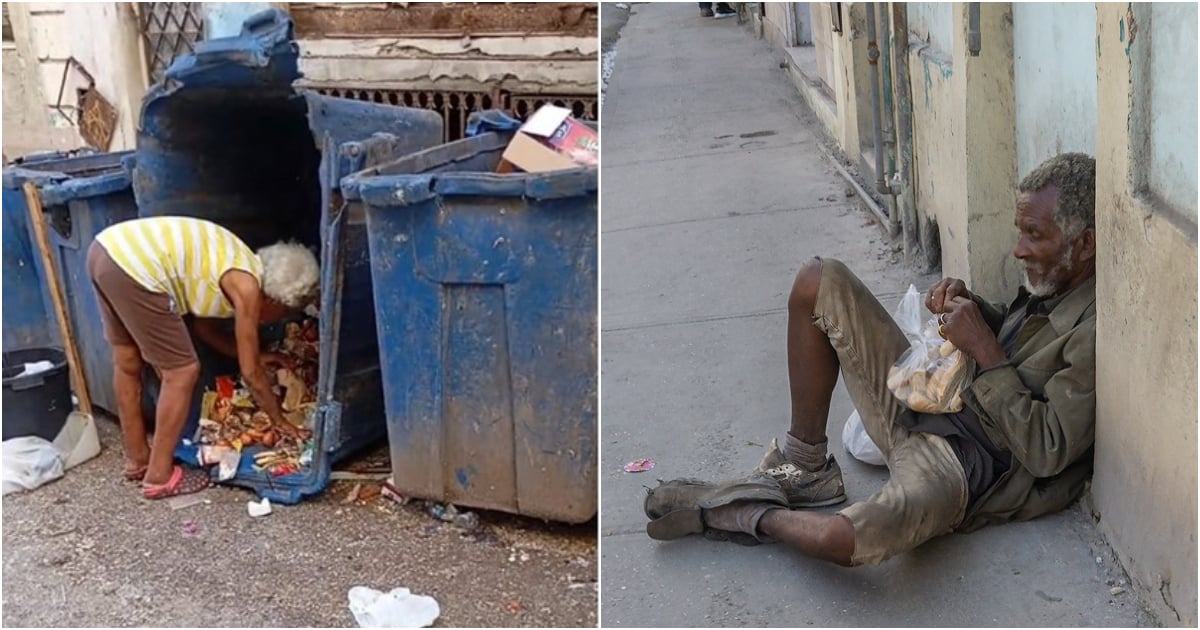
An independent writer from Santiago de Cuba, Yasser Sosa Tamayo, recently shared a poignant piece on Facebook, highlighting the grim realities of everyday life in Cuba as a journey toward disaster. His narrative, rich with raw imagery and everyday testimonies, criticizes the never-ending blackouts, food shortages, and dire conditions in hospitals.
Sosa Tamayo paints a vivid picture of families enduring up to 12-hour power outages, where refrigerators emit the stench of spoiled food. People resort to cooking with wood or charcoal to make a meager meal of rice that doesn't satisfy and bread that vanishes before reaching the table. He also touches on the endless lines, the mounting frustration, and the severe lack of basic hospital supplies.
Describing hospitals as ghostly, he states, "There's no saline, antibiotics, or gauze. Mothers bring their sick children, and doctors ask them to provide even the cotton. Without it, there’s no treatment." The walls still bear slogans like "Homeland or death" and "To resist is to win." He questions, "What good is resisting when ideals don't fill plates, heal bodies, or turn on the lights? Resisting here means going to bed hungry, selling clothes, lying to your child saying tomorrow will be better, knowing it won't."
He argues that in Cuba, poverty is impossible to hide, it's palpable. The island, he believes, now embodies "hunger, exhaustion, anger, darkness. It's not a metaphor. It's not poetry. It's the burning truth. Here, people survive, but they don't live." Concluding his widely shared message, he warns, referring to the government, "Someone should tell the captain that this ship is adrift, heading for the wreck of its people."
His post resonated with users, who see it not only as an individual outcry but as a mirror reflecting the collective despair engulfing the island. Weeks earlier, engineer Yulieta Hernández shared a similar sentiment, describing life on the island as defined by the "normalization of abnormality." She believes a structural and sustained crisis prevails, convincing many that survival is replaced by what she calls "over-dying."
She emphasized that energy, food, healthcare, education, transportation, housing, connectivity, the economy, security, and even social values are in a state of relentless collapse. In late June, Sayli Alba Álvarez, a worker at the Provincial Center for Books and Literature in Sancti Spíritus, recounted her night-time trek with her son, searching for something as basic as electricity to sleep. Yet, what she found was a city shrouded in darkness and a sense of defeat more profound than mere exhaustion—a silent defeat that no lamp can dispel, eroding the hope of entire generations. She concluded, "My city has died, and I have run to hide."
Even official spokespersons like Michel Torres Corona, known for his role in the propaganda program Con Filo, acknowledged the current state in Cuba, admitting the Revolution is "bogged down" while criticizing the hypocrisy and complaining about the blackouts affecting the capital. His statements came amidst growing tension in Havana, where consecutive days of power outages and water shortages led to public protests.
The sentiment is echoed by another regime spokesperson, singer Israel Rojas, who admitted on social media that "what we are going through is of unspeakable severity," adding that "everyone has the right, the duty, and almost the obligation to express their pain as they experience it." Additionally, Carlos and Ele Alfonso, prominent figures in Cuban music known for their work with Nueva Trova and the Group Síntesis, expressed their frustration on social media over the constant power interruptions.
Understanding Cuba's Current Crisis
What are the main issues described by Yasser Sosa Tamayo?
Yasser Sosa Tamayo highlights issues like prolonged blackouts, food scarcity, and severe deficiencies in hospital supplies as part of the everyday hardships faced by Cubans.
How do the recent social media posts reflect the situation in Cuba?
The social media posts reflect a deep sense of despair and highlight systemic problems such as power outages, food shortages, and a general collapse in essential services, resonating with many Cubans.
What does the term "normalization of abnormality" signify in the Cuban context?
The term "normalization of abnormality" signifies the acceptance of ongoing crises and disruptions in essential services as a regular part of life in Cuba, highlighting a structural and persistent breakdown.