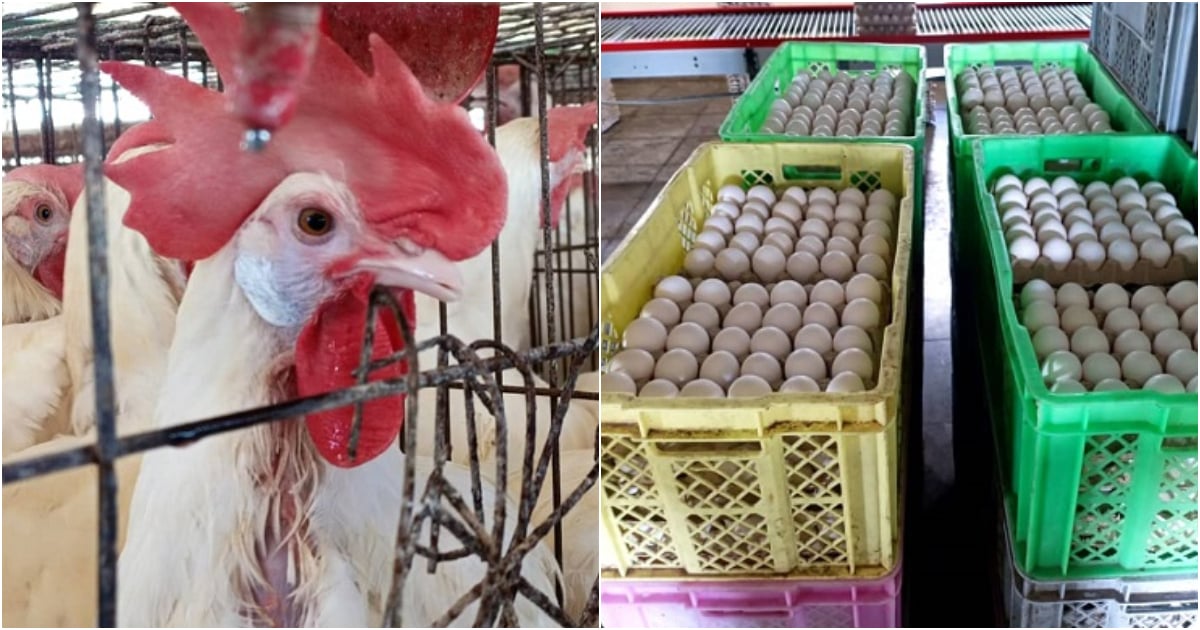
On Thursday, poultry producers in the Dominican Republic urged protection of their egg exports to Cuba, a nation that now receives an average of 65 million eggs each month from the Dominican Republic. Businessman Fabio Baba emphasized that following the 2023 diplomatic crisis with Haiti, Cuba has become a vital supporter of the Dominican poultry sector, as reported by the local newspaper Diario Libre.
“If this door closes, we would lose one of the key pillars supporting the current stability of the industry,” warned Baba during the technical event "Protect Our Poultry," held in Santiago de los Caballeros. According to Pavel Concepción, president of the Dominican Poultry Association (ADA), the industry is witnessing a historic phase, with egg production projected to grow by 15% between 2024 and 2025, reaching approximately 390 million eggs monthly.
Additionally, the production of broiler chickens has increased from 20.5 million to over 22 million birds per month, bolstering the country's food security and establishing the Dominican Republic as a regional leader in animal protein exports. The event in Santiago de los Caballeros brought together national and international producers and experts to enhance the industry's competitiveness and health sustainability.
The Rise in Cuban Egg Imports
In March, it was reported that Cuba imported around 16.5 million eggs monthly from the Dominican Republic. However, Dominican producers now claim the actual figure has surged to about 65 million. This dramatic increase highlights Cuba's growing dependency on this market and underscores the strategic importance of the island for the Dominican poultry industry's stability.
Cuban authorities blame the agricultural sector's collapse on shortages of supplies, fuel scarcity, and adverse weather conditions. Besides the Dominican Republic, Cuba also imports eggs from countries like Colombia and the United States. In fact, American eggs are sold in state-owned hard currency stores and through micro, small, and medium-sized enterprises (MSMEs).
Challenges Facing Cuban Egg Production
Despite claims by the regime that the U.S. embargo prevents them from purchasing basic food products, eggs from the United States are available in both physical and online stores on the island. Cuban economist Pedro Monreal has analyzed the severe drop in egg production since the economic "reordering" in 2021, which he describes as more severe than during the notorious Special Period of the 1990s.
In August, Monreal referenced an article from the pro-government portal Cubadebate, arguing that the current decline is one of the most alarming signs of the nation's food insecurity. He extended his critique to the official media's handling of the crisis, pointing out the inconsistency of promoting a supposed "new management model" as a solution.
The economist described this model as antiquated, resembling a medieval "barter of physical units" rather than a market-driven system. Implemented since late 2024, this mechanism involves a cooperative production contract where feed suppliers, ranging from MSMEs to foreign investment entities, receive 70% of the eggs produced. Cuban poultry farms, responsible for infrastructure, technology, and labor, retain 30% of the eggs.
In provinces like Pinar del Río, egg production barely reaches 24% of 2019 levels. Despite ongoing recovery programs after years of accumulated crises, hurricanes, power outages, and feed shortages, the situation remains dire. In October 2024, Agriculture Minister Ydael Pérez Brito revealed that from producing four to five million eggs per day, the output plummeted to just 1,200,000 when they manage to feed the livestock.
In early July, the sale of eggs in dollars at La Época store in Sancti Spíritus turned into a "Roman coliseum" scene, with pushing, shouting, and absolute impunity, as acknowledged by the official newspaper Escambray. Due to the scarcity of an essential food in the Cuban diet, egg cartons have reached astronomical prices in the informal market, far exceeding the minimum salary or pension.
In 2024, Cubans reported the exorbitant cost of a "file" of chicken eggs: 5,000 pesos on the black market, a price unaffordable for low-income workers or retirees with their meager pensions.
Understanding Cuba's Egg Import Dependency
How many eggs does Cuba import from the Dominican Republic each month?
Cuba imports an average of 65 million eggs each month from the Dominican Republic.
What factors contribute to the decline in Cuba's egg production?
The decline in Cuba's egg production is attributed to shortages of supplies, fuel scarcity, adverse weather conditions, and an antiquated management model.
Why is the Dominican Republic's egg export to Cuba significant?
The Dominican Republic's egg export to Cuba is significant because Cuba has become a crucial market stabilizer for the Dominican poultry industry, especially after the 2023 diplomatic crisis with Haiti.