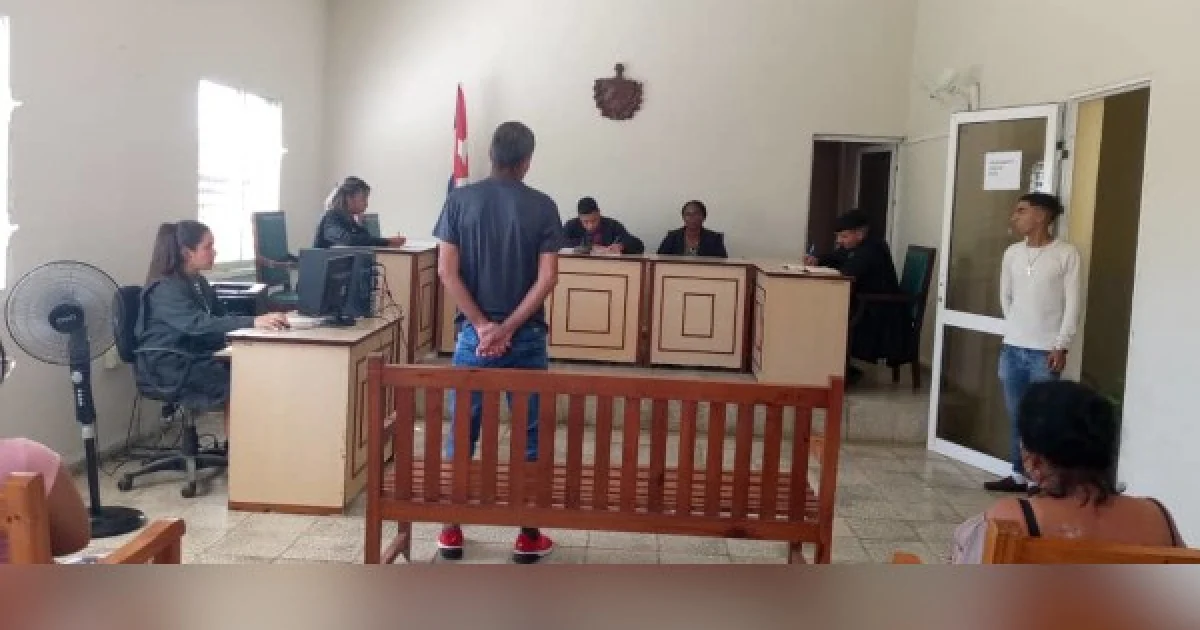
In Cienfuegos, the municipal court of Abreus has sentenced Javier Santana Rodríguez to a year of corrective labor with internment for allegedly stealing five quintals of potatoes from the Carmelina Basic Enterprise Unit located in Horquita. This verdict was heralded by state media as a "model" trial amidst the nation's ongoing economic and food crisis.
According to the publication 5 de Septiembre, the incident took place on February 16th when Santana Rodríguez was caught transporting 230 kilograms of potatoes in an animal-drawn cart, which he had taken from the state-run farm's fields. Fortunately, the entire product was recovered, resulting in no economic losses.
In addition to his primary sentence, Santana Rodríguez faces a suspension of his civil rights, which includes restrictions on voting, holding leadership positions, or leaving the country until the completion of his sentence.
Trials as a Deterrent
The Cuban authorities continue to impose harsh penalties for crimes related to food production, which they consider crucial amidst rampant inflation, chronic shortages, and uncontrollably rising prices. These judicial proceedings are portrayed as deterrents, aiming to "safeguard the national economy."
However, citizens accuse the regime of failing to address the root causes behind the surge in criminal activity: widespread scarcity, low wages, and the State's inability to ensure a steady food supply. Consequently, agricultural theft has become increasingly common in Cuba's production centers.
The Tension Between Hunger and Social Discontent
While the government emphasizes its stringent approach against theft suspects, the public reports a rise in crime and street violence. Many call for penalties against common criminals but also criticize the perceived inefficiency and neglect of law enforcement, which they believe fails to curb theft and violence impacting the populace.
The case in Cienfuegos exemplifies the current contradictions in Cuba: on one side, a government conducting numerous high-profile trials to prevent food loss in agriculture; on the other, a society increasingly battered by crisis, viewing justice's severity as targeting individuals without addressing the underlying issues driving crime.
Understanding the Legal and Social Implications in Cuba
Why was Javier Santana Rodríguez sentenced to a year of corrective labor?
He was sentenced for allegedly stealing 230 kilograms of potatoes from a state-run farm in Cienfuegos.
What additional penalties did Santana Rodríguez face?
In addition to his sentence, he was stripped of certain civil rights, including the right to vote, hold leadership positions, or leave the country until the sentence is served.
How does the Cuban government justify such trials?
The government views these trials as necessary deterrents to protect the national economy against crimes related to food production.