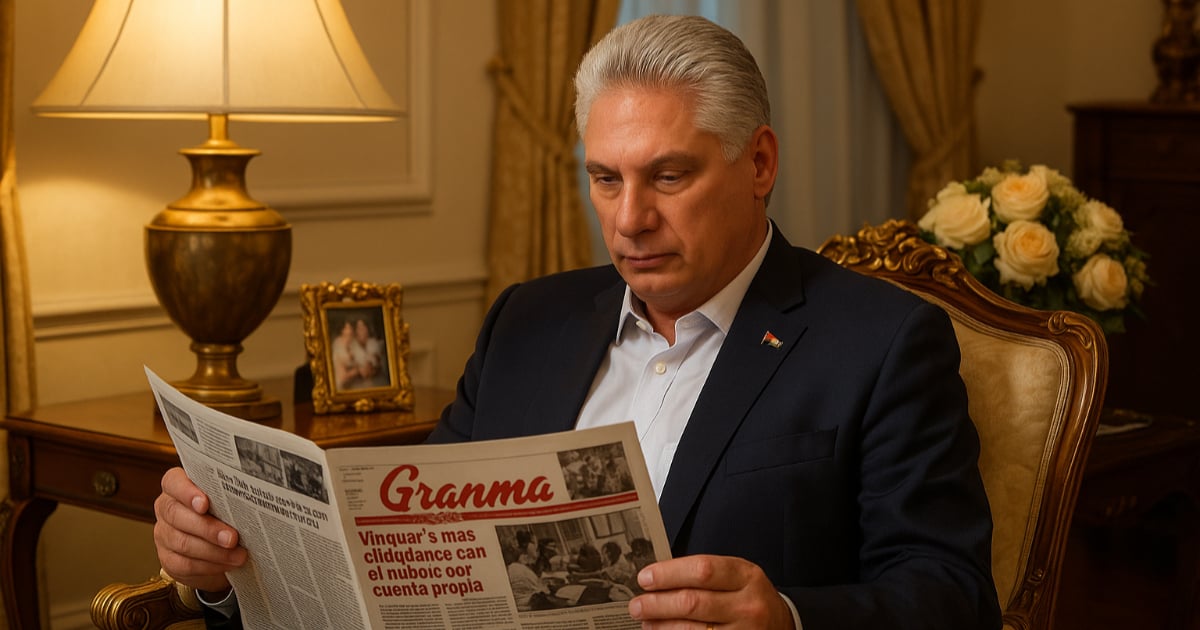
In a recent statement, President Miguel Díaz-Canel emphasized the significance of the newspaper Granma as the "main spokesperson of the Revolution" and urged for its transformation into the "flagship" of Cuban journalism amidst the current media challenges. This declaration sparked significant backlash on social media. On his X account, Díaz-Canel commemorated the founding of Granma on October 3, 1965, and defended its institutional role while stressing the necessity of adapting to "times of multimedia and intensified media warfare."
Granma's editorial team also marked the anniversary on social media, accompanied by images that evoke the era of dictator Fidel Castro (1926-2016). However, many users mocked the publication, describing it as a propaganda tool incapable of addressing the country's real issues. One commenter sarcastically remarked that the newspaper serves as "the best toilet paper for the Cuban people," while others questioned its credibility.
The discussion further highlighted criticisms regarding material shortages and public management, pointing fingers at the government for implementing failed policies that have impoverished the population, leaving them without basic services like electricity, water, and medicines—issues that official media often denies or downplays.
Several messages emphasized that independent media—persecuted by the regime—along with exiles, foreign media outlets, and citizens on social networks, are the ones genuinely documenting issues that state-controlled media cannot freely reflect or analyze. Recently, the PCC's Political Bureau appointed Yoerky Sánchez Cuéllar as the new director of Granma, following his role at Juventud Rebelde.
Sánchez, 41, is not just a journalist but also a National Assembly deputy, a Central Committee member of the PCC, and part of the Council of State. This appointment is seen as merely a reshuffling within the regime's media apparatus, where leadership roles in state media are based on political loyalty rather than journalistic merit.
The leadership change comes over a year after Yailín Orta Rivera stepped down from leading Granma. Her removal was never officially announced, but in May 2024, two months after she left, internal sources confirmed to CubaNet that her tenure led to journalist departures and a tense newsroom atmosphere. Influencer Alexander Otaola accused her of theft and misappropriation of resources, including car parts, entire vehicles, and hundreds of boxes of chicken intended for the newspaper staff's meals.
Orta, who had previously led Juventud Rebelde, served as Granma's director from December 2017 until she was provisionally replaced by Dilbert Reyes Rodríguez, before Sánchez's official appointment. In April 2024, Díaz-Canel reiterated his desire for the PCC's official outlet to become the most-read digital platform in the country during a visit to the newspaper's headquarters. According to an official report, the facilities underwent significant renovations between 2023 and early 2024, restoring the main work areas' comfort and beauty with a modern spatial design.
Key Questions on Granma's Role and Leadership Changes
What role does Granma play in Cuban media?
Granma is considered the main voice of the Cuban Revolution and serves as a crucial propaganda tool for the government, often criticized for not addressing the real issues facing the country.
Who is Yoerky Sánchez Cuéllar?
Yoerky Sánchez Cuéllar is the new director of Granma, previously leading Juventud Rebelde. He is also a National Assembly deputy, a Central Committee member of the PCC, and part of the Council of State.
What criticisms have been raised against Granma?
Critics argue that Granma acts as a propaganda outlet unable to reflect the country's real issues. Comments on social media highlight its limited credibility and failure to address material shortages and failed government policies.
What changes occurred in Granma's leadership recently?
Granma's leadership saw a change with Yoerky Sánchez Cuéllar's appointment, following Yailín Orta Rivera's departure. Orta's management was reportedly marked by internal tensions and accusations of resource misappropriation.