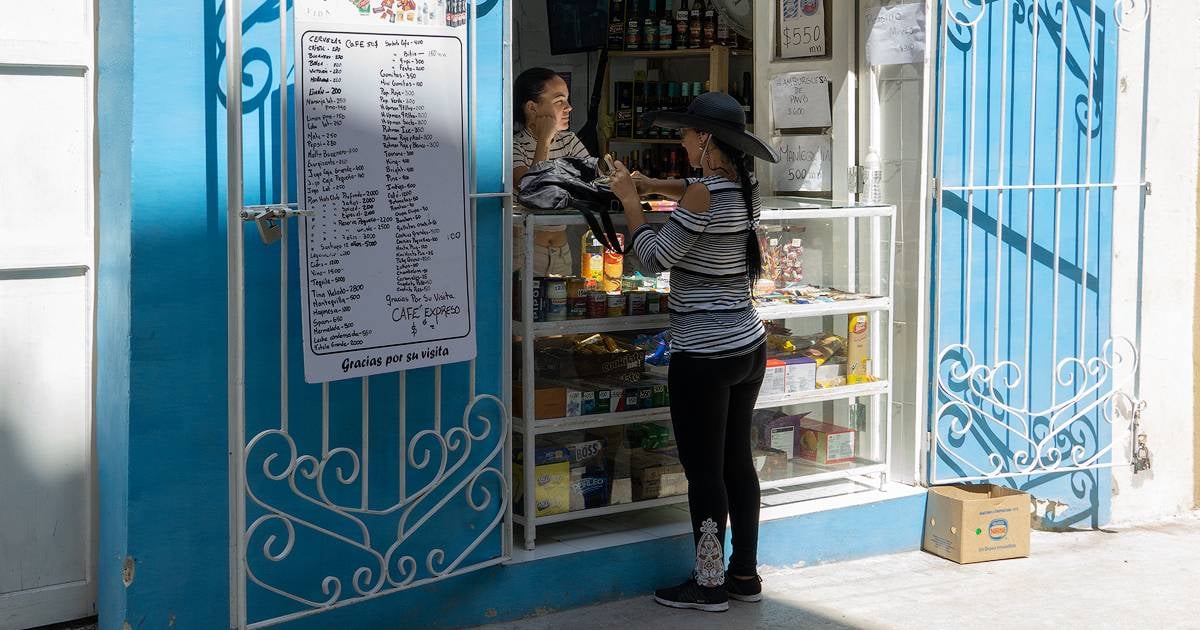
The private sector in Cuba now accounts for more than half of the retail market and provides nearly a third of the nation's employment. However, its potential for growth is severely curtailed by government-imposed limitations, legal restrictions, and constrained access to international markets. A recent report by economist Ricardo Torres Pérez, released by the Cuba Study Group, highlights the increasingly challenging environment faced by Cuban entrepreneurs. They have minimal involvement in exports and lack adequate financing to facilitate expansion.
Adding to the difficulties are power outages, resource shortages, and a decline in private tourism—previously robust in 2024 but hit hard in May 2025 when Airbnb withdrew from the country.
Unveiling the Data: Private Sector's Role
The report titled "Cuba's Private Sector: Escape Valve or Development Engine?" reveals that Cuban entrepreneurs are responsible for over 31% of the country’s employment, with the private sector controlling 55% of retail trade. Despite this, its contribution to the Gross Domestic Product (GDP) was a mere 15% in 2024.
The study’s graph illustrates a dual reality. On one hand, private business owners are vital in visible economic sectors like commerce, services, and tourist accommodation. On the other, they remain marginalized from strategic, high-productivity sectors. A mere 3.2% of exports are conducted by the private sector, highlighting its exclusion from global markets and demonstrating the State's continued dominance over foreign trade.
Furthermore, 23% of state budget revenues come from taxes levied on the private sector, underlining the role of micro, small, and medium enterprises (MSMEs) and individual entrepreneurs not only in employment generation but also in financing a significant portion of public spending. Nevertheless, the current fiscal structure puts them at a disadvantage compared to foreign investors, who enjoy tax exemptions and privileges unavailable to local players.
Crisis in Private Tourism: A Silent Setback in 2025
The private sector's growth was most evident in tourism, which accounted for 24% of international visitor overnight stays by the end of 2024. This upward trend suffered a significant blow in May 2025 when Airbnb suspended payments to hosts in Cuba without prior notice, forcing many to seek foreign bank accounts or leave the platform. Airbnb processed existing bookings but blocked new ones unless conditions, tied to U.S. federal regulations, were met.
This decision impacted over a thousand private accommodations and experiences, particularly in Havana. Airbnb Experiences, including cultural tours, cooking classes, and music sessions led by locals, were also halted, leaving many entrepreneurs without income or immediate alternatives. Most hosts now face higher commissions and struggle to provide basic services like electricity and water amid Cuba's energy crisis. Additionally, they rely on family abroad to collect the few bookings they manage to arrange.
Cuban authorities, meanwhile, have intensified their focus on state-run tourism, announcing new hotel investments, tourist facility leases, and the introduction of foreign currency bank cards, among other measures. While the state opens up to foreign investment, the private sector endures regulations, price caps, legal uncertainty, and enforced banking practices that complicate operations in the Cuban context.
A Productive Sector Locked Out of the Economic Core
The graph from the Cuba Study Group's report clearly depicts the private sector's limitations within the Cuban model. Despite generating employment, contributing taxes, and leading retail trade, MSMEs and individual entrepreneurs remain excluded from currency control, exports, and key economic sectors.
This imbalance is no accident. The regime's policies serve as a structural barrier, with obstacles to foreign trade, financing restrictions, stringent regulations, and an approach that views the private sector more as a social release valve than a genuine economic engine.
The private sector in Cuba demonstrates dynamism, innovation, and resilience in the face of structural challenges. Yet the rules of the game remain unchanged, confining its role to filling the gaps left by the State without reaching the transformative potential the country desperately needs.
FAQs on Cuba's Private Sector Challenges
What percentage of Cuba's employment is provided by the private sector?
The private sector in Cuba accounts for over 31% of the country's employment.
How has the withdrawal of Airbnb affected Cuba's private tourism sector?
Airbnb's withdrawal has severely impacted over a thousand private accommodations and experiences, particularly in Havana, leaving many entrepreneurs without income or immediate alternatives.
What obstacles does the private sector in Cuba face?
The private sector in Cuba faces numerous obstacles, including government-imposed limitations, legal restrictions, limited access to international markets, fiscal disadvantages, and enforced banking practices.