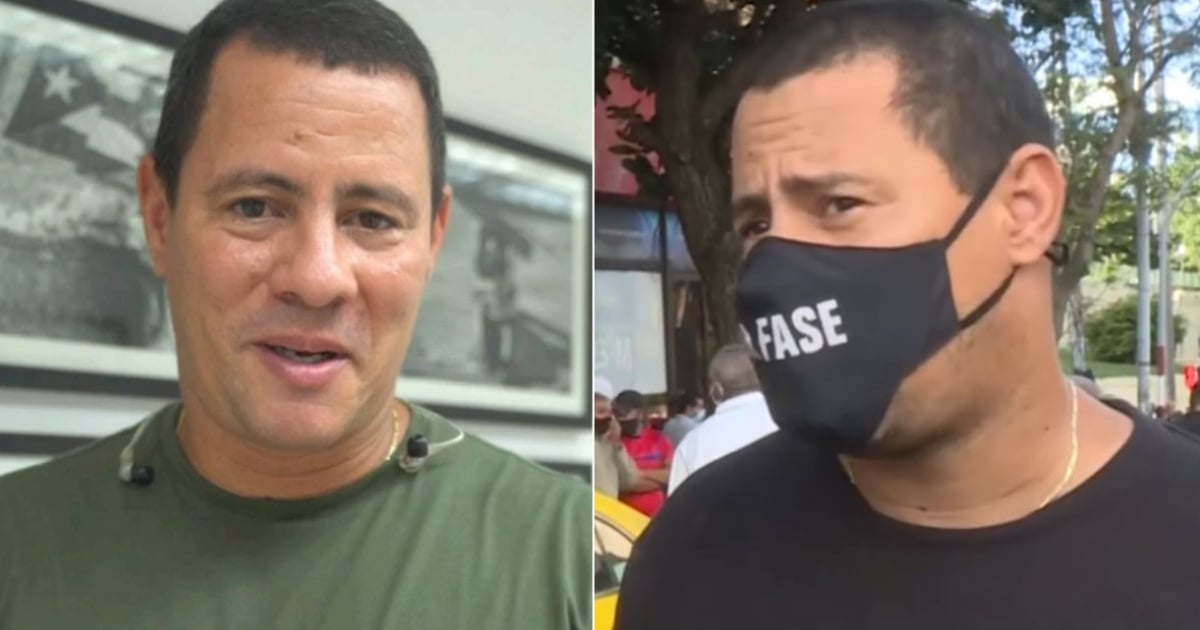
Cuban singer Israel Rojas, leader of the duo Buena Fe and a well-known advocate for the regime, has taken many by surprise with a recent Facebook post. For the first time, he acknowledges the severity of the crisis facing the Cuban people, suggesting that speaking out against it is almost a civic duty. "Everyone has the right, the duty, and almost the obligation to express their pain as they feel it," Rojas wrote.
The performer stated, "What we're going through is indescribably severe," adding that the helplessness and anger have become unbearable, to the point where "sometimes I think I won't make it to tomorrow."
Past as a Regime Defender
Rojas's statement comes amid the worsening crisis in Cuba and starkly contrasts with his previous support for the government. During the protests on July 11, 2021, when economic turmoil and power outages were already plaguing the nation, he appeared on state television endorsing the regime's crackdown on demonstrators. In May 2023, he denied the existence of political prisoners from those protests, aligning himself with the government's narrative and downplaying the repression of thousands of Cubans demanding their rights.
Now, Rojas admits to feeling overwhelmed by rage and helplessness in the face of "injustices of all kinds and levels" and expresses gratitude for those who help him "survive one more day by assisting others."
Protests Surge in Havana
In a paradoxical twist, the artist who once justified repression now acknowledges that the people's suffering demands expression. He implicitly questions the responsibility of a government unable to provide essential services, food, medicine, transportation, and quality education.
Scores of citizens have taken to the streets in Centro Habana, following consecutive days of blackouts lasting over 20 hours and chronic water shortages. Videos shared by users like Saúl Manuel and Enrique Hernández depict scenes of banging pots, chants of "Freedom!" and fires lit in the streets. Key intersections have been blocked, involving even children, highlighting families' desperation over the lack of basic services.
The energy crisis, at the heart of the discontent, goes beyond sporadic outages. According to reports from Havana's Electric Company, the city has experienced up to 296 MW deficits during peak hours, leaving blocks without power for extended periods. Compounding the issue is the water scarcity, caused by breakdowns in the Cuenca Sur pipeline and unreliable supply in large areas of the capital. Residents report going over a month without service, forced to pay exorbitant prices for private water deliveries that last only a few days.
The government's failure to provide concrete solutions underscores its inefficiency and negligence in managing basic services, systematically affecting citizens. Israel Rojas's statement arrives at a critical juncture, as the collapse of essential systems combines with widespread poverty, leaving Cubans trapped in a cycle of endless blackouts, hunger, medicine shortages, and an unresponsive state administration.
With his message, Rojas presents a new perspective on the urgency of voicing dissatisfaction, though his historical role as a regime supporter highlights the contradiction between his past and the belated acknowledgment of the harsh reality faced by millions of Cubans.
Understanding Cuba's Current Crisis
What prompted Israel Rojas's change in stance on Cuba's crisis?
Israel Rojas's shift in perspective seems to be influenced by the worsening conditions in Cuba, including widespread power outages and shortages of basic necessities, which have become unbearable for many citizens, including himself.
How have Cubans reacted to the ongoing crisis?
Cubans have responded to the crisis with increased protests, particularly in areas like Centro Habana, where residents experience extended blackouts and water shortages. Demonstrators have taken to the streets, expressing their frustration through chants and public demonstrations.
What are the main causes of the current crisis in Cuba?
The crisis in Cuba is largely due to the government's mismanagement of essential services, resulting in extensive power outages, water shortages, and an inability to provide adequate food, medicine, and education to the population.