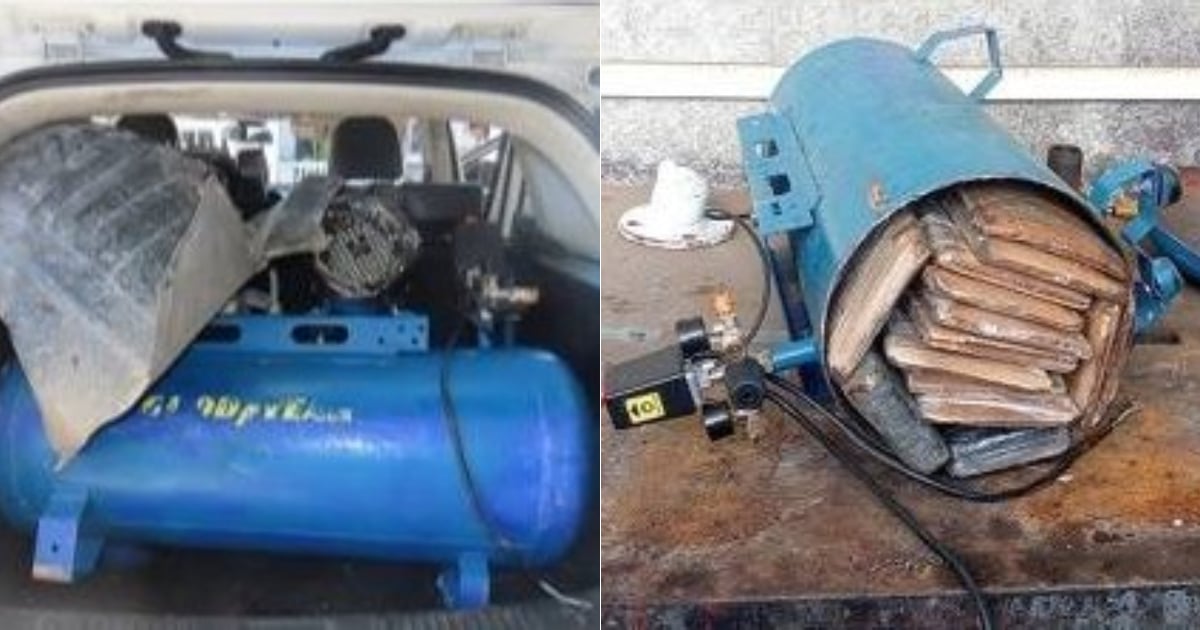
In a recent operation carried out in the Báguanos area of Holguín, Cuban police apprehended three men transporting more than 35 kilograms of cocaine concealed within an industrial compressor. This information comes from sources connected to the Ministry of the Interior (Minint).
The arrest took place in the Camazán locality, along the highway linking Báguanos with Mayarí. The suspected drug traffickers were traveling in a tourist vehicle carrying the modified equipment, as reported by the Facebook page El Cubano Fiel on Thursday.
According to sources cited by the page, the suspects ingeniously altered the compressor to hide the drugs. They opened the tank, stashed the drug packages inside, then sealed and painted it to make it appear as factory-made.
The precision of the operation by the National Revolutionary Police (PNR) suggests that authorities had prior intelligence about the cocaine shipment and the method used to conceal it, the report noted.
The identities of the individuals arrested have not been disclosed, though the publication shared photos of the trio handcuffed with their faces obscured by emojis, along with images of the compressor and the hidden drug parcels.
This case highlights the cunning of drug traffickers in Cuba, who increasingly employ sophisticated tactics to transport and distribute illegal substances. Networks have resorted to using everyday items, such as hygiene products, food, and religious objects, to smuggle cocaine and marijuana into the country.
Both the illegal sale and consumption of drugs have reached critical levels on the island, especially over the past five years, despite the regime’s attempts to control them under a "zero tolerance" drug policy.
In August, Cuba's Supreme People's Court issued a stern warning about the rising sale and use of synthetic drugs—specifically synthetic cannabinoids known as "químico" or "papelillo"—in the country, notably in Havana. The court has approved stricter punitive measures against those caught possessing or distributing these highly harmful substances.
Recently, the Minint disclosed that more than 1,500 individuals have been detained in anti-drug operations, with many currently held in pre-trial detention.
Last week, the Provincial People's Court of Holguín sentenced three individuals—two men and one woman—to prison terms ranging from six to eight years for crimes related to drug possession, trafficking, and consumption. In Havana, another court handed down a 15-year sentence to a man convicted of trafficking cocaine and synthetic cannabinoids.
Despite the imposition of harsher penalties and exemplary sentences against traffickers, the government's strategy seems inadequate to curb the ongoing issue. The drug trade has become yet another serious concern for Cuban society, already burdened by economic challenges and daily shortages of basic necessities.
Understanding Cuba's Drug Trafficking Challenges
How do traffickers conceal drugs in Cuba?
Traffickers use a variety of methods to hide drugs, including modifying industrial equipment like compressors, and concealing substances within everyday items such as hygiene products, food, and religious objects.
What measures has Cuba taken against drug trafficking?
Cuba has implemented a "zero tolerance" policy on drugs, increased penalties, and imposed stricter punitive measures against those possessing or distributing drugs. Over 1,500 arrests have been made in recent anti-drug operations.
What are the consequences of drug trafficking in Cuba?
Drug trafficking in Cuba results in severe legal penalties, including lengthy prison sentences. It also poses significant societal challenges, exacerbating the country's economic issues and daily shortages of essentials.