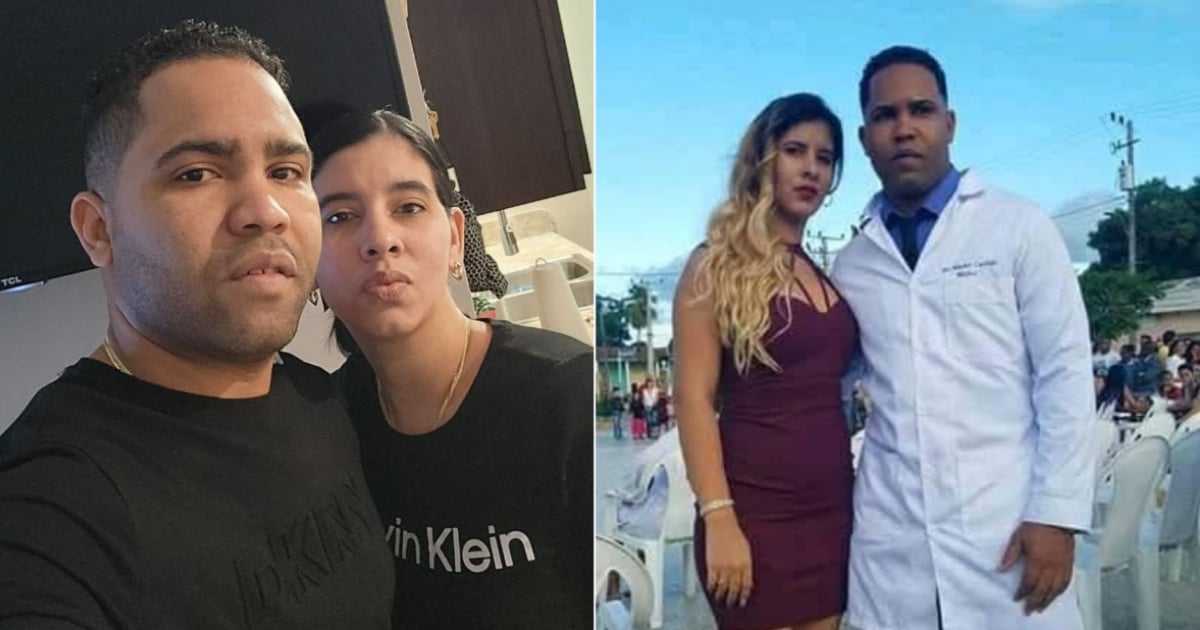
After years of uncertainty and perseverance, a pair of Cuban doctors from Guantánamo have made significant strides in rebuilding their professional careers in the United States. Delia Cardosa, a specialist in geriatrics, and her husband Héctor, an intensivist, along with their three children, have settled in Kentucky. There, they have successfully become part of the healthcare system as Physician Assistants (PAs).
The couple, who arrived in the U.S. with an I-220A form, navigated a complex journey to achieve this goal. For nearly three years, they faced the challenges of reintegrating into a professional field in a country with stringent requirements for credentialing and certification of internationally trained healthcare professionals. Their journey has been marked by personal and professional sacrifices, yet fueled by the conviction that they could rebuild their lives in an environment where effort and perseverance are rewarded.
The Journey of Cuban Doctors in the United States
The experience of Delia and Héctor illustrates the path many Cuban doctors must take to join the U.S. healthcare system. Becoming a Physician Assistant doesn't equate to practicing as a physician in the U.S., but it offers a viable and quicker alternative to entering the healthcare workforce while utilizing the training obtained in Cuba.
The process starts with the evaluation of academic credentials, where accredited agencies like WES (World Education Services) verify that Cuban degrees are equivalent to a university degree in the U.S. Following this, candidates must meet the admission requirements for a master's program in Physician Assistant Studies, accredited by the ARC-PA. These programs demand, among other prerequisites, proficiency in English, validated science courses within the U.S. system, documented clinical experience hours, and sometimes passing the GRE exam.
The master's program spans two to three years, involving both theoretical education and clinical rotations in hospitals across the country. After graduation, aspiring PAs must pass the national certification exam (PANCE) and obtain the required state license to practice. In their roles, they work in hospitals, private clinics, or community centers, always under a physician's supervision.
An Alternative to Overcome Systemic Barriers
The path to full medical practice in the U.S. is even more challenging, prompting many professionals to opt for the Physician Assistant role. This choice allows them to re-enter their field and maintain their connection to medicine. The achievement of Delia Cardosa and Héctor not only provides personal relief after years of sacrifice but also serves as a beacon of resilience for hundreds of Cuban doctors who have arrived in the U.S. with the I-220A, facing the challenge of reconstructing their professional lives in a highly competitive setting.
FAQs on Cuban Doctors Rebuilding Careers in the U.S.
What is the I-220A form?
The I-220A form is a document issued to certain immigrants, including Cuban doctors, allowing them to reside temporarily in the United States while their immigration status is resolved.
How can Cuban doctors utilize their training in the U.S.?
Cuban doctors can leverage their training by becoming Physician Assistants, which allows them to work in healthcare while meeting the U.S. certification and licensing requirements.
What are the key steps to becoming a Physician Assistant in the U.S.?
The key steps include credential evaluation, completing a master's program in Physician Assistant Studies, passing the PANCE exam, and obtaining a state license.