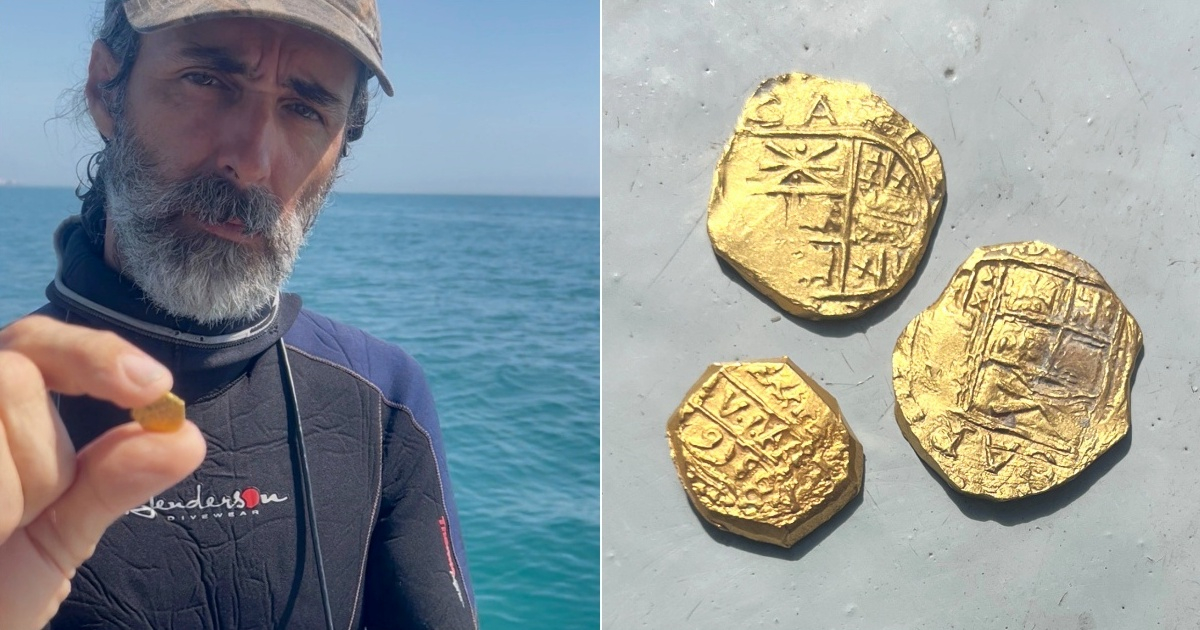
A recent discovery off the coast of Florida has captivated historians, archaeologists, and treasure hunters globally. Over 1,000 silver coins and five gold coins, estimated to be worth nearly a million dollars, were retrieved by a marine salvage team from the ocean floor. These artifacts, minted in the 18th century in former Spanish colonies such as Mexico, Peru, and Bolivia, belong to the legendary 1715 Treasure Fleet—a Spanish convoy that sank over 300 years ago during a hurricane, according to a report.
The find, spearheaded by Captain Levin Shavers and carried out by the crew of the M/V Just Right, occurred this summer along Florida's aptly named Treasure Coast, a region famed for its shipwrecks laden with riches discovered over the centuries.
The Calamitous 1715 Disaster: Ships, Lives, and Lost Wealth
In the early hours of July 31, 1715, a devastating hurricane struck a fleet of a dozen Spanish ships departing the New World for Spain, loaded with colonial treasures. The catastrophe was immense: estimates suggest up to $400 million in gold, silver, and jewels were lost. Between 700 and 1,000 people perished, according to historical records.
The coins recovered in this recent expedition are known as reales (silver) and escudos (gold), with many still bearing visible dates and mint marks pre-dating 1715, allowing for precise tracing of their origins. Most were minted at the Mexican Mint, with others from Peru and Bolivia. Experts theorize that these coins "likely belonged to a single chest that spilled when the ship broke during the storm," stated Queens Jewels, LLC, the salvage company responsible for the find.
An Emotional and Archaeological Discovery
The treasure was located in an area of just 25 square feet, buried under several feet of sand and sea, necessitating strict recovery protocols set by Florida for underwater archaeology. The excitement among the discoverers was palpable. Captain Shavers likened the experience to "losing something you truly value and almost accepting you'll never find it again, and then it suddenly appears. It's an incredible feeling."
Sal Guttuso, operations director at Queens Jewels, emphasized that the discovery's value transcends monetary worth. "Each coin is a piece of history, a tangible link to the people who lived, worked, and sailed during the Spanish Empire's Golden Age. Finding 1,000 in a single recovery is as rare as it is extraordinary," he stated.
Meanwhile, Mike Perna, a shipwreck diver and board member of the company, highlighted that the discovery was the result of six years tracking a mile-long treasure trail, tracing the ill-fated fleet’s journey along the Atlantic coast. "Gold coins have proved much more elusive than silver ones," he noted, with two notable pieces being the eight escudo Mexican coins from 1714, marked as especially valuable.
Conservation, Exhibition, and an Incomplete Treasure
The haul represents about one-third of a typical coin chest from that era, suggesting more treasures await discovery at the site. The coins must undergo a conservation process to remove encrustations and determine their rarity or numismatic value. Once this is completed, some pieces will be exhibited in local museums.
Queens Jewels, which holds exclusive salvage rights to the 1715 Fleet's remains granted by U.S. courts, collaborates closely with marine archaeologists and institutions to ensure these finds contribute to historical knowledge, beyond their potential commercial value. "Each discovery helps reconstruct the history of the 1715 fleet," Guttuso affirmed. "We are committed to preserving and studying these artifacts so future generations can appreciate their historical significance," he added.
This new discovery bolsters the reputation of Florida's east coast as one of the world's richest regions for underwater archaeological finds. Known as the Treasure Coast, it includes Indian River, St. Lucie, and Martin counties, and has been the site of multiple discoveries related to the 1715 Fleet over the last century.
Insights into the 1715 Treasure Fleet Discovery
How much is the discovered treasure worth?
The treasure is estimated to be worth nearly a million dollars, comprising over 1,000 silver coins and five gold coins.
What is the historical significance of the coins?
These coins are a part of the legendary 1715 Treasure Fleet, a Spanish convoy that sank during a hurricane, representing a tangible link to the Spanish Empire's Golden Age.
Who led the discovery of the treasure?
The discovery was led by Captain Levin Shavers and carried out by the crew of the M/V Just Right.