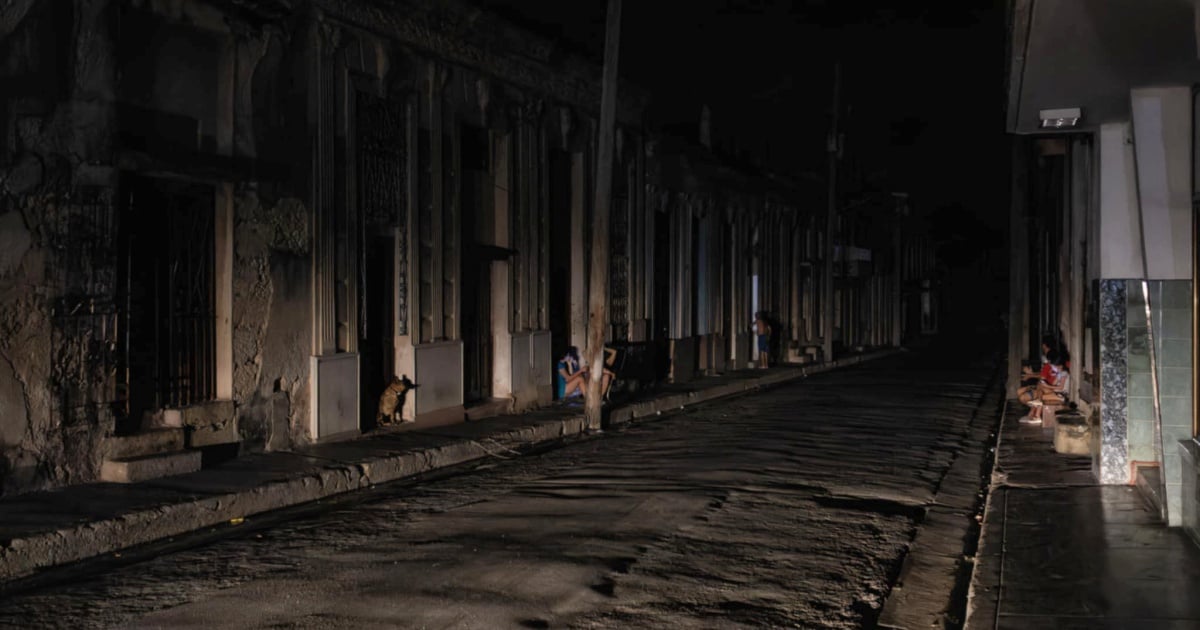
Following over a day without electricity in multiple provinces, the Cuban government once again pointed fingers at the United States for the ongoing energy crisis impacting millions. Despite continuous investments in hotel construction that remain largely unoccupied, the Cuban leadership continues to deflect blame.
Bruno Rodríguez Parrilla, the Minister of Foreign Affairs, shared an update on the national report concerning the effects of the U.S. embargo. Covering the period from March 2024 to February 2025, the report claims the embargo has inflicted damages exceeding $7.5 billion in just a year, marking a 49% increase from the previous period, as reported by Cubadebate.
Rodríguez persistently argued that the embargo severely impacts the national electrical grid, describing it as one of the hardest-hit sectors. He asserted that just five days of blockade hinder the funding necessary for repairs at power plants like Antonio Guiteras and Carlos Manuel de Céspedes. Furthermore, he claimed that two months of embargo costs equate to the entire fuel requirement needed to meet the country's electricity demand.
In his address, Rodríguez maintained that without Washington's policy, Cuba would be able to secure its electricity supply and advance energy projects. "Twelve days of blockade represent the annual maintenance budget for the electrical system," he stated, continuing the government's typical comparisons to avoid responsibility.
The report also highlighted challenges faced by the nation, such as contract cancellations, denial of technical assistance, and blocked financial transactions by foreign banks—all due to fears of U.S. sanctions. Among the cited examples was a friendly company's refusal to provide technical support for a power plant repair because the equipment contained over 10% U.S. components.
Deputy Minister of Energy and Mines, Tatiana Amarán Bogachova, reiterated on the Mesa Redonda program that the embargo is "the main obstacle" to restoring Cuba's electrical system. She acknowledged the deep impact of power outages on daily life and noted that even contracted technicians have declined to travel to the island due to external pressures.
The official also pointed out that the embargo inflates equipment costs, delays access to crucial parts, and hinders the acquisition of technology essential for progressing in renewable energy. "It's like having a sick system and being denied the medicine to cure it," she remarked, summarizing the official narrative.
Curiously, amid all the reports and figures, there is no mention of how much has been lost due to the regime's failed policies. However, the government steadfastly refuses to acknowledge its share of responsibility for the island's energy chaos.
Meanwhile, power outages continue to escalate nationwide, affecting the daily lives of millions of Cubans who endure fatigue, frustration, and a lack of concrete answers on when the situation might improve.
Understanding Cuba's Energy Crisis
How does the U.S. embargo affect Cuba's energy sector?
The Cuban government claims that the U.S. embargo significantly impacts their energy sector by restricting access to necessary funds for repairs and maintenance, increasing equipment costs, and blocking technical assistance and financial transactions due to fear of sanctions.
What are the reasons for Cuba's power outages?
Cuba's power outages are attributed to the U.S. embargo, which the regime claims limits resources for maintaining and upgrading the electrical grid. However, critics argue that internal mismanagement and failed policies also play a significant role in the energy crisis.
Has the Cuban government acknowledged its role in the energy crisis?
The Cuban government predominantly blames the U.S. embargo for the energy crisis, often avoiding taking responsibility for internal policy failures that contribute to the ongoing issues.