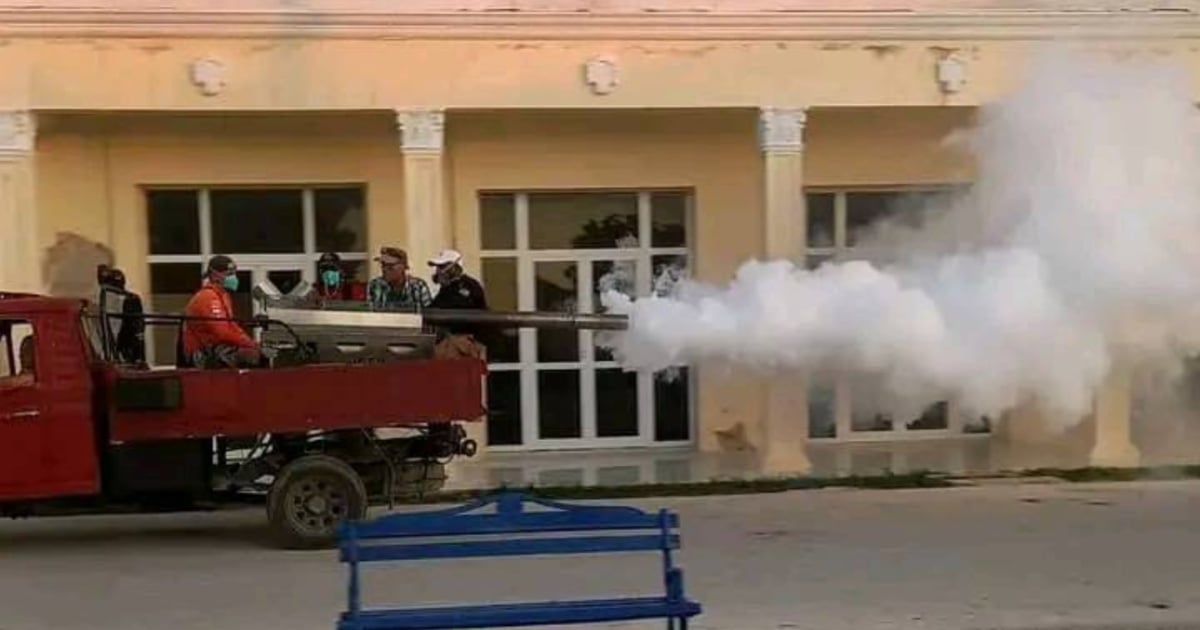
The health authorities in Sagua la Grande, located in Villa Clara, have sounded the alarm over a surge in fever cases in recent weeks, amidst an outbreak of various arboviruses impacting multiple Cuban provinces. On Wednesday, state media reported that Isabela de Sagua's local council has initiated an intensive surveillance and anti-vector campaign.
Efforts include targeted destruction activities across all city blocks, treating water containers with larvicides, and conducting three rounds of indoor fumigation to break mosquito transmission chains. Health teams have also conducted door-to-door screenings in 25 blocks identified as high-risk areas for fever cases.
On Tuesday evening, the first round of adulticide street fumigation took place to decrease the adult mosquito population. This initiative adds to the already complex epidemiological scenario in Cuba, where four arboviruses—dengue (endemic), chikungunya, zika, and oropouche—are present. The latter, oropouche, is transmitted by different mosquitoes than the Aedes species.
The primary vectors are Aedes aegypti and Aedes albopictus; factors such as accumulated trash, rainfall, and high temperatures aid their proliferation. Since June, chikungunya cases have been documented in Matanzas, initially in Perico and later in Máximo Gómez.
Authorities are employing focal treatment with larvicides, fumigation, adulticides, and perifocal actions. To date, there are no severe or critical cases, and health services remain operational. In Colón alone, within a week, 435 non-specific febrile syndromes were reported, with 40 hospital beds occupied and five patients showing warning signs.
Officials mention ongoing door-to-door screenings, micro-dump removal, and fumigation in high-incidence zones, though these efforts are deemed insufficient. In Matanzas, daily life has become a battle against fever and resource scarcity. The sick are crowding homes and hospitals, while power outages and uncollected trash make mosquito control impossible.
Chikungunya is rarely fatal but can cause lasting effects and is especially problematic amidst shortages of medicines, insecticides, and healthcare. What's truly deadly is the mix of shortages, official indifference, and media silence—a combination that has turned Matanzas into the epicenter of a health crisis the government attempts to downplay, yet it overwhelms Cuban households.
Understanding the Fever Outbreak in Cuba
What are the main causes of this fever outbreak in Cuba?
The current fever outbreak in Cuba is mainly due to arboviruses like dengue, chikungunya, zika, and oropouche, transmitted by mosquitoes such as Aedes aegypti and Aedes albopictus, exacerbated by factors like accumulated trash, rain, and high temperatures.
How are authorities responding to the fever outbreak in Isabela de Sagua?
Authorities in Isabela de Sagua are responding with intensive surveillance, destruction of mosquito breeding sites, treating water deposits with larvicides, indoor fumigation, and door-to-door health screenings in high-risk areas.
Why is the situation particularly severe in Matanzas?
The situation in Matanzas is worsened by shortages of medicine, insecticides, and healthcare resources, combined with power outages and garbage accumulation, creating ideal conditions for mosquito proliferation and disease spread.