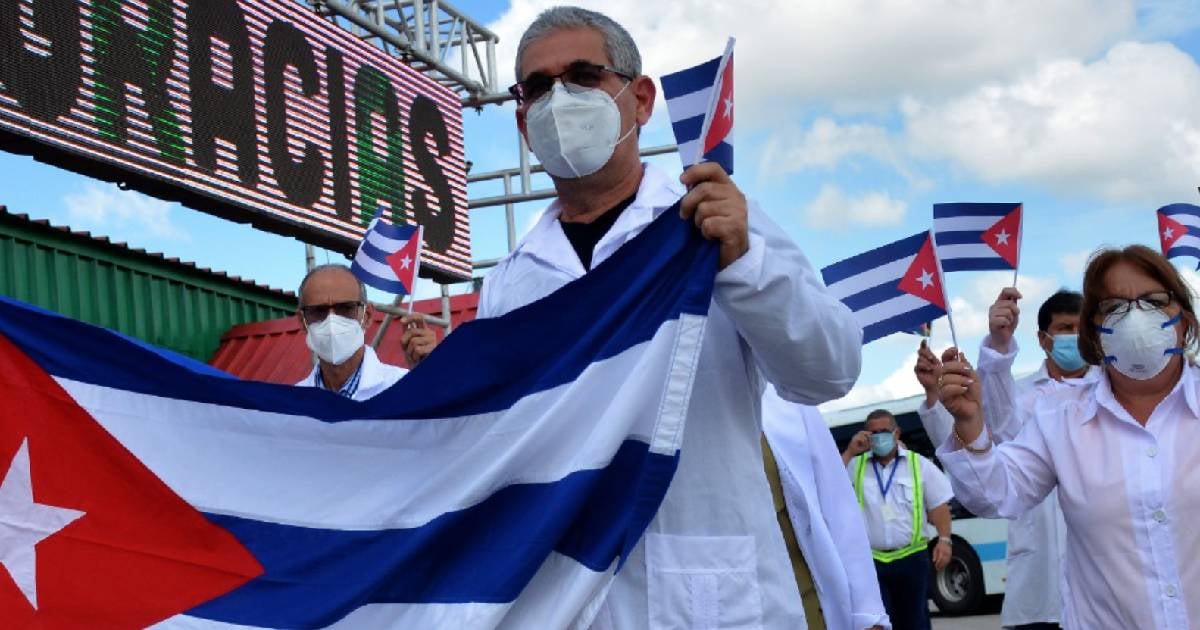
In a significant policy shift, Grenada has announced alterations to its "Cuban Workers Program" following intense pressure from the United States to reassess the working conditions of Cuban professionals dispatched by Havana's regime. The Ministry of Foreign Affairs, Trade, and Export Development issued a formal statement explaining that after high-level discussions between Grenadian and Cuban officials in Havana, an agreement was reached to ensure that all Cuban professionals working in Grenada enjoy the same conditions as their local counterparts.
The discussions were spearheaded by Foreign Minister Joseph Andall and Health Minister Phillip Telesford. Grenada's government expressed gratitude for Cuba's willingness to embrace these modifications and acknowledged Washington's role in advocating for the program's reassessment.
The "Cuban Workers Program" has been essential in supporting Grenada’s healthcare system, yet this new direction aims for enhanced transparency, equitable labor conditions, and greater local oversight, aligning with U.S. demands.
Bahamas Seeks Approval for Direct Payment to Cuban Doctors
Meanwhile, the Bahamas is awaiting U.S. consent to initiate a system enabling Cuban doctors to enter into direct contracts with the local Ministry of Health, thus bypassing the Cuban Medical Services Marketing Company (CSMC), which has long controlled and withheld a significant portion of their salaries. According to Caribbean Life, Bahamian Health Minister Michael Darville has confirmed that the agreements have been submitted to the U.S. for review. Upon approval, Cuban doctors would receive their full salaries, a drastic change from the current setup where they receive only 15% of the $12,000 monthly payment per doctor, with the remainder retained by the regime.
Several former collaborators have reported that even when they had control over their own bank accounts, they were coerced into transferring their earnings to accounts dominated by the Cuban state—a practice that Washington has labeled as "forced labor" and "human trafficking."
Washington's Pressure and the Caribbean Crossroads
This reevaluation of medical programs is part of a broader U.S. diplomatic campaign that gained momentum under the Trump administration and persists under current Secretary of State Marco Rubio. Washington has threatened Caribbean nations with immigration sanctions and visa revocations if they maintain exploitative arrangements with Cuban medical brigades. Countries like the Bahamas, Antigua, and Guyana were among the first to implement alterations to avoid penalties.
Doctors Caught in a Triangular Conflict
In June, Nassau's government announced the termination of current contracts with Cuban medical brigades, proposing new direct agreements for those who wish to remain. Presently, around 35 Cuban professionals—including ophthalmologists, nurses, and lab technicians—are still employed in the Bahamas, where they play a crucial role in addressing the shortage of local healthcare personnel. Most are eager to stay, but their fate hinges on U.S. approval and potential repercussions from Havana, which often punishes those who evade state control severely.
U.S. Influence on Caribbean Medical Agreements
Why did Grenada change its program for Cuban medical workers?
Grenada adjusted its program in response to U.S. pressure to improve the working conditions of Cuban professionals and ensure they are treated equally to local workers.
What changes are proposed for Cuban doctors in the Bahamas?
The Bahamas seeks U.S. approval to allow Cuban doctors to sign direct contracts with the local Ministry of Health, bypassing the Cuban Medical Services Marketing Company, enabling them to receive full salaries.
How does the U.S. influence Caribbean health programs?
The U.S. exerts diplomatic pressure, threatening sanctions and visa revocations to countries maintaining exploitative programs with Cuban medical workers, encouraging reforms for fair labor practices.