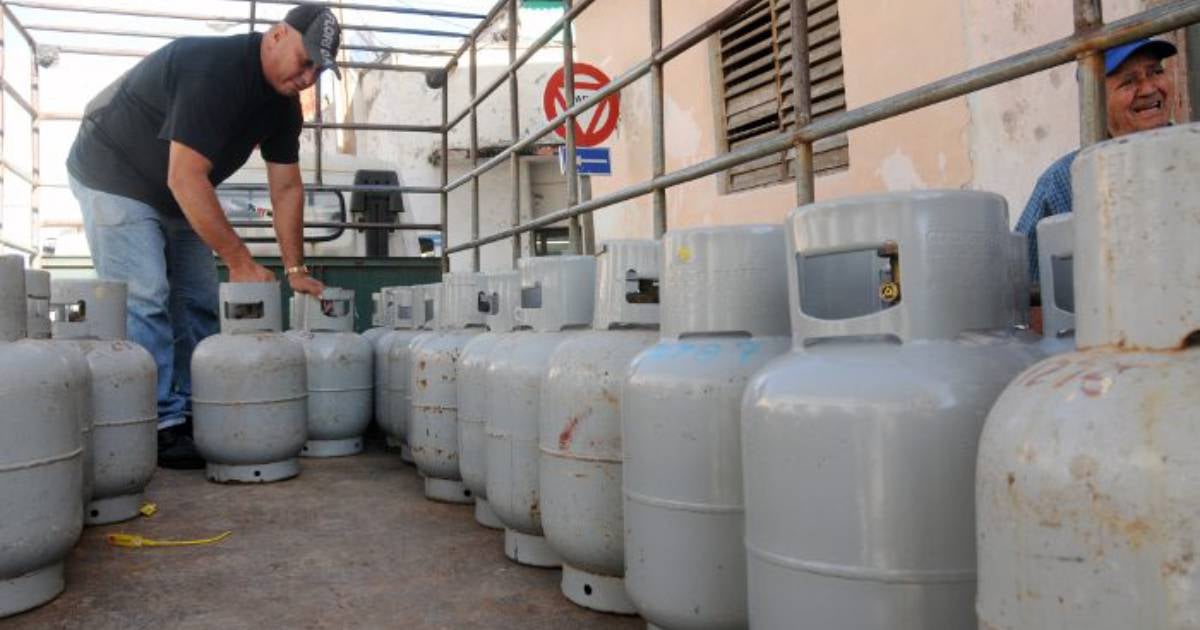
A clandestine operation involved in the illegal trafficking of liquefied gas has been dismantled by authorities in the provinces of Cienfuegos and Sancti Spíritus. According to the official Facebook page, Las Cosas de Fernanda, the operation was revealed on Monday. It was discovered that the network was dangerously overfilling gas cylinders beyond their safe limits.
Instead of adhering to the standard 60 pounds, some tanks were filled with up to 80 pounds, significantly increasing the risk of explosions. The gas, which has become a highly sought-after commodity due to shortages, was transported in vehicles to unauthorized locations where it was transferred and sold on the black market at prices much higher than the state value. Meanwhile, legal cylinders circulated without drawing suspicion.
The economic police intervened, terminating these illicit activities that posed not only a criminal offense but also a serious threat to public safety. Authorities are continuing to investigate to determine the full scope of the network and those involved.
Widespread Issues with Gas Trafficking
In recent months, several provinces have seen the rise of networks engaged in the trafficking and manipulation of liquefied gas, which has become increasingly coveted. In Artemisa, a local leader was accused of organizing an internal fraud, pretending a theft to cover up the appropriation of at least 40 cylinders. Similarly, in Havana, similar operations have been documented, including the dismantling of a gang involved in the theft and resale of small gas cylinders, demonstrating the national extent of the issue.
Alongside these criminal activities, the state’s distribution system itself has caused tensions. In Villa Clara, authorities decided to reorganize and restrict the sale of liquefied gas, increasing consumer dissatisfaction and reinforcing the perception of scarcity. More recently, reports have highlighted how access to fuel has become a fertile ground for inequality and corruption, putting families with fewer resources at a disadvantage and creating a parallel market where prices far exceed official values.
Understanding the Liquefied Gas Trafficking Issue in Cuba
What risks are associated with overfilling gas cylinders?
Overfilling gas cylinders beyond their safety limits can significantly increase the risk of explosions, posing a grave danger to public safety.
How does the black market affect gas prices in Cuba?
The black market can inflate gas prices well above state-controlled values, making it difficult for families with fewer resources to afford this essential commodity.
What measures have been taken to address the gas trafficking issue?
Authorities have intervened by dismantling illegal networks, reorganizing the distribution system, and investigating the full extent of these operations to curb the problem.