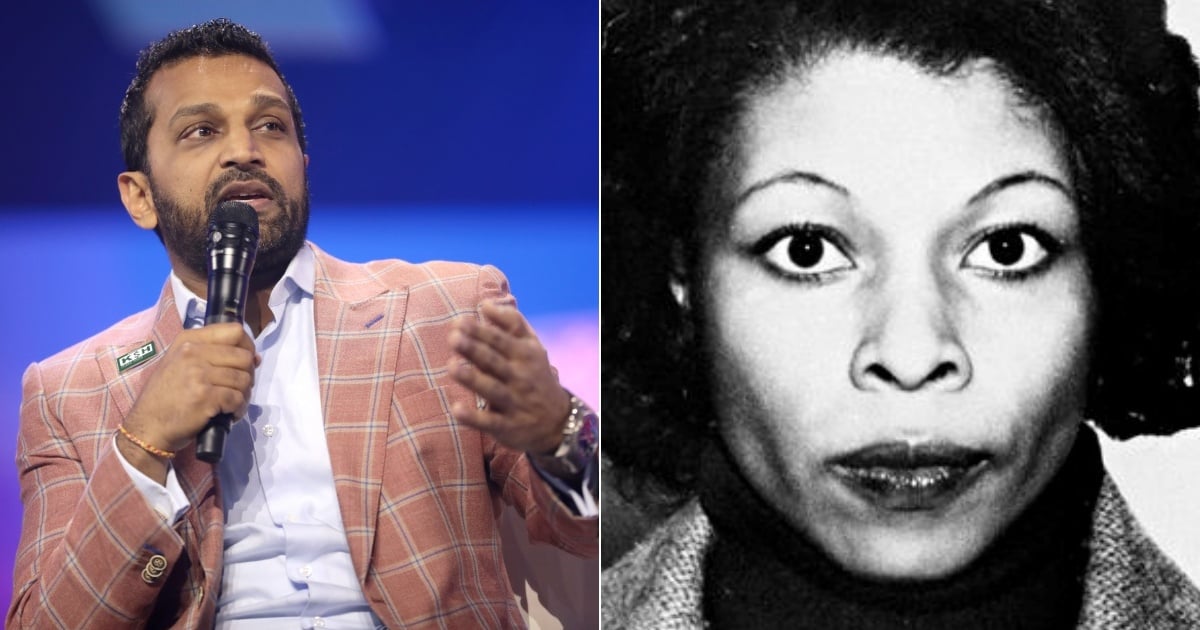
This past Sunday, Kash Patel, the director of the Federal Bureau of Investigation (FBI), publicly denounced any efforts in the United States to commemorate Joanne Deborah Byron, also known as "Assata Shakur." This American fugitive passed away last week in Cuba. For more than forty years, the U.S. had been demanding her extradition from the Cuban government for the 1973 murder of a New Jersey police officer.
"Joanne Chesimard was not a champion for justice. She cold-bloodedly murdered New Jersey State Trooper Werner Foerster and then fled to Cuba to avoid facing the consequences of her actions," Patel stated on X. He emphasized, "The FBI has consistently identified her as what she was: a terrorist."
The U.S. official concluded that mourning her is akin to disrespecting the badge and the sacrifice of every officer who has died in the line of duty. The U.S. Embassy in Havana echoed his statement on X.
Last Friday, the Ministry of Foreign Affairs (MINREX) in Cuba announced the death of Joanne Deborah Byron. The brief official note mentioned that she died on September 25 in Havana due to health issues and her advanced age.
The Notorious Crime Behind Assata Shakur's Fugitive Status
In 2013, Assata Shakur became the first woman to be placed on the FBI's Most Wanted Terrorists list, with a reward for her capture increased to two million dollars. Born in 1947, Chesimard rose to prominence as a leader in the Black Panther Party, a political-military organization established in 1966 and dissolved in 1982 during Ronald Reagan's presidency.
After marrying Louis Chesimard in 1967 and subsequently divorcing in 1970, she adopted the name Assata Shakur and joined the Black Panthers. On May 2, 1973, Chesimard and two accomplices killed New Jersey State Trooper Werner Foerster during a routine traffic stop for a broken taillight. She initiated a shootout with officers James Harper and Werner Foerster, resulting in the deaths of her associate Zayd Shakur and Officer Foerster.
Chesimard was arrested, tried, and sentenced to life in prison for the crime. However, in November 1979, she escaped from maximum-security prison in Hunterdon County, New Jersey. She lived as a fugitive in the U.S. for several years before reaching Cuba in 1984, where she was granted political asylum.
U.S. Efforts to Extradite Chesimard
In 1998, the U.S. Congress unanimously demanded her extradition from Cuba, but their efforts bore no fruit. In 2005, her name was added to the FBI's Terrorist List with a one-million-dollar reward. Despite numerous appeals from politicians and civil organizations, Cuba consistently refused to extradite her.
Even in 2017, during the second round of U.S.-Cuba negotiations on counterterrorism, there were speculations of a potential exchange involving spies and fugitives, which included Chesimard. However, no agreement was reached. In June 2017, then-President Donald Trump demanded the return of American fugitives, including the cop-killer Joanne Chesimard, to the U.S.
In 2018, Republican Senator Marco Rubio and Democrat Bob Menendez signed a resolution calling for the "immediate extradition" of U.S. fugitives in Cuba, among them Joanne Chesimard. In May 2025, the U.S. government renewed its call for her extradition.
Understanding Assata Shakur's Case
Who was Assata Shakur?
Assata Shakur, born Joanne Deborah Byron, was a member of the Black Panther Party who became infamous for the 1973 murder of New Jersey State Trooper Werner Foerster, leading to her fugitive status.
Why was Assata Shakur on the FBI's Most Wanted Terrorists list?
In 2013, Shakur was added to the FBI's Most Wanted Terrorists list due to her involvement in the murder of a police officer and her subsequent escape from prison, which led to a lengthy period as a fugitive.