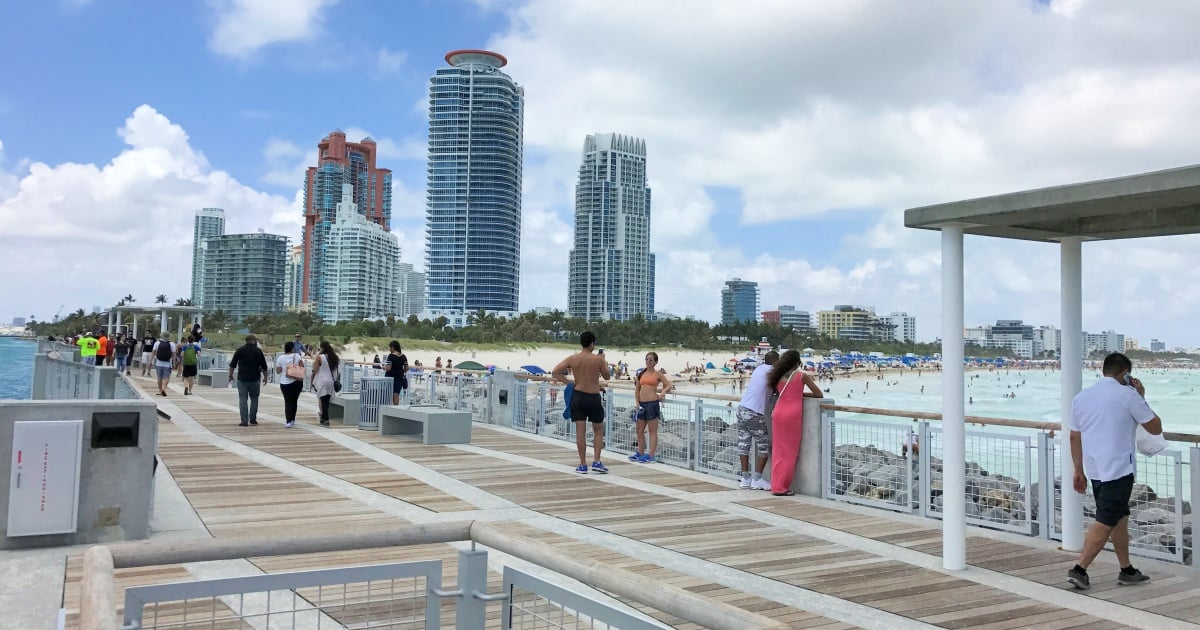
The Florida Department of Health has issued an urgent public health alert due to elevated levels of the bacteria Enterococcus found at two popular beaches in Miami-Dade County. The affected locations are Crandon Park North, near Key Biscayne, and South Point Drive Beach (South Beach Park) at the southern tip of Miami Beach.
Official Notice: Avoid Water Contact
Health authorities have advised residents and tourists, as reported by local media, to avoid engaging in any water-related activities at these beaches. The warning extends beyond swimming to include water sports or any direct exposure to the sea in these areas.
This decision follows laboratory tests conducted on September 23, which indicated that the water quality does not meet the safety standards established by the Florida Department of Health for recreational use. The tests discovered over 70 colonies of Enterococcus per 100 milliliters of water, exceeding the permissible limit.
According to protocol, a warning is issued when two consecutive samples show levels above the safety threshold.
Understanding Enterococcus and Its Risks
Enterococcus, commonly referred to as enterococcus, is a bacterium naturally present in the intestinal tract of humans and animals. Its presence in water bodies often signifies fecal contamination, potentially stemming from sewage, stormwater runoff, wildlife, or pets.
When these bacteria are found in high concentrations at beaches or recreational areas, they pose various health risks, particularly if the contaminated water comes into contact with open wounds or is accidentally ingested.
Potential adverse effects include:
- Gastrointestinal infections
- Skin rashes
- Urinary tract infections
- Illnesses in immunocompromised individuals
Authorities emphasize that the risk of illness is heightened for swimmers exposed to these conditions, especially for those with skin cuts, young children, the elderly, or individuals with weakened immune systems.
Water Quality Classification
The water quality at beaches is assessed by counting Enterococcus colonies per 100 milliliters. The Florida Department of Health categorizes these findings as follows:
- Good quality: 0 to 35 colonies
- Moderate: 36 to 70 colonies
- Poor: 71 colonies or more
In the cases of Crandon Park North and South Point Drive Beach, the detected concentrations exceeded the threshold of 70, leading to a "poor" classification and justifying the current health alert.
When Will It Be Safe to Swim Again?
Authorities are continuing their regular monitoring program at state beaches. If subsequent tests show a reduction in Enterococcus levels to acceptable ranges, the "no swim" advisory will be lifted, allowing safe access to these areas once again.
Although Crandon Park North and South Point Beach are popular destinations due to their natural beauty and proximity to urban areas, officials urge the public to heed the warnings to safeguard their health. Until further notice, it is recommended to refrain from any aquatic activities in these regions.
Frequently Asked Questions About Enterococcus Contamination
What causes Enterococcus contamination in beach waters?
Enterococcus contamination in beach waters is often caused by fecal matter entering the water, which can originate from sewage, stormwater runoff, wildlife, or pets.
What are the health risks associated with Enterococcus?
Health risks include gastrointestinal infections, skin rashes, urinary tract infections, and other illnesses, particularly in those with weakened immune systems.
How does the Florida Department of Health classify water quality?
Water quality is classified based on the number of Enterococcus colonies per 100 milliliters: good (0-35 colonies), moderate (36-70 colonies), and poor (71 or more colonies).
When will it be safe to swim at Crandon Park North and South Point Beach?
It will be safe to swim again when the Enterococcus levels drop to acceptable levels as determined by ongoing monitoring by health authorities.