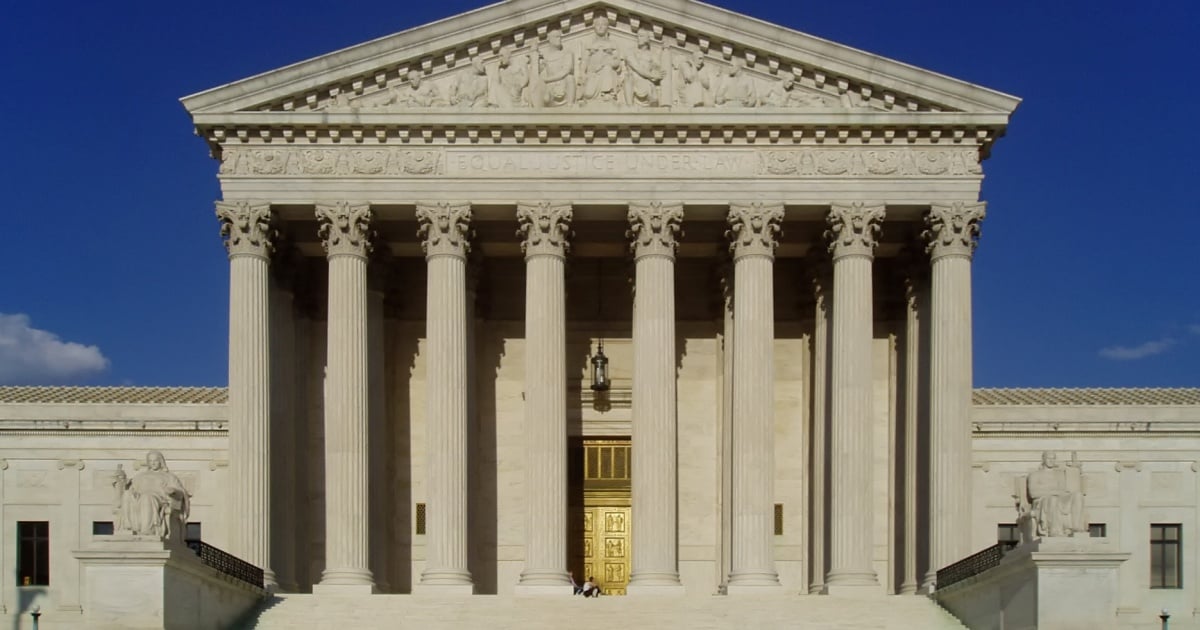
President Donald Trump has called upon the Supreme Court to uphold his executive order that seeks to terminate automatic citizenship for children born to immigrants residing in the United States unlawfully or temporarily. This development, reported by the Associated Press on Saturday, marks the beginning of a legal process that could lead to a final decision by mid-2026.
On the first day of his second term, Trump signed a decree that challenges more than a century of the 14th Amendment's interpretation, which guarantees citizenship to all individuals born on U.S. soil, with exceptions like children of foreign diplomats. Up until now, federal courts across various states have blocked the enforcement of this measure, arguing that it infringes upon the Constitution.
The Ninth Circuit Court of Appeals in San Francisco ruled in favor of a nationwide injunction, while a federal judge in New Hampshire issued a similar ruling as part of a class-action lawsuit. In the appeal, Solicitor General D. John Sauer contended that judicial decisions have nullified "a policy of utmost significance to the president and his administration," granting "without legal justification, the privilege of citizenship to hundreds of thousands of unqualified individuals."
Legal Challenges Against Trump's Executive Order
Immigrant rights organizations have labeled Trump's attempt as unconstitutional. Cody Wofsy, an attorney with the American Civil Liberties Union (ACLU), stated, "This executive order is illegal, period, and no maneuver will change that reality." Although the Supreme Court recently limited the use of national injunctions, it has yet to address the order's constitutionality.
Nearly all courts reviewing the matter have agreed that it violates or is likely to violate the 14th Amendment, which was established after the Civil War to ensure citizenship for African Americans freed from slavery. Trump's administration's appeal encompasses two ongoing cases. A potential hearing before the Supreme Court justices could take place between this winter and next spring, but a decision on whether to accept the case will take several months.
The Impact of Ending Birthright Citizenship
Trump's initiative to end birthright citizenship has sparked a vigorous legal battle since he signed the executive order during his second term. The measure aims to radically alter the interpretation of the 14th Amendment, historically guaranteeing this right to all born within U.S. territory, save for exceptions like diplomats' offspring.
The order immediately met with lawsuits from civil rights groups and various states, resulting in judicial suspensions across different courts. Amidst the litigation, the legal battle escalated through federal channels, yielding conflicting rulings regarding the order's validity. While some judges questioned the decree's constitutionality, others allowed parts of the government's plan to proceed.
This uncertainty led to an unprecedented cascade of legal and administrative procedures, impacting immigrant families and state agencies responsible for civil registration. Simultaneously, the United States Citizenship and Immigration Services (USCIS) initiated an internal plan to redefine who qualifies as a citizen at birth.
A leaked document, scrutinized by experts, suggests establishing criteria to exclude children of immigrants in irregular or temporary situations. Although its implementation hinges on the Supreme Court's final ruling, the draft indicates an intention to apply new eligibility standards retroactively, potentially affecting thousands of previously issued birth certificates.
Key Questions on Birthright Citizenship and Legal Implications
What is Trump's executive order on birthright citizenship?
Trump's executive order seeks to end automatic citizenship for children born to immigrants who are in the U.S. unlawfully or temporarily, challenging the 14th Amendment's long-standing interpretation.
How have courts responded to the executive order?
Federal courts have blocked the order's enforcement, citing constitutional violations. The Ninth Circuit Court and a federal judge in New Hampshire have both ruled in favor of suspending the order nationwide.
What are the implications of redefining birthright citizenship?
Redefining birthright citizenship could exclude children of immigrants in irregular or temporary situations, affecting eligibility criteria and potentially thousands of birth certificates.