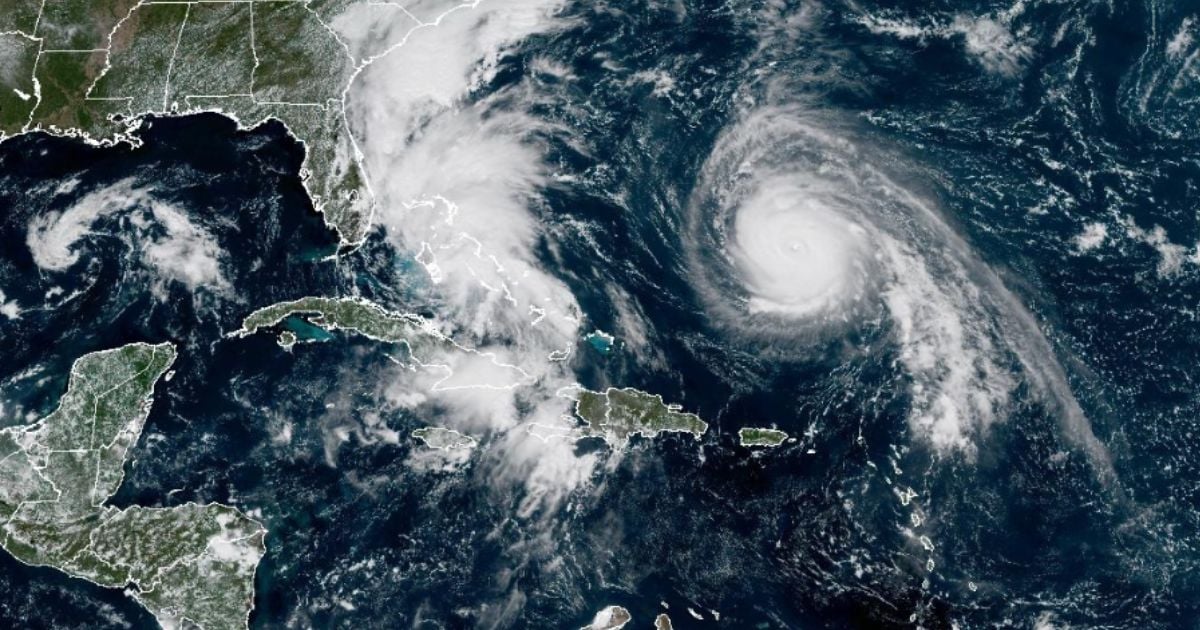
On Sunday, Tropical Depression Nine evolved into Tropical Storm Imelda, as confirmed by the United States National Hurricane Center (NHC) in their latest advisory. The agency announced on its X account that tropical storm conditions are anticipated this afternoon and evening over the central and northwestern islands of the Bahamas.
Meteorologists warn that the system is expected to intensify as it progresses northwest, with the capacity to unleash heavy rainfall, sustained winds, and storm surges across the archipelago. While the phenomenon is moving away from Cuba, its bands have already resulted in significant rainfall in the eastern region over the past few days, and this trend is likely to continue in the near future.
In an earlier report, experts had cautioned that the rains linked to the system would persist in affecting eastern Cuba and the Bahamas through Tuesday, with accumulations that could lead to flash floods, urban flooding, and river rises, as well as landslides in mountainous areas. The National Hurricane Center also highlighted the risk of surges and strong currents along the eastern coasts of Florida and Georgia, with these conditions expected to gradually extend northward along the U.S. east coast at the start of the week.
The Cuban Meteorology Institute (INSMET), in its latest advisory, noted the system's minimal structural changes, yet it has triggered intense rainfall and thunderstorms across eastern Cuba. As a result of the heavy precipitation, reservoirs in the province of Santiago de Cuba have seen a significant recovery after enduring months of severe drought.
FAQs about Tropical Storm Imelda and Its Impact
What is the current status of Tropical Storm Imelda?
Tropical Storm Imelda is currently strengthening as it moves northwest, impacting the Bahamas with potential heavy rains and strong winds.
How has Imelda affected Cuba?
Despite moving away, Imelda's bands have caused significant rainfall in eastern Cuba, contributing to the recovery of water reservoirs in Santiago de Cuba.
What are the potential risks for the U.S. east coast?
The east coast of the U.S., particularly Florida and Georgia, could experience storm surges and strong currents as the system progresses northward early in the week.