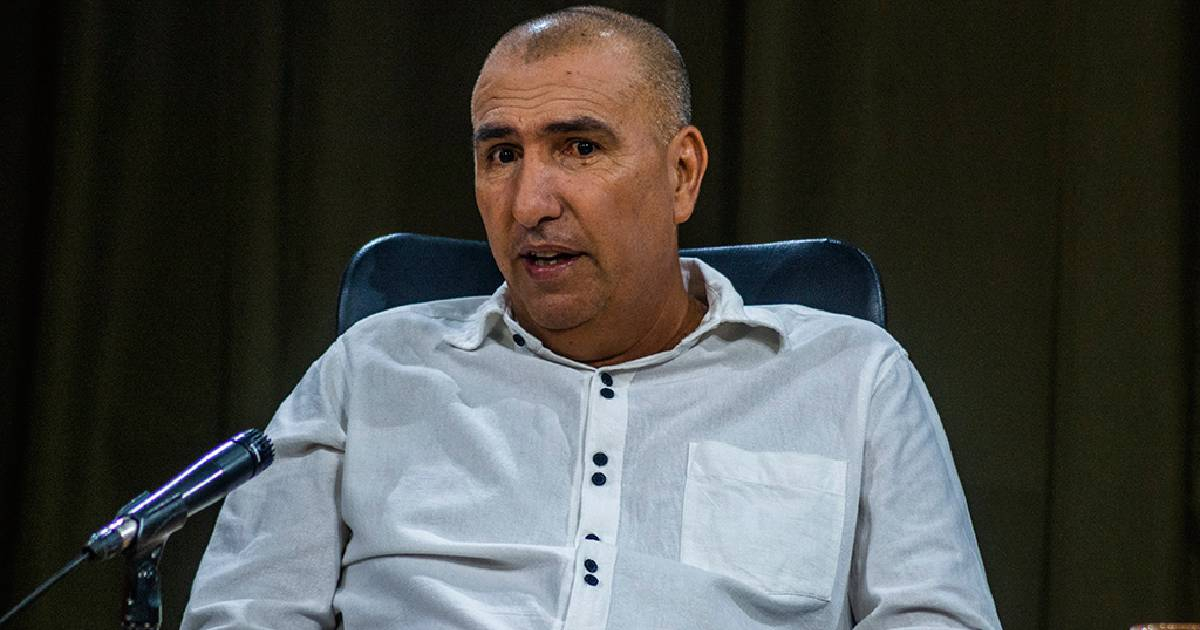
Osbel Lorenzo Rodríguez, the first secretary of the Communist Party of Cuba (PCC) in the province of Las Tunas, has stated that corruption cases will only be officially disclosed when legally permissible. He criticized both public and journalistic critiques circulating on social media.
In a recent appearance on the monthly television program broadcast by TunasVisión—featuring the region's top political and government figures—Lorenzo addressed allegations of influence peddling and crimes that are unofficially discussed in public opinion. He stressed that information would be shared "in due time," emphasizing that the presumption of innocence and due process prevent details from being disclosed until authorized by law.
While acknowledging citizens' rights to express dissatisfaction, Lorenzo cautioned that criticisms should not harm collective or private property or people's dignity, as reported by the official newspaper 26 in a summary of the program. This statement seems to set boundaries on public expressions of discontent.
The PCC leader in Las Tunas took aim at social media and even questioned journalists from official outlets who have criticized the government's and Party's management in the province. He labeled such comments as offensive and condemned the trend of "blaming others" for the province's issues.
In April, Cuban leader Miguel Díaz-Canel Bermúdez visited the municipalities of Jobabo and Colombia in Las Tunas, acknowledging persistent severe social and economic problems that disturb public tranquility. A major topic was the escalating corruption between state entities and the non-state sector of the economy, initially encouraged as a necessary complement.
Díaz-Canel admitted to significant irregularities in leasing premises and the use of public funds for services and products, announcing that criminal accountability would be sought in severe cases. In March, it was revealed that Maricela Alonso Ojeda, the former mayor of Puerto Padre, was sentenced to seven years in prison for embezzlement after being found guilty of misappropriating state goods meant for public sale.
The Provincial People's Court of Las Tunas also sentenced Mario Quirino Infante Sosa, former administrator of the Palace of Pioneers, to six years in prison for his involvement. In January, the news portal Cubanos por el Mundo reported that Alonso was detained and faced multiple corruption charges. This included the first secretary of the Communist Party in the municipality, Yanisleidys Fernández López, and the secretary of the Municipal Assembly of People's Power, Juana Álvarez Fernández, who were implicated by the former administrator of the Palace of Pioneers.
Allegations included the diversion of state resources for local microenterprise provisioning and resale, document falsification to justify these operations, illegal fuel theft and sale, and abuse of power granted by Cuban government authorities. Additionally, at least five other investigations involving various political and administrative officials in the area were mentioned.
While some sectors praised the court's verdict, others deemed it insufficient, failing to address the underlying structural issues within the system. In this context, on March 25, Walter Simón Noris was removed as the first secretary in Las Tunas after less than a year in the position, with no reasons provided.
Previously, authorities in Las Tunas had vowed to act "rigorously" against those responsible for diluting milk meant for children aged zero to seven, highlighting the local government's lack of control. PCC and government officials promised harsh penalties for those involved, yet details on the scope of the sanctions or specific actions to improve product quality remain undisclosed.
Outrage on digital platforms underscores the profound indignation among Cubans, fueled by widespread distrust of the authorities and the persistent perception of corruption. The public is still waiting for official information regarding the most significant corruption case in recent times, involving the detention of former Vice Prime Minister and Minister of Economy and Planning, Alejandro Gil Fernández.
Gil was removed from his position, and the government only disclosed that an investigative file had been opened by the Prosecutor's Office for "serious errors" during his tenure. At the time this corruption scandal erupted, he was overseeing highly responsible processes in Cuba, such as banking, remittance control, and monetary regulation. The regime has maintained complete silence on this case.
Understanding Corruption Challenges in Las Tunas
What did Osbel Lorenzo Rodríguez say about the timing of corruption disclosures?
Osbel Lorenzo Rodríguez stated that corruption cases will be disclosed officially only when legally permissible, emphasizing the importance of due process and the presumption of innocence.
How did Miguel Díaz-Canel Bermúdez respond to social and economic problems in Las Tunas?
Miguel Díaz-Canel Bermúdez acknowledged persistent severe social and economic issues in Las Tunas, particularly addressing the escalation of corruption between state entities and the non-state sector.
What was the outcome of Maricela Alonso Ojeda's embezzlement case?
Maricela Alonso Ojeda was sentenced to seven years in prison for embezzlement, having been found guilty of misappropriating state goods intended for public sale.
What actions did the PCC promise regarding the dilution of milk for children?
The PCC and government authorities promised rigorous action against those responsible for diluting milk meant for children, although specific details on penalties and improvements remain undisclosed.