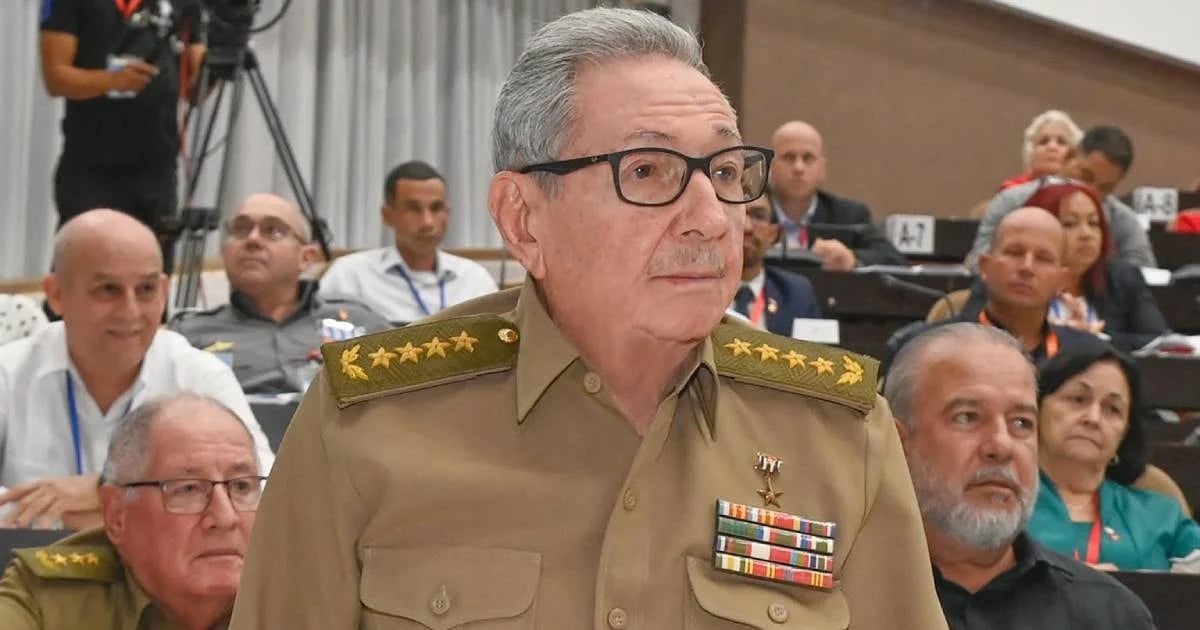
In recent hours, Cuba's regime has initiated a robust digital campaign to bolster Raúl Castro's image, under the slogan "Raúl is Raúl," utilizing hashtags like #RaúlEsRaúl and #YSigueAquí. Official ministries, state-run media, and accounts linked to the Ministry of the Interior, along with profiles aligned with the repressive apparatus, have started sharing images, slogans, and videos portraying the army general as a "steadfast, present, and combative" leader. The campaign even includes segments from his speech at the 8th Congress of the Communist Party and references to the Tank Division, alluding to warfare.
A striking feature of this campaign is its visual uniformity. Posts share a consistent green and white color scheme, identical graphic designs, and typography, emphasizing that this is a coordinated operation from a singular command center. The posters echo the phrase "With foot in the stirrup," accompanied by images of Raúl in military attire adorned with medals, both current and archival, in a clear symbolic strategy to depict continuity and resilience.
The Ministry of Tourism contributed with a photo of Raúl waving a Cuban flag, accompanied by the message: "Still with foot in the stirrup. He hasn't stepped aside, he hasn't left. His footprint continues to mark the way." Similarly, the newspaper Invasor shared another poster underscoring that he is "ready to continue the fight."
Addressing the Unfounded Rumor
This narrative seeks to convey the former leader's vitality and continuity, particularly after an unfounded rumor about his alleged death circulated online. The rumor originated on September 22 when the Facebook profile Ignacio Giménez Cuba, known for spreading falsehoods, claimed Raúl Castro had been urgently taken to a clinic in Havana. The post lacked verifiable photos or identifiable testimonies, merely mentioning "stretchers," "life support units," and "security rings."
The following day, Periódico Patria 1892, a self-proclaimed media outlet, almost verbatim copied the post, leading some international outlets to cite it as an "unofficial source," lending it an unwarranted air of legitimacy. The rumor gained further traction when a CiberCuba parody page spread a graphic montage announcing Raúl's "death," turning the falsehood into a widely circulated fake news story in Cuba's digital ecosystem.
Ultimately, on September 26, Ignacio Giménez admitted on his profile that he fabricated the rumor as a so-called "test" to gauge the reliability of media outlets and pages, mixing it with unrealistic promotions of tech projects and job offers. This admission confirmed the hoax's fabricated nature.
Why Rumors Thrive in Cuba
For many Cubans, Raúl Castro's death is seen as a potential catalyst for profound change. This expectation turns any public absence into fertile ground for speculation. The official secrecy adds to this, creating an information vacuum about the health of historical leaders. What isn't communicated gets imagined, and rumors thrive.
The experience with Fidel Castro reinforces this pattern: before his actual death in 2016, numerous false death reports circulated. In contrast, when it truly happened, the official announcement was immediate, and the global impact was undeniable.
A Political Response
The "Raúl is Raúl" campaign is a political strategy aimed at countering the wave of rumors through a propaganda display asserting the general's relevance. This symbolic reappearance, now transformed into a digital trend, serves as a counterbalance to social anxiety and the erosion of official credibility. The real story isn't Raúl Castro's death, which hasn't occurred and couldn't be hidden, but how an untrustworthy post became "news" through uncritical sharing and viral parodies. Rather than merely denying, the regime's response emphasizes reinforcing the narrative that Raúl remains steadfast and present.
Understanding the Impact of Cuban Propaganda
Why did the "Raúl is Raúl" campaign start?
The campaign was launched to strengthen Raúl Castro's image amid false rumors of his death and to project continuity and strength in leadership.
How do rumors about Cuban leaders spread so easily?
Rumors spread due to the Cuban government's secrecy about leaders' health and the public's anticipation of significant changes, which turns speculation into fertile ground.
What role does social media play in these rumors?
Social media amplifies rumors by quickly spreading unverified information, especially when repeated by multiple accounts or outlets.